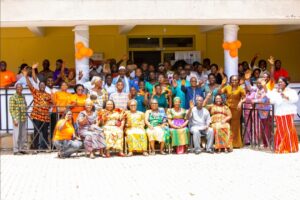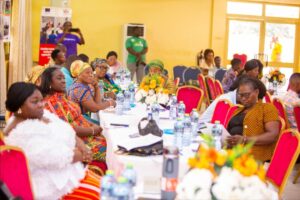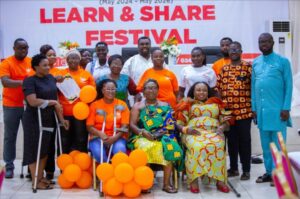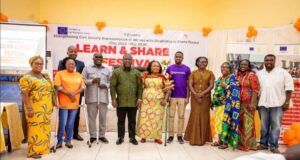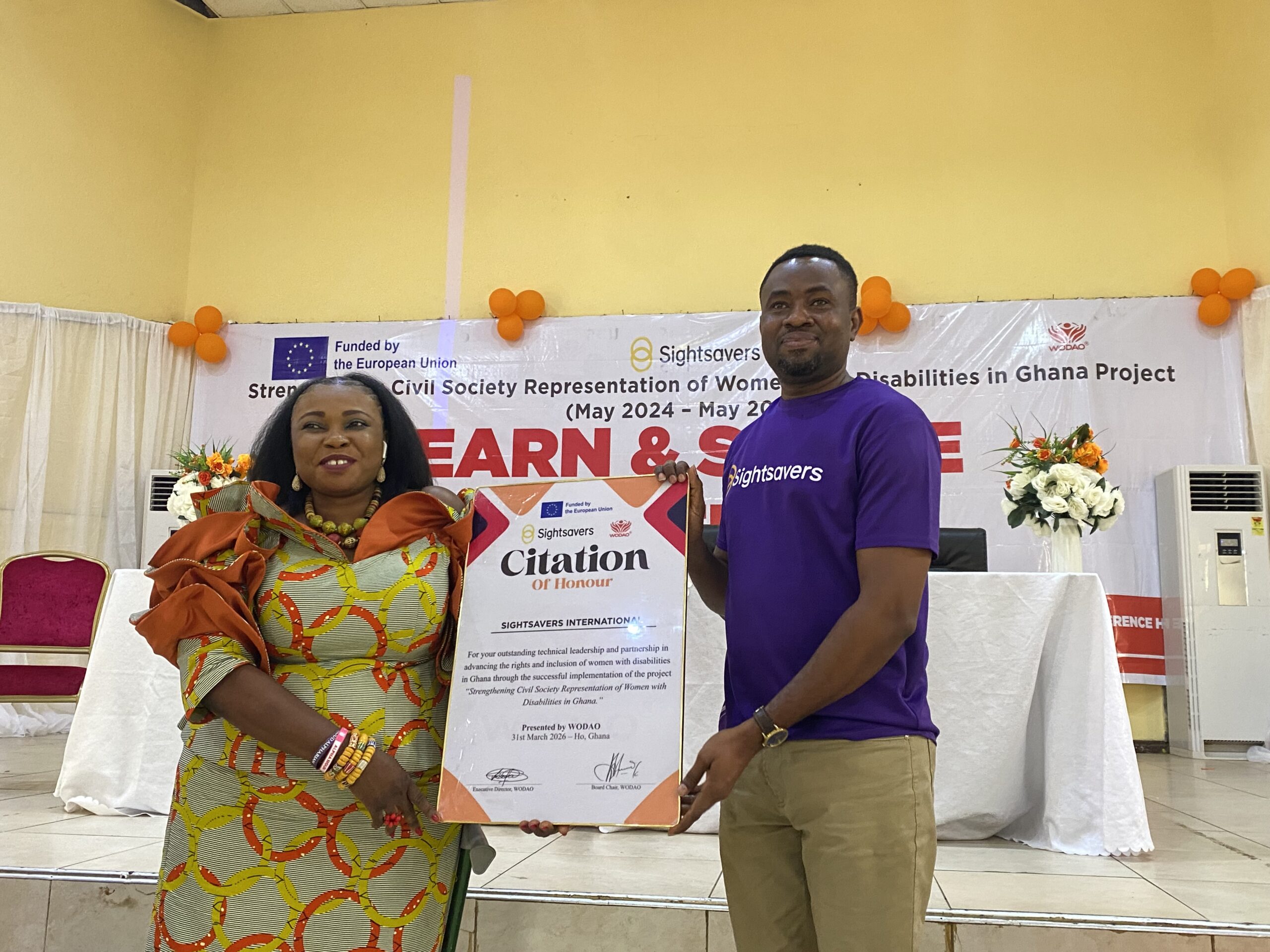
Ho, Tuesday, March 31, 2026 – The Women with Disability Development and Advocacy Organization (WODAO) has honoured the European Union, Sightsavers International and key partners for their support towards the successful implementation of a two-year disability inclusion project.
The recognition was done during a Learn and Share Festival held in Ho to mark the end of the European Union-funded project titled “Strengthening Civil Society Representation of Women with Disabilities in Ghana.”
The project, implemented by WODAO in partnership with Sightsavers and the ABAK Foundation, ran from May 2024 to May 2026 and aimed at strengthening the capacity of civil society organisations to promote gender equality, disability inclusion and the effective participation of women with disabilities in governance and decision-making processes.
A.
The citation on behalf of Sightsavers International was received by its Programme Manager, Mr Mohammed Abdul-Razak, and was presented to him by Ms Veronica Denyo Kofiedu, Executive Director of WODAO.
Ms Kofiedu said the recognition was to appreciate the strong partnerships that contributed to the success of the project.
She said the initiative strengthened two co-applicant organisations and 23 downstream groups across the Volta and Oti Regions, and mentored 45 women with disabilities to participate in advocacy and community engagement.
Ms Kofiedu added that the project had contributed to ensuring that women and girls with disabilities were not only seen and heard but actively engaged in shaping decisions that affected their lives.
Mr Mohammed Abdul-Razak, Programme Manager at Sightsavers, said the project reached more than 2,000 beneficiaries and maintained strong implementation performance throughout its duration.
He called on government to expedite the passage of the Persons with Disabilities Bill and address employment challenges facing persons with disabilities, especially graduates.
Mr James Gunu, Volta Regional Minister, commended the implementing partners and described the project as a model for inclusive development.
He said inclusive development was essential for national progress, noting that no society could develop when sections of its population were left behind.
Alhaji Mohammed Avona Akape, Volta Regional Coordinating Director, said the project had demonstrated the importance of collaboration in achieving sustainable development outcomes.
He called for sustained partnerships to maintain the gains made under the initiative.
Mr George Kofiedu, Project Officer at WODAO, said the project exceeded several of its targets, including training 122 civil society staff against a target of 75, reaching 586 downstream participants and implementing 36 advocacy actions.
He, however, noted challenges such as limited awareness of disability inclusion, resource constraints, coordination difficulties and accessibility gaps.
Dr Joseph Kobla Wemakor, Executive Director of Human Rights Reporters Ghana, in a solidarity message, emphasized the need for stronger collaboration among stakeholders to advance disability inclusion.
He described inclusive storytelling and representation as key to amplifying the voices of persons with disabilities.
Dr Wemakor announced that Human Rights Reporters Ghana would host a high-level dialogue at the RightsCon 2026 Summit on May 6, 2026, at the Mulungushi International Conference Centre in Lusaka, Zambia.
He said the dialogue, themed “Silenced Twice: Press Freedom and Disability Voices Under Threat in Africa,” would bring together journalists, disability rights advocates, policymakers and digital rights actors to explore ways to improve inclusion in media and digital spaces.
Dr Wemakor said the forum would examine how media systems could be made more inclusive, promote ethical reporting on disability issues, strengthen the capacity of persons with disabilities to tell their own stories and address the risks of digital exclusion.
He said the dialogue was expected to generate practical recommendations to guide policy and practice.
“This is not just a media issue – it is a human rights issue. When voices are excluded, democracy itself is weakened,” he said.
Participants reaffirmed their commitment to sustaining the gains of the project and strengthening partnerships to promote inclusive development across the country.