
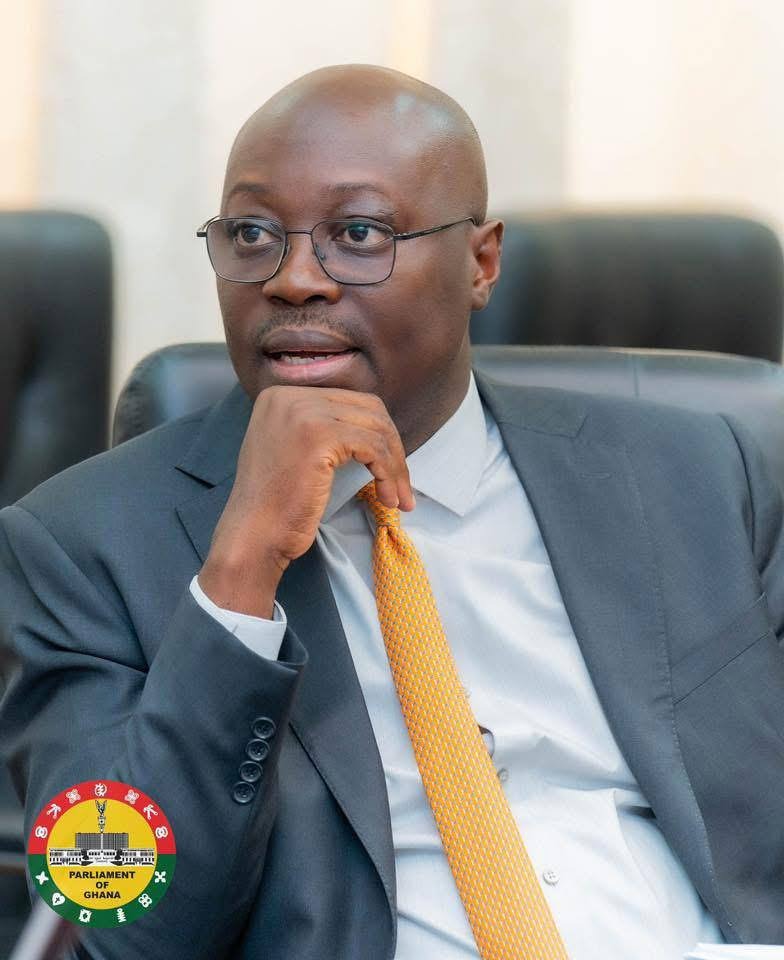
Government’s growing wage burden has effectively blocked new public sector recruitment, with Finance Minister Cassiel Ato Forson revealing that the state is borrowing heavily just to pay existing workers.
Speaking at the Presidency, the Minister disclosed that Ghana spent beyond its available resources in 2025, forcing authorities to borrow about GH¢17 billion solely to meet salary obligations. The development, he indicated, has left no fiscal space to employ additional workers despite rising unemployment pressures.
According to the data presented, Ghana generated GH¢183 billion in tax revenue in 2025. However, statutory payments—including transfers to funds such as the DACF, GETFund, and NHIL, alongside debt servicing—consumed GH¢122.1 billion, leaving only GH¢61.9 billion.
This remaining amount fell far short of the public sector wage bill, which stood at GH¢78.9 billion. The gap, estimated at GH¢17 billion, had to be financed through borrowing—highlighting the severity of the country’s fiscal strain.
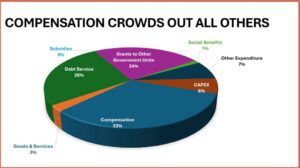
The figures show that compensation alone accounted for 44 percent of total tax revenue, significantly exceeding the 35 percent threshold recommended by the Economic Community of West African States.
A broader breakdown of government spending paints an even tighter picture. Wages, debt servicing, and statutory transfers together consumed 83 percent of total revenue, leaving just 17 percent for all other expenditures. Capital investment received only 6 percent, raising concerns about stalled infrastructure projects and long-term economic growth.
The immediate impact is a freeze on public sector hiring, with thousands of graduates likely to be affected. Planned expansions in key sectors, including security services recruitment, are also now uncertain as analysts question how such commitments can be financed under current conditions.
Beyond employment, the fiscal pressure is also threatening development. Limited capital spending could slow down projects in roads, healthcare, and education, while increasing the cost of doing business and weakening investor confidence.
READ ALSO:‘Reverse It Now’ – Franklin Cudjoe Reacts to McDan Aviation License Withdrawal
Economists warn that Ghana’s current trajectory—borrowing to finance recurrent expenditure such as salaries rather than productive investment—is unsustainable. The trend risks deepening the country’s debt burden without generating the growth needed to service it.
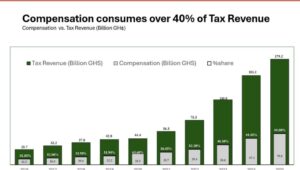
Historical data further underscores the challenge, showing that wage expenditure has consistently taken up a large share of revenue over the years, even as government earnings increased.
The situation now raises tough questions about the viability of large-scale public sector job creation promises, shifting attention toward private sector-led employment as the more realistic path forward.
The Finance Minister has called for urgent reforms, including tighter wage management, improved revenue mobilisation, and expenditure rationalisation. Without these measures, analysts warn, the country could remain trapped in a cycle where borrowing to pay salaries crowds out development and limits future economic opportunities.
