
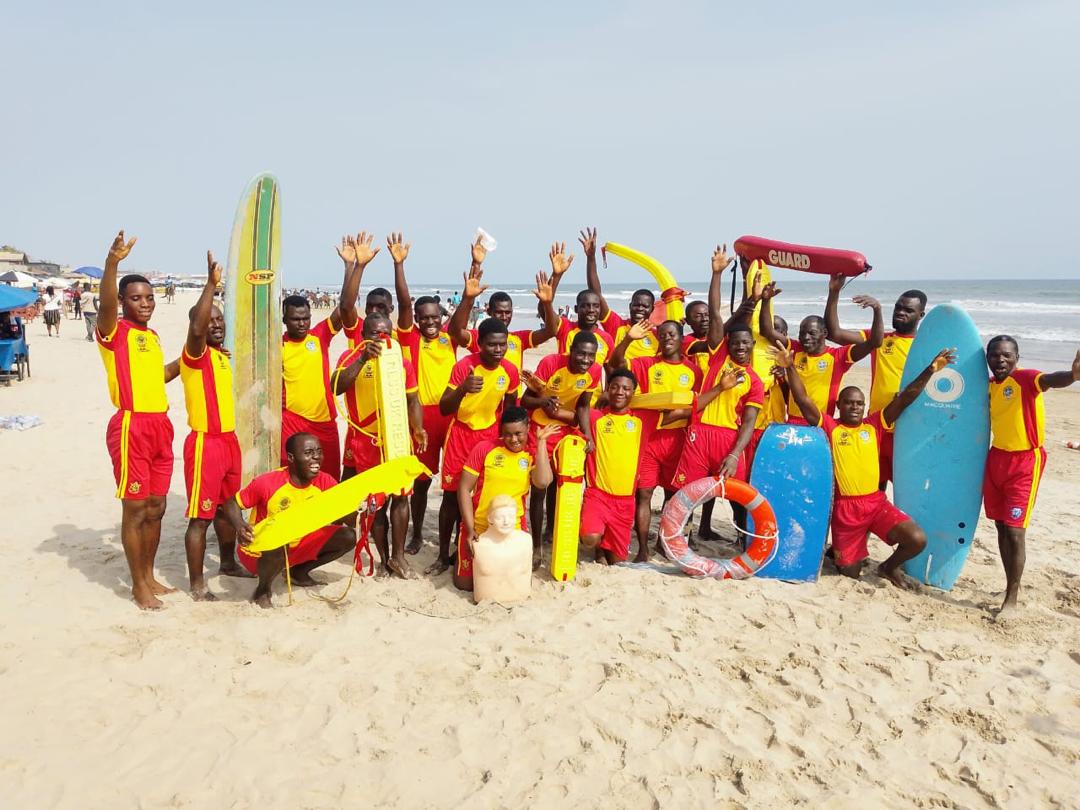
The Government of Ghana has launched a nationwide lifeguarding initiative to curb drowning incidents, which claim an estimated 1,400 lives annually.
The programme, forms part of a broader strategy to strengthen water safety systems, improve emergency response, and build local capacity through structured lifeguard training and deployment.
Deputy Interior Minister, Ebenezer Okletey Terlabi, described drowning as a pressing public safety and national security issue that demands urgent, coordinated intervention.
He said recent tragedies, including fatalities recorded at Aboadze Beach, highlight the need to treat drowning as a systemic national concern rather than isolated incidents.
“Drowning is not theoretical. It is immediate, real, and affecting Ghanaian families today,” he stated, stressing that citizen security must extend to safety in and around water bodies.
Multi-agency collaboration
The initiative is being implemented through a multi-sector partnership involving key state institutions, including the Ghana National Fire Service, Ghana Police Service, Ghana Navy, National Disaster Management Organisation, National Ambulance Service, Ghana Health Service, and the Ghana Tourism Authority.
Technical and financial support is being provided by international and academic partners, including the Johns Hopkins International Injury Research Unit and Bloomberg Philanthropies, alongside local expertise from the Kwame Nkrumah University of Science and Technology.
Early gains recorded
Authorities say the initiative is already producing results, with trained lifeguards deployed to high-risk coastal areas and responding to emergency situations.
According to officials, lifeguards are playing a critical role in monitoring beaches, identifying hazards, and providing rapid rescue interventions—actions that significantly reduce fatalities.
Pilot training programmes have also demonstrated the viability of building local expertise through coordinated institutional support.
Policy reforms underway
Government is considering amendments to existing legislation, including Act 537, to formally integrate drowning prevention into the mandate of the Ghana National Fire Service.
The proposed reforms are expected to enhance coordination, clarify institutional roles, and ensure sustained implementation of water safety measures nationwide.
Stakeholders pledge support
Stakeholders at the launch reaffirmed their commitment to the initiative.
A representative of the Ghana Navy, Ben Baba Abdul, underscored the importance of maritime safety collaboration, particularly along coastal communities.
From the research front, Abdulgafoor Bachani of the Johns Hopkins International Injury Research Unit called for sustained investment in data-driven interventions.
Similarly, Emmanuel Nakua of KNUST emphasized the role of research, training, and community education in reducing drowning risks, especially among young people.
Community role critical
Officials stressed that community awareness and participation will be key to the success of the initiative.
With water bodies central to livelihoods, transportation, and recreation in Ghana, authorities say intensified public education on water safety and risk awareness will be essential in reducing preventable deaths.
generate another more detailed researched one
Government Rolls Out National Lifeguarding Programme to Stem Ghana’s Drowning Crisis
The Government of Ghana has launched a comprehensive national lifeguarding programme as part of renewed efforts to address the country’s persistent drowning crisis, which claims an estimated 1,400 lives each year.
The initiative, unveiled on April 14, 2026 at the Labadi Beach Hotel, signals a policy shift towards treating drowning as a major public safety and national security concern, rather than isolated incidents.
Deputy Interior Minister Okleteye Teye Larbi, speaking on behalf of the sector minister, said the growing number of drowning cases across coastal and inland water bodies demands urgent, coordinated national action.
He referenced recent fatal incidents, including those at Aboadze Beach and along sections of the Volta Basin, as evidence of a widening safety gap that requires systemic intervention.
“Drowning is not theoretical. It is immediate, real, and affecting Ghanaian families today,” he said, adding that national security must encompass the protection of lives in and around water bodies.
A growing but underreported public health burden
Drowning remains one of the leading causes of unintentional injury-related deaths globally, according to the World Health Organization, with low- and middle-income countries accounting for over 90 percent of cases.
In Ghana, experts say the situation is exacerbated by weak safety regulations at beaches and inland waterways, limited public awareness, and the absence of structured lifeguard systems in many high-risk communities.
Children, fisherfolk, transport operators, and recreational users are among the most vulnerable groups, particularly in areas where rivers, lakes, and the sea serve as key economic and social lifelines.
Multi-sector approach to prevention
The newly launched programme adopts a multi-agency model, bringing together emergency services, security institutions, and public health authorities.
Key implementing bodies include the Ghana National Fire Service, Ghana Police Service, Ghana Navy, National Disaster Management Organisation, National Ambulance Service, Ghana Health Service, and the Ghana Tourism Authority.
The initiative also leverages international expertise and funding support from the Johns Hopkins International Injury Research Unit and Bloomberg Philanthropies, with research and training contributions from the Kwame Nkrumah University of Science and Technology.
Officials say the collaboration is designed to ensure a coordinated response across prevention, rescue, and post-incident care.
Lifeguards at the centre of intervention
At the core of the programme is the training and deployment of certified lifeguards to high-risk locations along Ghana’s coastline and inland water bodies.
Authorities report that pilot deployments have already begun yielding positive results, with trained personnel conducting surveillance, enforcing safety protocols, and carrying out rescue operations.
Lifeguards are expected to serve as the first line of defense—identifying hazards such as strong currents and unsafe swimming zones, educating the public, and responding swiftly to emergencies.
Experts say such structured lifeguarding systems have significantly reduced drowning deaths in countries where they are well established.
Legislative reforms in focus
As part of efforts to institutionalize the intervention, government is reviewing existing legal frameworks, including the Ghana National Fire Service Act (Act 537), to incorporate drowning prevention into the formal mandate of the service.
The proposed reforms are expected to strengthen inter-agency coordination, provide legal backing for enforcement of water safety measures, and ensure sustained funding for lifeguard operations.
Stakeholders call for sustained investment
Stakeholders at the launch underscored the need for long-term commitment to the programme.
A representative of the Ghana Navy, Ben Baba Abdul, highlighted the importance of maritime collaboration, particularly in monitoring coastal zones and supporting rescue operations.
From the research community, Abdulgafoor Bachani of the Johns Hopkins International Injury Research Unit stressed the need for data-driven strategies to guide interventions and measure impact.
Similarly, Emmanuel Nakua of KNUST emphasized the role of research, training, and behavioural change campaigns in addressing drowning risks, especially among children and young people.
Community engagement critical
Beyond institutional efforts, officials say community participation will be crucial to the success of the initiative.
Public education campaigns are expected to focus on safe swimming practices, use of life jackets, early risk detection, and adherence to safety guidelines at beaches and water transport points.
With Ghana’s water bodies central to fishing, transport, tourism, and daily livelihoods, authorities maintain that reducing drowning deaths will require a combination of policy enforcement, local awareness, and sustained stakeholder collaboration.
The lifeguarding initiative, they say, represents a significant step toward closing a long-standing gap in Ghana’s public safety architecture.
