
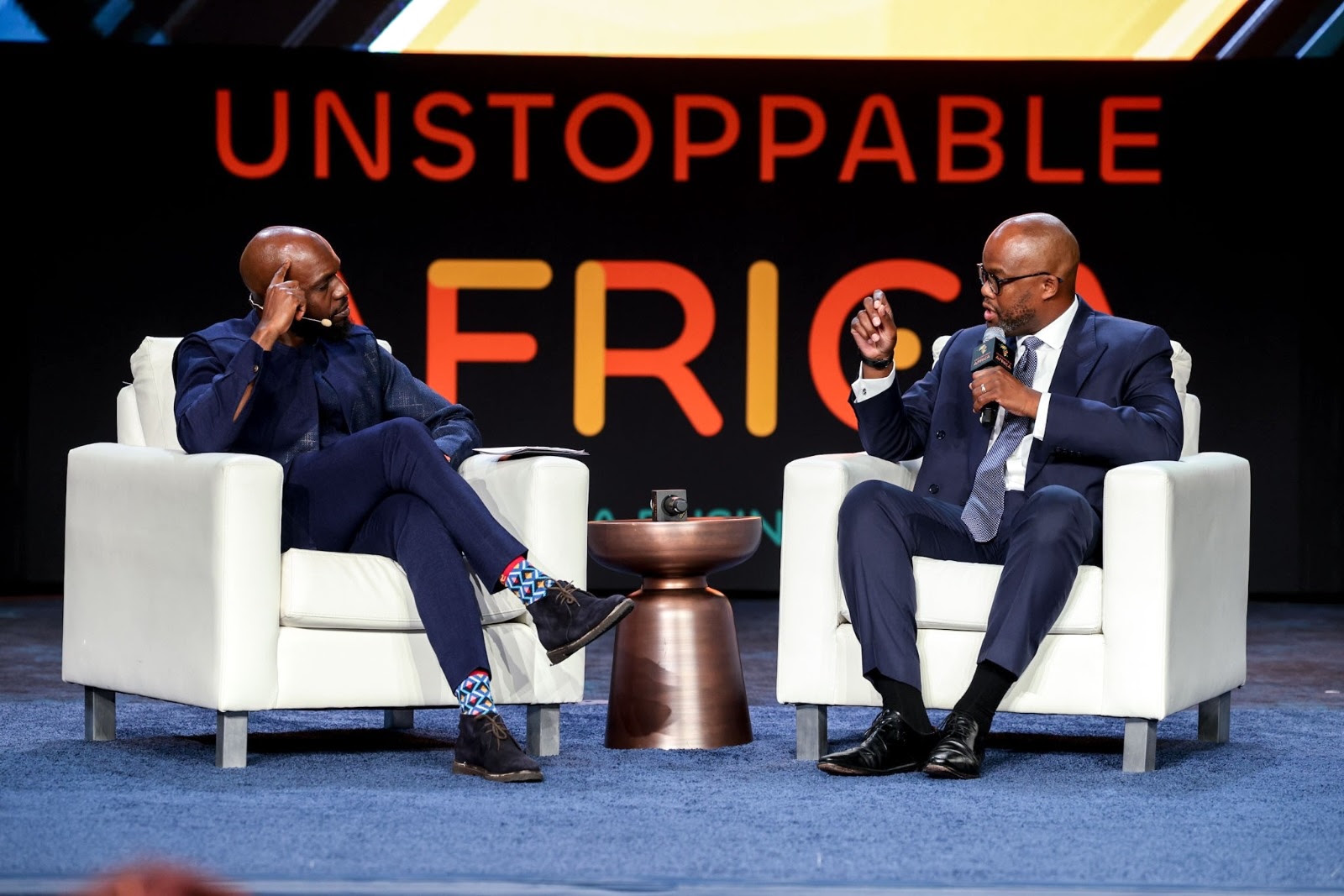
At Unstoppable Africa 2026 in New York, on the margins of the UN General Assembly, AfCFTA Secretary-General Wamkele Mene set out why the continent’s digital opportunity depends on common rules — and what the AfCFTA Protocol on Digital Trade is designed to put in place.
NEW YORK — On the margins of the United Nations General Assembly, the Secretary-General of the AfCFTA Secretariat, H.E. Wamkele Mene, joined the fireside chat “One Continent, One Click: Creating Africa’s Digital Trade Age” at Unstoppable Africa 2026, the flagship convening of the Global Africa Business Initiative (GABI), a platform dedicated to strengthening Africa’s place in the global economy.
Behind the session’s title sits a practical question. Africa’s digital economy is growing. Whether it grows as a patchwork of national markets or as one continental market is a question of rules.
The size of the opportunity
The Secretary-General put the opportunity at more than US$700 billion by 2035, according to the International Finance Corporation, and was specific about where that value lies: consumer spending and GDP generated through digital payments, data transfers and processing, mobile banking, health technology and agricultural technology, among other areas of digital activity.
The figure describes a potential, not a result that arrives by default. A payment that cannot clear across a border, a firm that cannot prove its identity to a customer in another country, data that cannot lawfully travel: each one leaves part of that value unrealised.
The rulebook
The AfCFTA Protocol on Digital Trade is the continental legal framework designed to close those gaps. In February 2025, at its 38th Ordinary Session, the Assembly of the African Union adopted eight annexes that form the core of the framework.
They cover rules of origin; digital identities; cross-border digital payments; cross-border data transfers; the criteria for determining legitimate public interest reasons for source code disclosure; online safety and security; emerging and advanced technologies; and financial technology.
Read together, the annexes answer the questions a digital business meets the moment it crosses a border: how a company or a customer proves who they are, how a payment settles, where data may go, and what protections apply online.
Emerging technologies, and who gets to use them
Artificial intelligence was part of the conversation. The Secretary-General presented the Protocol as a forward-looking framework able to nurture emerging technologies, including AI — an area the framework addresses through its annex on emerging and advanced technologies.
Inclusion ran through the discussion as well. The ambition set out in New York is not only a larger digital market, but one in which young people and small and medium-sized enterprises can take part, innovate and help shape what comes next.
The market the rules are written for
The Agreement establishing the AfCFTA entered into force on 30 May 2019, and trading under it began on 1 January 2021. It brings together the 55 Member States of the African Union in a single market of about 1.4 billion people, with a combined gross domestic product of approximately US$3.4 trillion. Intra-African trade exceeded US$220 billion in 2024, according to the Secretary-General.
Digital trade is where much of the next stage will be decided. A market of that size only functions as one if a business in one State Party can sell, get paid and deliver a service in another with the same confidence it has at home.
From adoption to use
Adoption is the first step, not the last. The Protocol and its annexes reach businesses as State Parties ratify them and bring them into national law. The Secretariat supports that work through technical assistance to Member States aligning their national frameworks with the Protocol.
The session’s title set the ambition in four words. The Protocol is the rulebook meant to make them true for a business on either side of a border.
Key facts
| ELEMENT | FACT |
| Event | Unstoppable Africa 2026, flagship convening of the Global Africa Business Initiative (GABI) — New York, margins of the UN General Assembly |
| Session | Fireside chat “One Continent, One Click: Creating Africa’s Digital Trade Age” |
| Speaker | H.E. Wamkele Mene, Secretary-General, AfCFTA Secretariat |
| Digital economy opportunity | More than US$700 billion by 2035, according to the International Finance Corporation (cited by the Secretary-General at the session) |
| Areas cited | Digital payments; data transfers and processing; mobile banking; health technology; agricultural technology |
| Legal framework | AfCFTA Protocol on Digital Trade |
| Annexes | Eight, adopted in February 2025 at the 38th Ordinary Session of the Assembly of the African Union |
| Annex subjects | Rules of origin · digital identities · cross-border digital payments · cross-border data transfers · legitimate public interest criteria for source code disclosure · online safety and security · emerging and advanced technologies · financial technology |
| AfCFTA market | 55 AU Member States · about 1.4 billion people · combined GDP of approximately US$3.4 trillion |
| Agreement in force | 30 May 2019 · trading since 1 January 2021 |
| Intra-African trade | More than US$220 billion in 2024 (stated by the Secretary-General) |
| Domestication support | 10 requests for technical assistance received from Member States to align national frameworks with the Protocol (AfCFTA Secretariat) |
| AfCFTA Digital Innovation Challenge | 505 applications at the inaugural edition, 32.4% from women (AfCFTA Secretariat) |
