
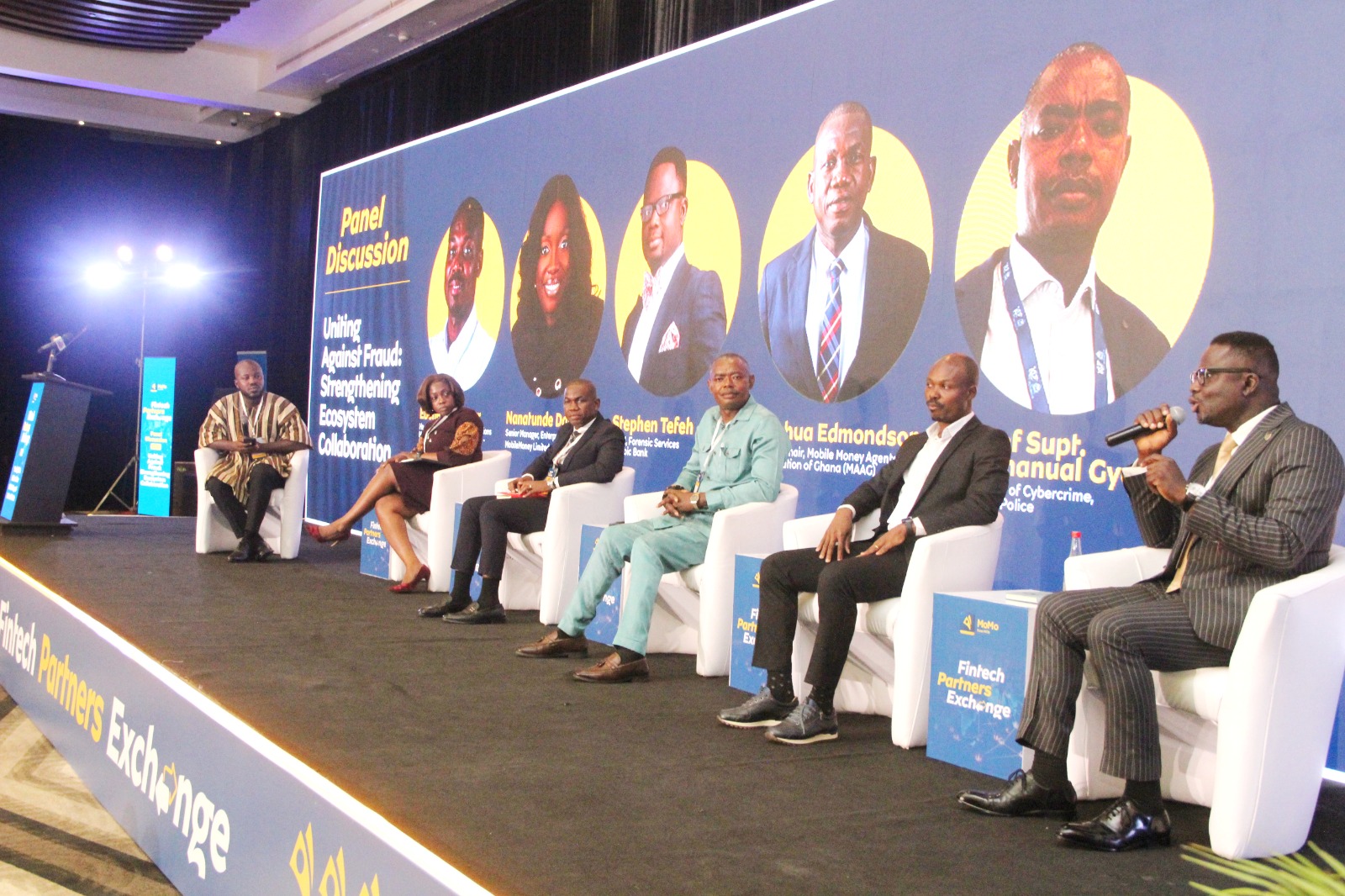
MobileMoney Fintech Limited(MMFL) has held its maiden Fintech Partner Exchange, bringing together key stakeholders across Ghana’s financial services ecosystem in a bid to deepen collaboration, strengthen trust, and build a more coordinated response to the growing threat of digital financial fraud.
The engagement, held under the theme “Uniting Against Fraud: Strengthening Ecosystem Collaboration,” provided a platform for industry leaders, regulators, infrastructure providers, fintech operators, and telecommunications stakeholders to collectively examine emerging fraud patterns and explore practical, system-wide solutions aimed at safeguarding Ghana’s rapidly expanding digital payments ecosystem.
The forum was positioned as a strategic industry dialogue designed not only to review operational challenges within the ecosystem but also to strengthen partnerships, improve communication channels, and align long-term priorities in the fight against increasingly sophisticated financial crime.

MobileMoney CEO Cites Scale of Transactions and Rising Fraud Exposure
Chief Executive Officer of MobileMoney Fintech Limited, Shaibu Haruna, underscored the urgency of strengthening fraud prevention systems by highlighting the rapid expansion of Ghana’s mobile money ecosystem and its growing exposure to digital risks.
He noted that the platform processed about 8.4 billion transactions in 2025 alone, representing an 18 per cent year-on-year increase, reflecting the continued growth of digital financial services in the country.
He further disclosed that an average of 23 million transactions is processed daily, stressing that while this expansion reflects increased financial inclusion and digital adoption, it also significantly widens exposure to fraud risks.
Mr. Haruna said the pervasive and coordinated nature of fraud has required the industry to build more robust systems not only for Mobile Money Fintech Limited but across the entire financial ecosystem.
He explained that fraud has evolved beyond isolated incidents into a complex digital crime ecosystem that spans banks, mobile money platforms, e-commerce systems, and social media channels.
According to him, fraud is no longer confined to a single platform. “It is not a mobile money problem alone, it is a digital crime environment. The attack points have changed it can start from e-commerce, from a compromised WhatsApp account, and then move across platforms before cashing out,” he explained.

Industry Push for Centralised Fraud Command and Real-Time Coordination
Analysts and stakeholders at the forum emphasised that a centralised fraud command centre could serve as a critical missing link in Ghana’s fight against digital financial crime.
They noted that delays in communication between institutions often allow fraudsters to move funds across multiple accounts before detection, weakening the overall response capacity of the ecosystem.
According to discussions at the forum, a unified platform would enable instant alerts, coordinated investigations, and faster intervention, significantly improving the industry’s ability to respond to fraud incidents in real time.
Stakeholders further observed that one of the biggest challenges facing the sector is limited cross-platform visibility, as financial institutions typically have strong internal verification systems but lack real-time access to data across other networks.
By integrating data flows and strengthening intelligence sharing, they noted that a centralised system could close existing gaps and make it more difficult for fraudsters to exploit weaknesses between institutions.
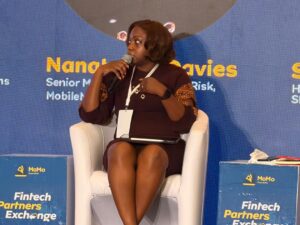
Chief Executive Officer of the Ghana Interbank Payment and Settlement Systems (GhIPSS), Clara B. Arthur, called for stronger collaboration across the financial ecosystem to address the increasingly sophisticated nature of digital fraud.
She noted that fraudsters are now operating in structured and coordinated networks that exploit gaps between institutions, often using repeated low-value transactions and rapid transfers to test system vulnerabilities.
Mrs. Arthur stressed that fragmentation across the ecosystem remains a major challenge, limiting the effectiveness of individual institutional responses.
She called for a shift toward an integrated, intelligence-driven system, supported by real-time information sharing among stakeholders.
She also emphasised the importance of leveraging data already generated within the financial system, adding that artificial intelligence and data analytics could significantly improve early detection of fraudulent activities.
Mrs. Arthur disclosed that GhIPSS is working on a shared fraud analytics and intelligence-sharing framework aimed at improving coordination, response times, and system-wide monitoring.
She further highlighted the importance of strengthening mobile money agents, describing them as a critical frontline defence in the financial ecosystem, and called for continuous training and strict adherence to compliance procedures.

Telecom Sector Calls for Unified Fraud Command System
Chief Executive Officer of the Ghana Chamber of Telecommunications, Sylvia Owusu-Ankomah, described the engagement as timely, given the increasing sophistication of fraud across Ghana’s digital financial ecosystem.
She noted that fraud has evolved into a highly coordinated and technologically advanced activity, requiring a unified response rather than fragmented institutional approaches.
Ms. Owusu-Ankomah explained that coordination gaps between stakeholders continue to create vulnerabilities that are exploited across multiple platforms.
She emphasised the need for stronger collaboration and collective responsibility, particularly in strengthening mobile money agents, whom she described as a “human firewall” in the ecosystem.
She further called for the establishment of a centralised fraud control and command system that integrates real-time monitoring, intelligence sharing, and rapid response mechanisms.
According to her, reliance on historical fraud data is no longer sufficient, as fraud patterns evolve in real time and require immediate automated intervention.
She urged regulators, including the Bank of Ghana, to take the lead in developing a unified framework for real-time data sharing and coordinated enforcement across the sector.
Police CID Calls for Faster Intelligence Sharing and Legal Reform
The Director of Cybercrime at the Criminal Investigations Department (CID) of the Ghana Police Service, Emmanuel Eric Gyebi, called for stronger intelligence sharing and faster access to digital transaction data to enhance the fight against cybercrime.
He raised concerns that existing legal and procedural processes for obtaining digital evidence are often too slow to match the speed at which cybercrime is executed.
Mr. Gyebi explained that delays in investigation processes often allow suspects to evade arrest and enable stolen funds to be moved across multiple platforms.
He stressed that cybercrime response must prioritise both prosecution and recovery of stolen funds, given the speed at which digital transactions occur.
He called for enhanced cooperation between law enforcement agencies, financial institutions, and telecom operators to enable faster access to critical data within legal frameworks.
He also advocated for standby response teams and real-time coordination systems to improve rapid intervention.
Mr. Gyebi further highlighted the cross-border nature of cybercrime, noting that Ghana’s systems must evolve to match global criminal networks.
He concluded that prevention, supported by real-time intelligence sharing and faster institutional coordination, remains the most effective approach to combating cybercrime.
MAAG Chair Calls for Faster Response and Stronger Collaboration to Curb Digital Fraud
Board Chair of the MobileMoney Agents Association of Ghana (MAAG), Joshua Edmondson, has called for stronger collaboration, continuous stakeholder education, and faster response systems to address rising cases of digital financial fraud.
He warned that fraud happens within seconds, stressing that delays in response can lead to irreversible financial losses as funds are quickly moved across multiple channels.
Mr. Edmondson called for real-time intervention systems to ensure fraud reports are addressed immediately.
He also backed the proposed centralised fraud command centre, describing it as a key step that requires strong cooperation among industry players to be effective.
Beyond systems, he stressed that education remains critical in preventing fraud, urging intensified training and engagement of mobile money agents as frontline defenders of the financial ecosystem.
Banking Sector Identifies System Weak Points
Head of Forensic Services at Stanbic Bank Ghana, Stephen Tefeh, noted that most fraud cases occur at critical system junctions where funds move between banks, mobile money platforms, and other financial channels.
He explained that these interconnection points represent the most vulnerable areas in the ecosystem and require stronger monitoring and coordination.
Mr. Tefeh stressed that customer awareness and staff training remain essential in addressing fraud risks, noting that many cases are enabled through social engineering tactics.
He explained that victims are often tricked into revealing sensitive information such as One-Time Passwords (OTPs), which allows fraudsters to compromise accounts.
He emphasised that technology alone is not sufficient, as human behaviour remains a key vulnerability.
He concluded that robust system controls, continuous education, and stronger inter-institutional collaboration remain essential to reducing fraud risks.
Hubtel Calls for Shift to Real-Time Fraud Prevention
Head of Internal Affairs (Risk Transactions Monitoring & Revenue Assurance) at Hubtel, Ebenezer Boffour, called for a shift from fraud detection and recovery to prevention through real-time data sharing across the ecosystem.
He proposed the creation of a centralised fraud intelligence database powered by APIs, where institutions can share fraud information instantly.
According to him, such a system would allow real-time verification of flagged numbers and accounts across platforms, preventing repeat fraud incidents.
He noted that current siloed systems limit visibility across institutions, weakening collective fraud prevention efforts.
Mr. Boffour acknowledged legal and trust challenges but stressed that addressing them is critical to building a unified fraud prevention architecture.
READ ALSO: MTN Clinic Unlocks Growth Opportunities for SMEs
He concluded that only a coordinated, technology-driven approach supported by regulatory backing can move Ghana’s financial ecosystem from reactive fraud response to proactive prevention.
Stakeholders at the Fintech Partner Exchange agreed that Ghana’s rapidly expanding digital financial ecosystem requires a unified, intelligence-driven, and technology-enabled response to fraud.
Across all interventions, there was consensus that stronger collaboration, real-time data sharing, enhanced regulatory leadership, and improved public education are critical to safeguarding trust and ensuring the long-term resilience of the country’s digital financial system.
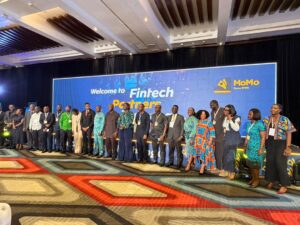
Source: Isaac Kofi Dzokpo
