
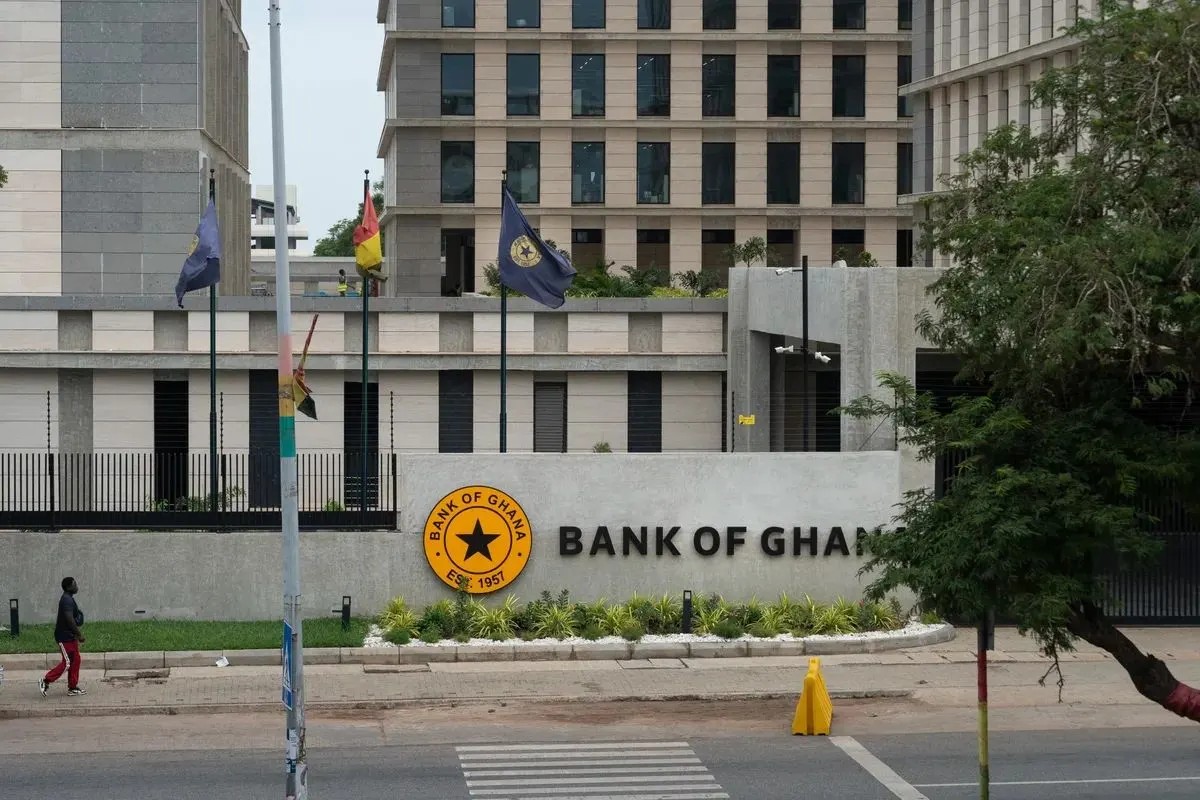
The 2025 financial statements of the Bank of Ghana (BoG) generated significant public debate regarding the financial condition of the central bank and the sustainability of its monetary policy operations.
The Bank reported very large accounting losses, including a comprehensive loss of approximately GH¢34.95 billion, a net operating loss of approximately GH¢15.63 billion, and a deepening negative equity position.
I agree with one important aspect of the Bank’s argument: central banks should not be evaluated solely on the basis of accounting profits and losses. Unlike commercial banks, central banks exist primarily to maintain macroeconomic stability, preserve price stability, anchor inflation expectations, and sustain monetary credibility. Consequently, the more important question is not whether a central bank records accounting losses, but whether it remains operationally capable of implementing credible stabilization policy.
However, I disagree with the Bank of Ghana’s specific attempt to demonstrate policy solvency using its 2025 calculations. The Bank’s reported positive policy solvency position depended heavily on realized gains from gold reserve sales. Once these one-time gains are excluded, the Bank’s own accounting framework shows that recurring operating income was insufficient to fully cover recurring monetary policy implementation costs. Under the Bank’s own accounting framework, the institution would therefore still be policy insolvent.
Nevertheless, I argue that policy solvency should not ultimately be evaluated through narrow accounting calculations alone. Instead, policy solvency should be evaluated through macroeconomic outcomes and the ability of the central bank to credibly and sustainably maintain monetary and macroeconomic stability.
Accounting Losses Are Undeniable
The first point is straightforward and largely uncontested. The Bank of Ghana incurred very large accounting losses in 2025. The financial statements reported:

These figures clearly demonstrate substantial accounting deterioration in the Bank’s balance sheet position. Importantly, these losses cannot simply be ignored or dismissed as irrelevant. Persistent accounting losses can eventually:
· weaken institutional credibility,
· increase fiscal dependence,
· complicate recapitalization needs,
· and reduce confidence in the central bank’s long-run financial position.
Accordingly, the Bank’s accounting losses are both real and significant.
Central Banks Should Not Be Evaluated Solely on Accounting Losses
While the accounting losses are undeniable, it would be incorrect to evaluate a central bank solely on the basis of accounting profitability. Unlike private firms or commercial banks, central banks are not profit-maximizing institutions. Their primary responsibilities include controlling inflation, preserving exchange rate stability and maintaining monetary credibility.
A central bank can therefore incur accounting losses while still successfully achieving its macroeconomic objectives. Indeed, many central banks globally have experienced periods of negative equity, accounting losses or sterilization-related financial deterioration, while still maintaining effective monetary control and policy credibility. Consequently, central banks should be evaluated not solely on accounting profitability, but more importantly on policy solvency.
Policy solvency refers to the ability of a central bank to credibly and sustainably implement monetary policy in a manner consistent with macroeconomic stability. Under this broader framework, accounting losses alone do not necessarily imply policy failure.
Why the Bank of Ghana’s Policy Solvency Calculation Is Problematic
Although the Bank of Ghana was correct to shift the discussion toward policy solvency rather than accounting losses alone, its specific attempt to demonstrate policy solvency in the 2025 report is problematic. The Bank reported:

Using these figures, the Bank argued that operating income exceeded monetary policy implementation costs and therefore concluded that the institution remained policy solvent. However, a closer examination of the composition of operating income reveals a major issue. A substantial portion of the reported operating income came from realized gains on gold sales.

This is critically important. The positive policy solvency position was heavily dependent on one-time realized gains generated through the sale of reserve assets. From a policy solvency perspective, realized reserve asset sales should not be treated as recurring operational monetary income. A central bank cannot sustainably rely on the repeated liquidation of strategic reserve assets to finance recurring monetary policy operations. Once the gold-sale gains are excluded, the Bank’s own numbers imply:

Therefore, under the Bank’s own accounting-oriented framework, the institution would still be policy insolvent. I must emphasize that this disagreement is not with the concept of policy solvency itself, but rather with the Bank’s attempt to classify one-time reserve asset sales as evidence of recurring operational solvency.
How Policy Solvency Should Instead Be Viewed
Policy solvency should not ultimately be evaluated through narrow accounting calculations alone. Instead, policy solvency should be assessed through macroeconomic outcomes and the central bank’s demonstrated ability to maintain macroeconomic stability and monetary credibility. Under this broader framework, several indicators become far more important than accounting profitability alone. These include:
· whether inflation expectations are anchored,
· whether exchange-rate stability is maintained,
· whether fiscal dominance has been reduced,
· whether reserve adequacy has improved,
· and whether the central bank retains monetary credibility.
Using these broader criteria, the Bank of Ghana’s 2025 performance appears considerably stronger. The Bank demonstrated:
· strong commitment to inflation reduction,
· aggressive liquidity sterilization,
· significant exchange-rate stabilization,
· improved reserve adequacy,
