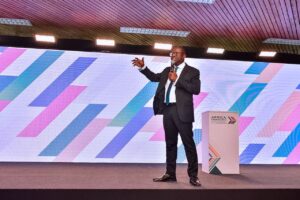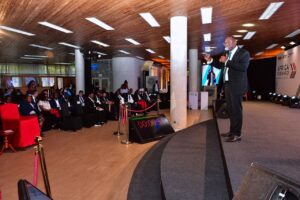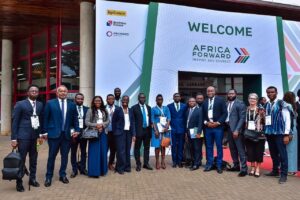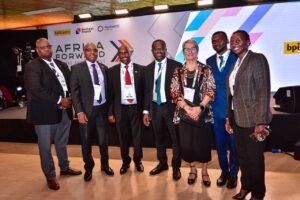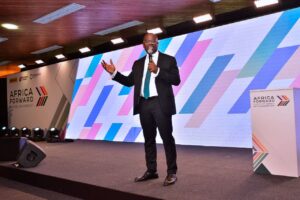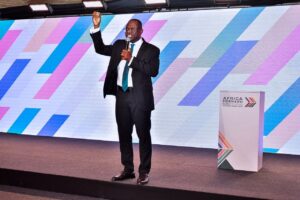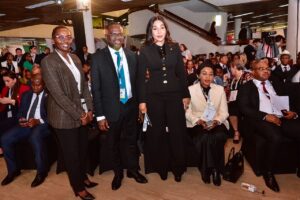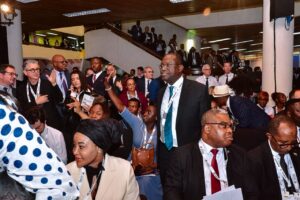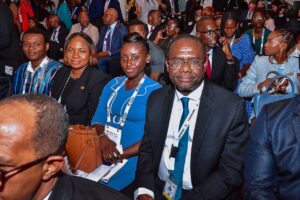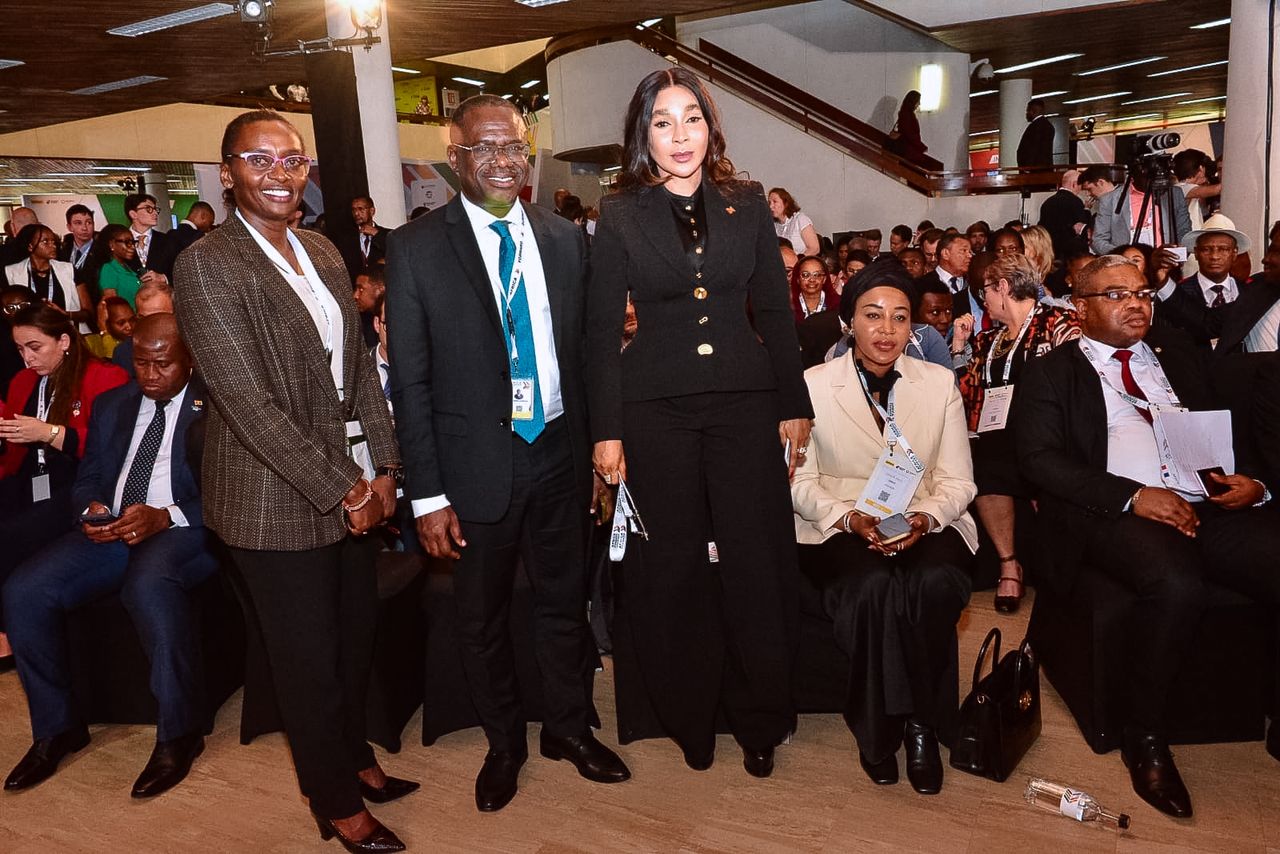
The Executive Chairman of Jospong Group, Dr. Joseph Siaw Agyepong, has urged African leaders to find African solutions for the continent’s development instead of depending on other regions.
He said Africa has the answers to its own problems and called on leaders to unite and drive national growth.
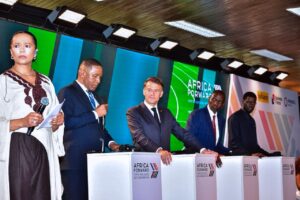
Speaking at the opening of the Africa Forward Summit at the University of Nairobi in Nairobi, Kenya on Monday, May 11, Dr. Agyepong rejected what he described as a mindset that keeps Africans struggling to access capital markets under restrictive conditions.
“Why should Africa export her problems when she can build industries to solve them? Why does Africa not have access to capital markets without tough conditions and restrictions? And why has Africa not yet fully utilised and harnessed the wealth of natural resources and human capital available to her?” he asked, presenting the three questions that have guided every decision he has made.
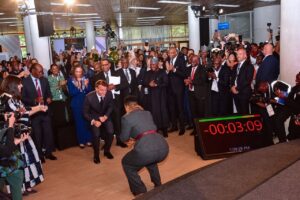
The two-day summit (11-12 May 2026), co-hosted by Kenya’s President William Ruto and France’s President Emmanuel Macron, marked the first Africa-France summit co-chaired with an English-speaking African nation.
Under the theme “To Build Together,” the gathering includes seven thematic pillars ranging from energy transition and AI to blue economy and reform of the international financial architecture.
From $3 and the Streets
Dr. Agyepong revealed his humble beginnings, growing up with sixteen siblings and selling goods at lorry stations and doing whatever he could to survive.
“My initial capital of $3 from my mother as investment launched me into the world of entrepreneurship, birthing resilience and enthusiasm,” he said.
From those footsteps, he told the audience, the Jospong Group has grown into a conglomerate with dozens of subsidiaries across Africa, operating in 29 countries.
Waste: An Unmined Resource, Not a Failure
Addressing the summit’s focus on financial growth through entrepreneurship in waste management, he said each person generates about 0.6 kilogrammes of waste every day. He noted that 20 years ago in Ghana, Accra faced serious flooding and sanitation challenges as waste clogged drains and created public health risks.
That crisis, he indicated, led to the development of a concept built on one key principle: sustainable financing for waste management.
“What Africa lacks is not ideas. It lacks sustainable financing structures,” he said adding that “At Jospong, we have developed a sustainable financing model that operates independently of sovereign guarantees and reduces the burden on governments.
…Today, the company operates in 29 countries and provides solutions in wastewater treatment, solid waste management, hazardous waste, and medical waste. It is among the largest waste management companies on the continent, with 40 to 50 treatment and recycling plants and a dedicated academy to train professionals and build local capacity.
According to the Executive Chairman of Jopsong Group, Africa generates hundreds of millions of tonnes of waste every year, yet only about four per cent was recycled.
“That is not just a statistic. It represents opportunity. It represents jobs, industries, and value waiting to be unlocked,” he said.
“We have developed the systems, the equipment and the expertise to turn waste into a resource. What we are calling for now is partnership. We invite financial institutions, development partners and investors to join us in building an African solution to African challenges.”
A Direct Challenge to Investors and Rating Agencies
Turning to global finance, Dr. Agyepong urged investors to rethink how they assess risk. “Long-term capital put into African circular economy businesses generates returns that short-term models simply cannot match. In waste management, demand never goes down. Investing here is not being generous. It is building a long-term partnership with a continent.”
He warned that “Asians have developed a way and called on development partners to remodel their financial architecture to support African-led solutions. He specifically invited collaboration alongside the African Development Bank, BPI, AFD Group, the International Finance Corporation, European development finance institutions, European EXIM and European ECA.
Call to African Entrepreneurs and Commitment to Expansion
He used the platform to urge Africa’s youth to seize the continent’s vast opportunities and make their mark, noting that Africa is richly endowed with mineral resources.
“To the youth of Africa, this is your time to rise up, challenge yourself, and strengthen yourself. With Africa’s enormous natural resources, you can make an impact,” he said.
On young African entrepreneurs, who make up about 60% of the continent’s population, he called them “our greatest hope and our most urgent responsibility.”
He urged them to become founders and builders leading the digital era in waste management.
Dr. Agyepong committed Jospong Group to open collaboration, co-investment and leading continent-wide conversations on circular economy financing. He said Africa must define its solutions on its own terms through collaboration, co-investment, and innovation.
“The green economy is not coming to Africa. We are building it. The invitation is open to all who choose to build with us,” he said. “Africa’s story is being written right now, in this room. When historians look back at this time, they will not see a continent held back by its challenges. They will see the moment Africa chose to turn its greatest challenges into its greatest industries.
Waste is not Africa’s shame and added that waste is Africa’s next frontier,” he stressed.
President William Ruto of Kenya welcomed delegates with a personal note, saying he first came to the KICC grounds on 14th July, 1987 as a student at the University of Nairobi.
“This place is home, so to all of you visiting, welcome home,” he said.
President Ruto said Kenya has positioned sports as a pillar of the Bottom-Up Economic Transformation Agenda, stressing that Africa’s youth population of over one billion under 35 is a historic opportunity to build a dynamic sports economy. “Sports can no longer be viewed as recreation alone. It is industry, infrastructure, investment, culture, diplomacy, technology, tourism, and jobs,” he said.
He outlined Kenya’s plans ahead of AFCON 2027 under the Pamoja partnership with Uganda and Tanzania, including Talanta Sports City, upgrades to Kasarani and Nyayo stadia, and 27 new stadia nationwide designed as full ecosystems with ICT hubs, film studios, and creative spaces.
The President also announced a $130 million agreement with Zaria Group to build a modern arena and entertainment district in Nairobi Railway City and another at Bomas of Kenya.
“The time is now. The opportunity is here,” he concluded.
The French President Emmanuel Macron, who opened the summit, announced €23 billion ($27 billion) in investment for Africa to secure the continent’s future.
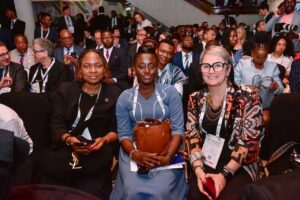
Also present at the summit were the Chairperson of the African Union Commission, nearly 30 CEOs from Africa and France, tech and innovation leaders and some 400 youth delegates whose voices are integrated into the final declaration.