
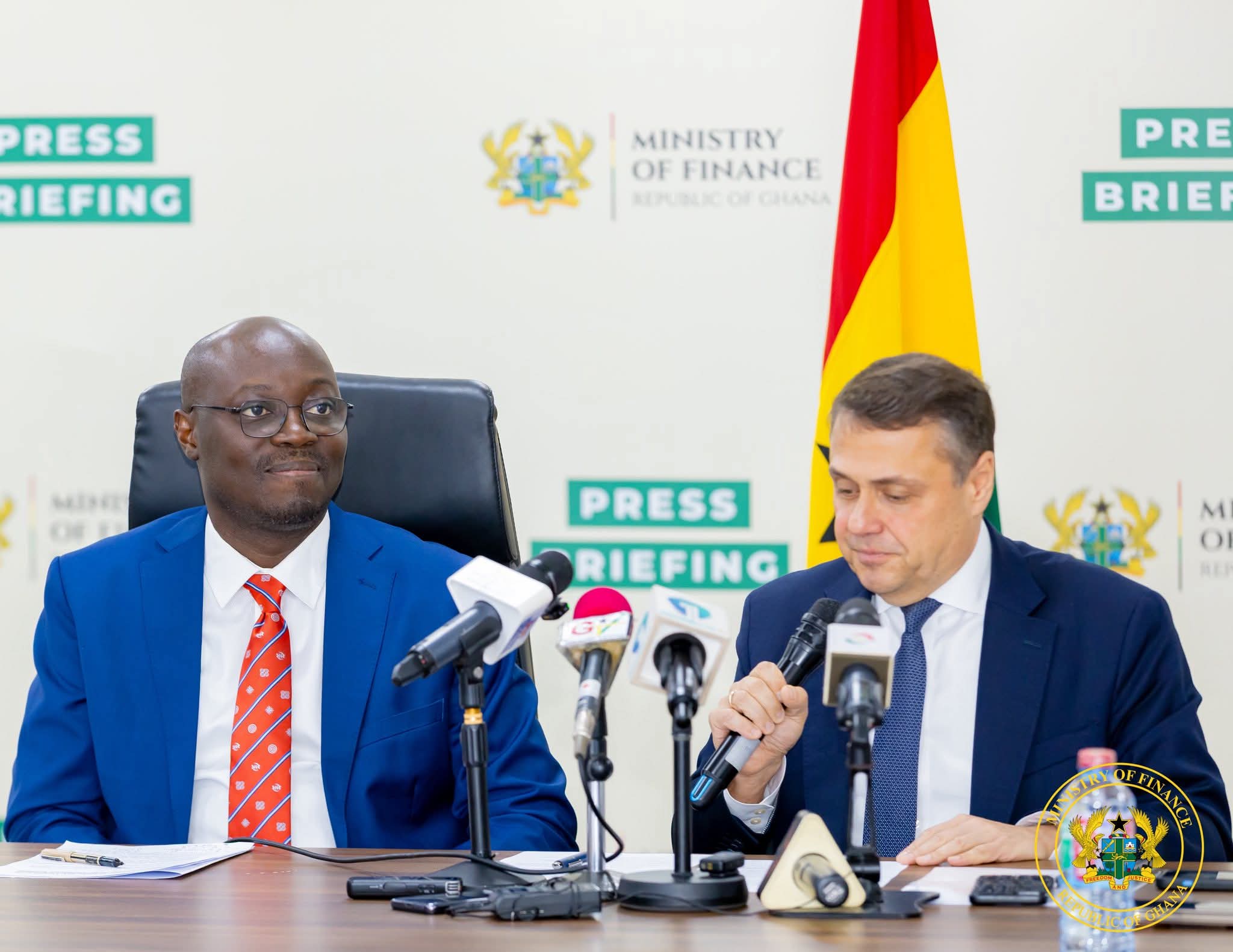
Ghana has officially exited its three-year $3 billion bailout programme with the International Monetary Fund after completing the Extended Credit Facility (ECF) arrangement aimed at restoring macroeconomic stability and debt sustainability.
Finance Minister Dr Cassiel Ato Baah Forson announced on Thursday that the government would now transition to a new Policy Coordination Instrument (PCI) agreement with the IMF to sustain economic reforms and strengthen investor confidence.
Speaking after the IMF concluded its 2026 Article IV Consultation and reached a Staff-Level Agreement with Ghana on the sixth review of the ECF programme, Dr Forson described the development as a major milestone in the country’s economic recovery efforts.
“The Government of Ghana announces the successful conclusion of its Extended Credit Facility financial bailout programme with the International Monetary Fund. Going forward, Ghana will engage with the IMF Policy Coordination Instrument,” he stated.
According to the Finance Minister, the IMF-supported reforms helped stabilise the economy through fiscal discipline, expenditure rationalisation and structural adjustments implemented over the past three years.
He said the measures had produced significant improvements, including declining inflation, a stronger cedi, reduced public debt levels and a rebound in economic growth.
Dr Forson clarified that unlike the ECF bailout arrangement, the new PCI programme would not provide direct financial support to Ghana but would instead serve as a policy support framework to deepen reforms and boost market confidence.
“For the avoidance of doubt, the PCI does not provide financial bailout, but will offer continuous capacity development, confidence boost to the market, and deliver a catalytic effect for fresh financing to Ghana,” he explained.
The Minister commended Ghanaians, bilateral creditors, investors and the Official Creditor Committee for supporting the country’s economic recovery process.
READ ALSO: Otumfuo: Ghana Must Prioritise Enterprise and Innovation
Meanwhile, Ruben Atoyan of the IMF African Department said Ghana’s successful completion of the programme reflected growing confidence in the country’s economic direction and reform agenda.
He stressed the need for continued fiscal discipline, transparency and stronger governance systems to safeguard the gains achieved under the programme.
“Building resilience against global shocks and commodity price volatility will require stronger financial frameworks and buffers,” he said, adding that government must maintain focus on private sector growth and institutional strengthening.
