
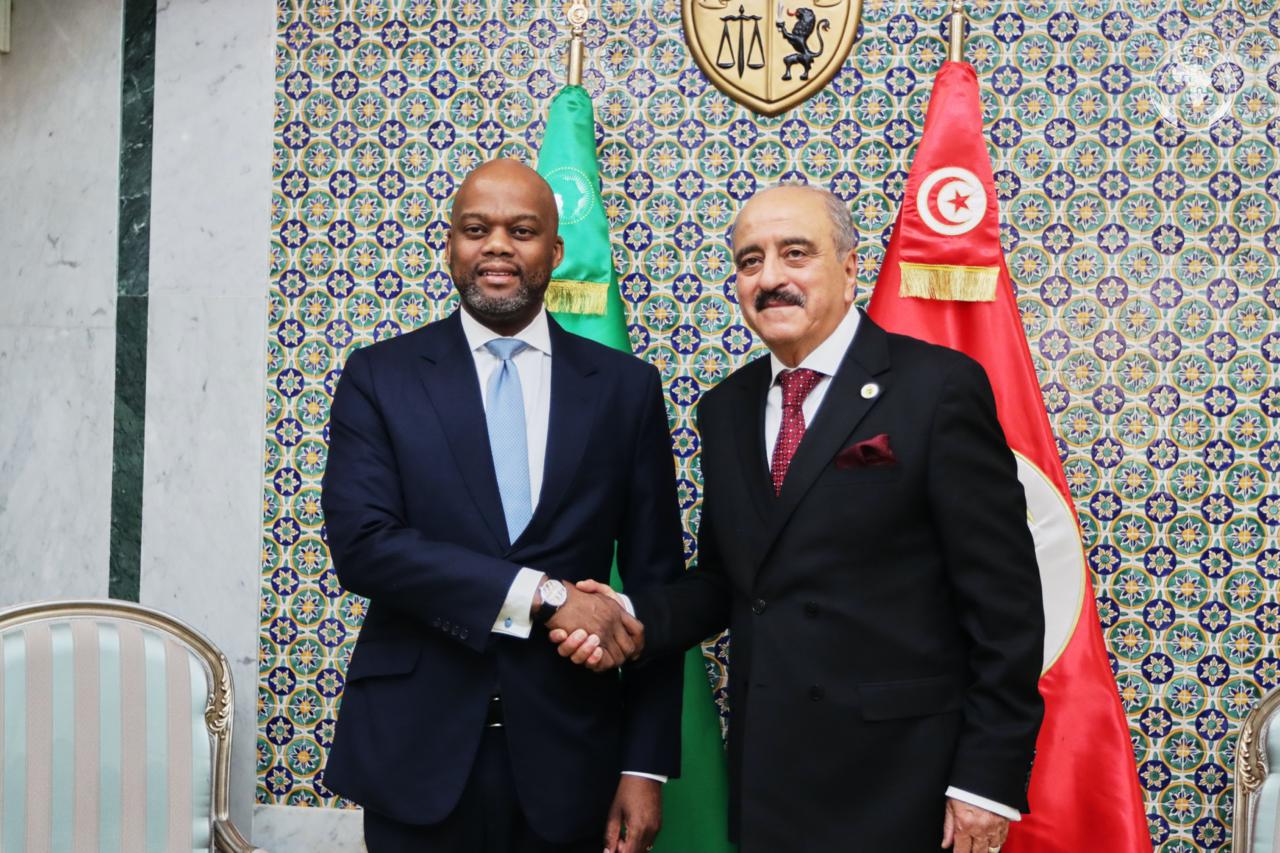
The Secretary-General of the African Continental Free Trade Area (AfCFTA), Wamkele Mene, has concluded a two-day official visit to Tunisia, ending with an agreement on a comprehensive action plan aimed at strengthening Tunisia’s trade relations across Africa.
The visit, which took place from June 11 to 12, 2026, focused on deepening cooperation between the AfCFTA Secretariat and the Tunisian government while identifying practical measures to increase the country’s participation in continental trade.
During the mission, Mene held discussions with Tunisia’s Minister of Foreign Affairs, Migration and Tunisians Abroad, Mohamed Ali Nafti, and the Minister of Trade and Export Development, Samir Abid. He also engaged members of the African diplomatic community in Tunis, met representatives of the Tunisian private sector at the Export Promotion Centre (CEPEX), and addressed the media at a closing press conference.
Mene praised Tunisia for being among the leading African countries in implementing the AfCFTA Agreement. Since ratifying the agreement in 2020, Tunisia has participated in the Guided Trade Initiative and has fully domesticated its tariff schedule, enabling preferential trade under the continental framework.
According to the AfCFTA Secretariat, Tunisian authorities have issued more than 300 AfCFTA certificates of origin, facilitating increased trade by Tunisian businesses with partners across Africa.
The Secretary-General commended Tunisia’s active contribution to AfCFTA negotiations and highlighted the importance of the strong partnership between the Secretariat and the Tunisian government.
A major focus of the visit was the role of the private sector in translating the agreement’s objectives into tangible economic benefits. During discussions with business leaders, Mene stressed the need for Tunisian companies to identify new export and import opportunities across African markets.
He also highlighted key trade facilitation tools available under the AfCFTA, including the Pan-African Payment and Settlement System (PAPSS), which allows businesses to conduct transactions in local currencies, as well as digital platforms designed to improve business connectivity and market intelligence.
The agreed action plan will focus on improving transport and logistics, developing a trade corridor linking the Sahel region to the Mediterranean, increasing private-sector participation, and raising awareness of AfCFTA opportunities.
“The African continent is open for business for Tunisia, beyond COMESA,” Mene said, encouraging Tunisian exporters to diversify into new African markets.
He further emphasized that the continental trade agreement has moved beyond negotiations and is now delivering practical results.
“The AfCFTA is no longer a negotiation. It is an operating reality, and Tunisia is among the countries proving it works,” he stated.
Mene also confirmed that he will return to Tunisia later this year for the Tunisia Investment Forum and the Tunisia–Africa Business Forum, reaffirming the Secretariat’s commitment to supporting the country’s continental trade ambitions.
The AfCFTA, a flagship project of the African Union’s Agenda 2063, entered into force in 2019, with trading under the agreement beginning in January 2021. Headquartered in Accra, Ghana, the AfCFTA Secretariat is responsible for coordinating the implementation of the continent-wide free trade agreement, which has been signed by 54 African Union member states.
