
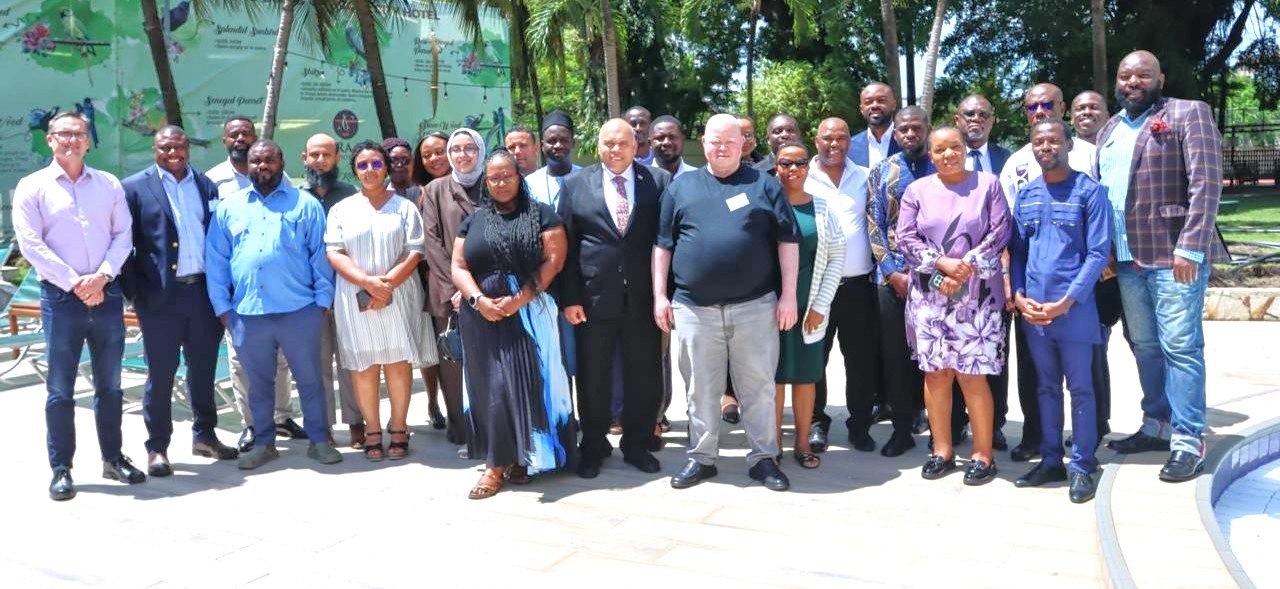
With Africa’s vehicle sales surging 22 percent over the past year, continental leaders have convened in Ghana to shift gears: transitioning Africa from a dumping ground for the world’s second-hand cars into a formidable automotive manufacturing powerhouse.
The officials are in the middle of a five-day “Automotive Seminar Week” that kicked off Monday in Accra, the opening leg of an eight-week Executive Short Course (ESC) built specifically for senior African Union government officials looking to take advantage of Africa’s automotive production opportunities. It’s the second time the course has been ran and this round focusing on procurement and trade administration.
The programme is organised by the the African Continental Free Trade Area (AfCFTA) Secretariat in collaboration with the African Association of Automotive Manufacturers (AAAM), and the African Export–Import Bank (Afreximbank). The goal is to give officials a deep enough understanding of automotive production and value-chain dynamics to drive industrialisation forward.
The full eight-week programme runs from June 15 to August 7 in three stages. After the Accra seminar wraps Friday, participants face roughly seven weeks of an online Automotive Policy and Strategy Assignment under academic guidance, before regrouping for a “learning consolidation and best practice” study week in Durban, South Africa, from August 3 to 7.
Delivering the course is the Toyota Wessels Institute for Manufacturing Studies (TWIMS), with the sessions led by Justin Barnes and Mbongeni Ndlovu. Officials who make it through all eight weeks walk away with a TWIMS-accredited Course Completion Certificate. Afreximbank is bankrolling the programme as main sponsor, with carmakers Toyota, Isuzu and Volkswagen also throwing in support.
Monday’s opening session laid the groundwork: how the global automotive value chain is actually structured, the political economy behind who builds and buys the world’s cars, and the disruptive forces.
Currently, the Sub-Saharan market relies heavily on foreign cast-offs, with used imports comprising 83 percent of all light-duty vehicle registrations. Africa is effectively acting as a global clearinghouse for aging fleets, predominantly from Japan. Despite boasting the world’s fastest-growing vehicle market, hitting 1.29 million units sold in 2025, the continent remains a nascent producer compared to global giants like China and the United States, producing only a fraction of the 96.4 million vehicles manufactured globally last year.
The rigorous programme kicked off with an Automotive Seminar Week in Accra, focusing on the micro, meso, and macro-economic factors required for competitive production. Crucially, the training goes beyond theory. Officials will be embarking on a six-week online syndicate assignment to draft targeted automotive policy, trade, and regulatory frameworks for selected national or regional economies.
This collaborative initiative, supported by industry heavyweights including Toyota, Isuzu, and Volkswagen, will culminate in August in Durban, South Africa. During the final “Learning Consolidation and Best Practice Week,” officials will undergo a deep immersion, touring advanced assembly plants, component manufacturers, and technology centres, before presenting their newly developed policy recommendations.
As global mobility transforms, this AfCFTA initiative signals a clear mandate: Africa is racing to ensure it is no longer just a destination for the world’s aging vehicles, but a competitive driver in the future of global automotive production.
