
Economic history demonstrates that transformative industries are rarely built through fragmented financing or short-term investment horizons.
Instead, successful industrial projects depend on patient capital, institutional backing and sustained investor confidence. Ghana’s salt industry, particularly the Ada Songor Salt Project, exemplifies such an opportunity.
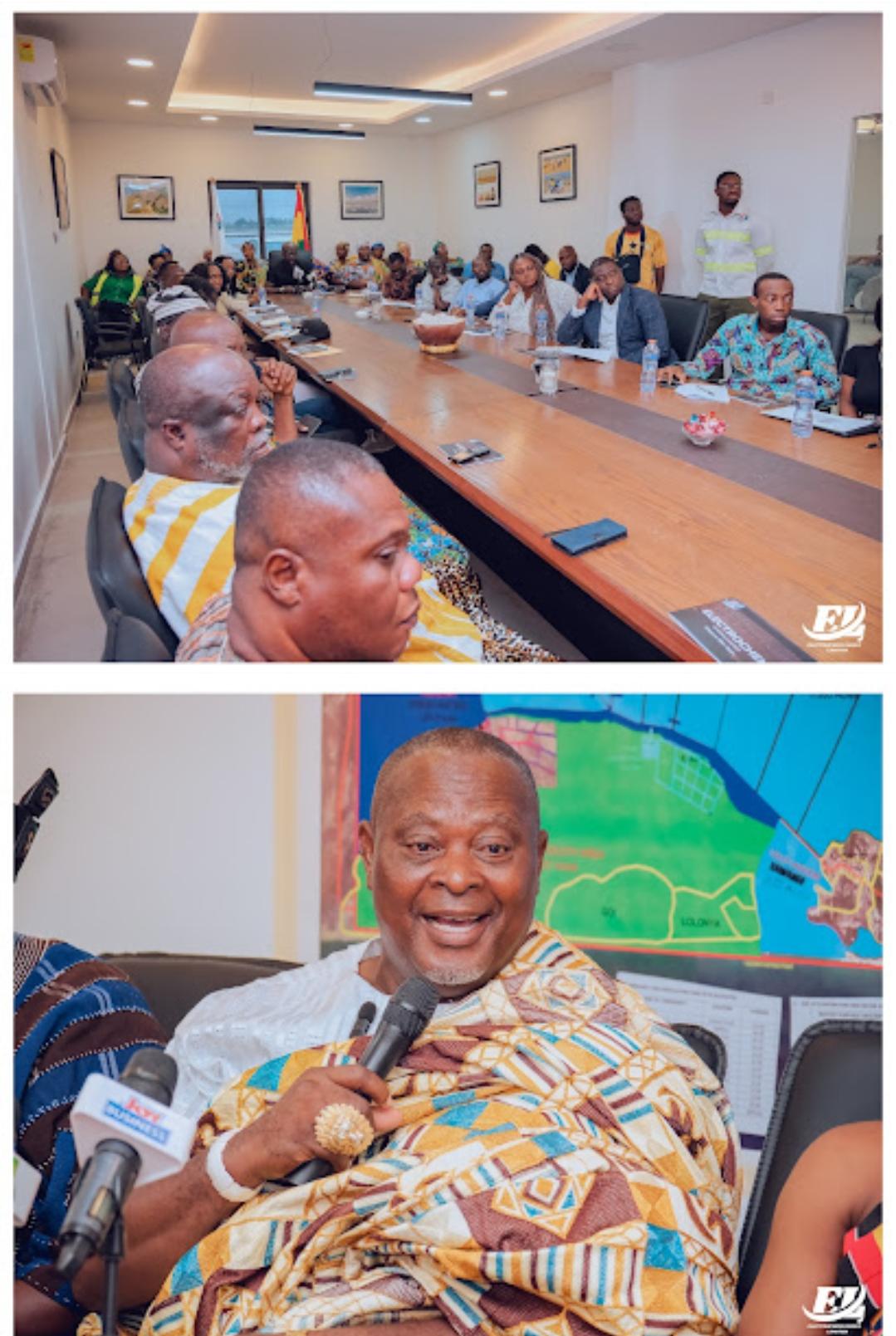
Civil society groups participating in recent stakeholder engagements with Electrochem Ghana Limited have highlighted the enormous economic potential embedded within the Songor Salt Project.
Their assessment is straightforward: Electrochem Ghana Limited has created the foundational infrastructure necessary for large-scale industrial salt production, but unlocking its full value requires additional capital support.
The global salt industry is a multi-billion-dollar market, while West Africa continues to import significant quantities of industrial salt despite possessing abundant natural resources.
Ghana, with the Songor resource base, possesses a unique comparative advantage capable of serving regional markets and reducing dependence on imports.
MIIF’s original investment was designed to catalyse this transformation by helping Electrochem scale operations, expand production capacity and create an integrated industrial ecosystem.
The project’s long-term vision includes refining, chemical processing, logistics infrastructure and export-oriented manufacturing, all of which have multiplier effects across the national economy.
CSOs contend that while operational challenges may exist, these should not be mistaken for evidence of investment failure.
Large-scale mining and industrial projects often experience periods of capital intensity before generating substantial returns.
What matters is whether the underlying asset remains viable, strategic and capable of producing long-term economic value. In the case of Songor, the answer remains overwhelmingly positive.
The policy response should therefore focus on recapitalization, governance strengthening and operational support rather than investment withdrawal.
Additional equity participation from MIIF, combined with strategic private-sector partnerships, can help Electrochem accelerate its growth trajectory and maximize the economic benefits of the Songor resource.
Ghana stands at a crossroads.
It can either continue exporting opportunities through underdeveloped resources or deliberately invest in industries capable of transforming the economy. The recapitalization of Electrochem is not simply a corporate financing decision, it is a national development imperative.
