
Story By: Felix Ernest Odamtten & Muhammad Faisal Mustapha..
The Driver and Vehicle Licensing Authority (DVLA) has reinforced its long standing partnership with Ghana’s traditional authorities through high level courtesy visits to the palaces of the Chief of Hansua in Techiman and the Paramount Chief of Wenchi, highlighting the indispensable role of traditional leadership in advancing road safety, infrastructure development and efficient public service delivery. The engagements reflected a shared commitment to accelerating development while promoting responsible road use across the country.
Leading the delegation was the Chief Executive of the DVLA, Mr. Julius Neequaye Kotey, who described the visits as an important milestone in strengthening collaboration between the Authority and traditional institutions. He stressed that the success of national development initiatives depends significantly on strong partnerships with local communities and their respected custodians.
“Road safety is a shared national responsibility, and traditional leaders remain among our strongest partners in changing attitudes and saving lives.” Hon. Julius Neequaye Kotey.
The first stop took the delegation to the palace of Nana Apenteng Fosu Gyeabour II, Chief of Hansua in the Techiman area, where the DVLA team received a warm traditional welcome from the chief and members of his royal council. The visit served as an opportunity to express gratitude for the enduring support the traditional authority has extended to the Authority over the years.
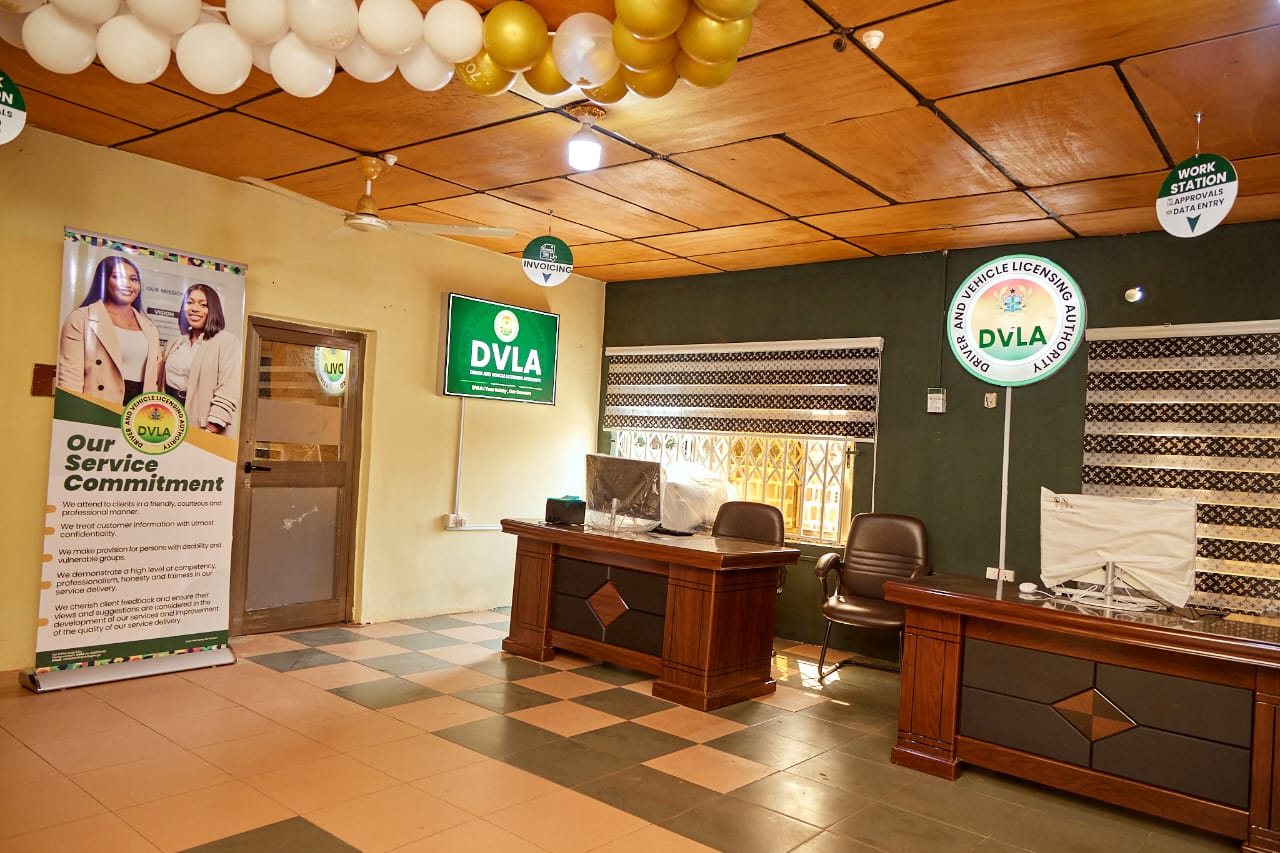
Hon. Kotey conveyed the Authority’s profound appreciation to Nana and the people of Hansua for donating land that made possible the construction of the Techiman DVLA office. He noted that the generous gesture demonstrated the confidence traditional authorities have placed in the DVLA’s mission of bringing essential licensing and vehicle registration services closer to citizens.
Although construction of the facility has recorded significant progress, the Chief Executive acknowledged that additional work remains before the office reaches its full operational potential. He reaffirmed the Authority’s determination to complete the project and further improve the quality, accessibility and efficiency of services available to residents within the Bono East enclave and surrounding communities.
Looking beyond infrastructure, Mr. Kotey unveiled plans to establish modern driving test grounds alongside a dedicated driving school in Techiman. According to him, the initiative will strengthen practical driver training, improve licensing standards and equip new motorists with the competence required to navigate Ghana’s increasingly busy road network safely.
The DVLA Chief Executive also appealed to traditional leaders to intensify public education campaigns on road safety, particularly encouraging motorcyclists to wear protective helmets at all times. He described traditional authorities as trusted voices capable of influencing behavioural change and helping reduce preventable road traffic fatalities within their jurisdictions.
“Road safety is a shared national responsibility, and traditional leaders remain among our strongest partners in changing attitudes and saving lives.” Hon. Julius Neequaye Kotey.
Hon. Kotey further commended Nana Apenteng Fosu Gyeabour II for his visionary leadership and unwavering commitment to community development. He prayed for continued wisdom, strength and good health for the chief as he continues to guide the people of Hansua toward sustainable progress.
Responding on behalf of the traditional council, Nana Apenteng Fosu Gyeabour II welcomed the delegation and expressed satisfaction with the steady progress made since the donated land was handed over to the Authority. He described the ongoing construction as visible evidence of what can be achieved when government institutions and traditional leadership work together in mutual trust and respect.
The DVLA delegation later proceeded to the Wenchi Palace, where they paid a courtesy call on Osagyefo Ampem Anye Amoampong Tabrako III, Paramount Chief of Wenchi. The traditional ruler warmly received the delegation and praised the Authority’s commitment to decentralising public services while improving operational efficiency across Ghana.
During the engagement, the Paramount Chief commended the performance of the Wenchi DVLA office, describing it as one of the Authority’s most outstanding branches nationwide. He also praised the introduction of the new vehicle number plate initiative, noting that the programme contributes significantly to enhanced vehicle identification, public safety and effective law enforcement. He pledged the unwavering support of the Wenchi Traditional Council for the Authority’s future programmes.
“Development flourishes where institutions and traditional leadership move together with a common purpose.” Osagyefo Ampem Anye Amoampong Tabrako III.
Expressing gratitude for the continued cooperation of the Wenchi Traditional Authority, Hon. Kotey observed that the establishment and expansion of DVLA services create direct and indirect employment opportunities while stimulating economic activity within host communities. He reaffirmed the Authority’s commitment to delivering innovative and customer centred services that meet the expectations of the Ghanaian public.
“Development flourishes where institutions and traditional leadership move together with a common purpose.” Osagyefo Ampem Anye Amoampong Tabrako III.
The twin visits underscore a broader national strategy by the DVLA to build enduring partnerships with traditional authorities as key stakeholders in development. Across Ghana, chiefs continue to play a pivotal role in facilitating land acquisition, promoting public education and fostering community ownership of national projects that improve citizens’ lives.
As Ghana advances its agenda of modernising transport administration and strengthening road safety, the collaboration between the DVLA and traditional institutions stands as a powerful example of how heritage, leadership and public service can converge to deliver lasting national progress. The engagements in Techiman and Wenchi reinforce the belief that sustainable development is best achieved through partnerships built on trust, mutual respect and a shared vision for the future.
