

The General Manager for HR Operations and Analytics at MTN Ghana, Abdallah Ibrahim, has urged graduates and young professionals to continuously upgrade their skills and remain adaptable as technology rapidly transforms jobs and reshapes the competencies required by employers.
He said academic qualifications remained important, but possessing a university degree alone was no longer enough to guarantee employment in an increasingly competitive and technology-driven labour market.
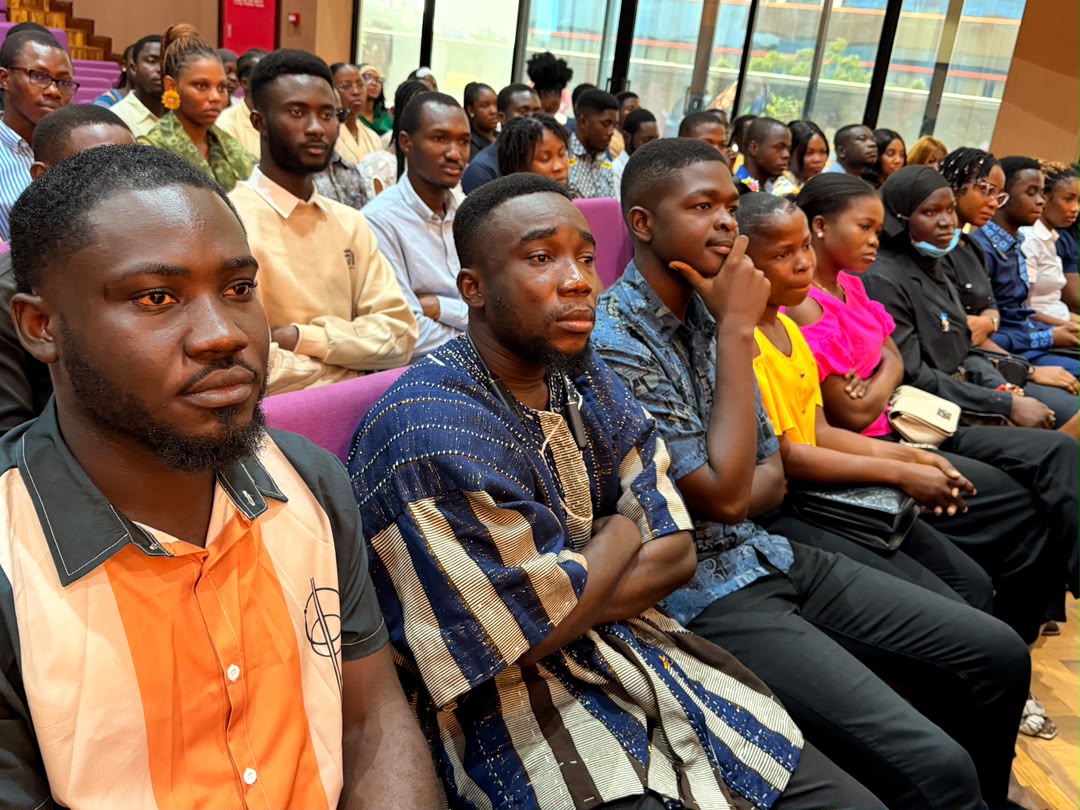
Mr Ibrahim made the remarks at the launch of the MTN Bright Scholars Network in Accra, where he challenged young people to look beyond their academic qualifications and deliberately develop skills that would keep them relevant as industries and professions evolve.
“You are not defined by your first degree. The world of work is changing quite significantly, and there has never been a time where technology’s influence on jobs has been more critical than now,” he said.
He said the speed of technological change meant that some traditional roles were evolving while new career opportunities were emerging, requiring graduates to embrace continuous learning throughout their professional lives.
According to him, young people who remain curious, adaptable and willing to acquire new competencies would be better positioned to take advantage of emerging opportunities.

Look Beyond Your First Degree — Ibrahim
Drawing on his own professional journey, Mr Ibrahim said graduates should not allow their first university degree to permanently define their career choices.
He said although he initially studied accounting, his professional journey eventually took him into human resources, operations and analytics, demonstrating that career paths could evolve considerably after university.
He encouraged graduates to be open to opportunities outside their original fields of study and to develop complementary skills that could make them valuable across different sectors.
With more than 100,000 graduates entering Ghana’s labour market annually, Mr Ibrahim said competition for available opportunities required young people to distinguish themselves through specialised knowledge, practical experience and relevant skills.
He said employers were increasingly interested not only in academic certificates but also in what prospective employees could practically contribute to their organisations.
For graduates, he said, this meant deliberately identifying emerging skills gaps and positioning themselves to meet changing business needs.
MTN Transitioning to Digital Platform Business
Mr Ibrahim said MTN Ghana’s own transformation illustrated how technological change was reshaping businesses and their workforce requirements.
He explained that MTN was evolving from a traditional telecommunications operator into a digital platform business, with the transition creating demand for a broader range of skills.
While traditional professionals such as telecommunications engineers and accountants remained relevant to the business, he said the company increasingly required talent capable of using technology, data and digital tools to solve problems, improve customer experience and support business growth.
He identified data analytics, cybersecurity, product management and User Experience/User Interface (UX/UI) design as some of the areas presenting growing career opportunities.
The development, he said, should encourage students and graduates to broaden their understanding of the telecommunications industry, which increasingly requires professionals from diverse technical and business backgrounds.
Data Creating New Career Opportunities
Mr Ibrahim highlighted data analytics as one area that had become increasingly important to businesses as companies seek to better understand customers and make informed commercial decisions.
Citing MTN’s Customer Value Management (CVM) operations, he said specialised data professionals analyse customer information and transform it into insights that can help the business identify opportunities and improve services.
He said such roles demonstrate how technology was creating career opportunities that may not traditionally have been associated with telecommunications.
Young people, he added, must therefore pay attention to how industries are changing and develop skills that could position them for emerging roles rather than focusing solely on conventional career paths.
Gain Experience Before Graduation
Mr Ibrahim also urged university students to seek practical industry experience early rather than waiting until they had completed their studies or begun national service.
He encouraged students to pursue internships and other opportunities that expose them to real workplace environments while they are still in school.
According to him, early industry exposure could help students understand what employers expect, identify gaps between classroom knowledge and workplace requirements, and develop practical competencies before entering the labour market full-time.
He also encouraged young people to deliberately build professional networks, noting that relationships developed through internships, industry engagements and other professional platforms could expose them to career opportunities and mentorship.
Multiple Pathways Into MTN
Mr Ibrahim highlighted a number of pathways through which students and young graduates could gain experience and potentially build careers with MTN Ghana.
These include the company’s annual internship programmes, national service placements and graduate development trainee schemes.
He said the graduate programmes provide opportunities in areas such as data science, engineering and digital product development, reflecting the changing skills required as the business expands its digital capabilities.
He encouraged students to take advantage of such opportunities to gain practical experience and better understand the demands of the corporate environment.
Continuous Learning Key to Staying Relevant
Mr Ibrahim stressed that learning should not end after university, particularly at a time when technological advances are changing the nature of work.
He urged graduates to use digital learning resources, professional networks and other opportunities available to continuously strengthen their competencies.
He said the ability to learn, unlearn and acquire new skills would become increasingly important as technology changes existing occupations and creates entirely new career opportunities.
For young professionals, he said, adaptability should therefore be viewed as a long-term career asset rather than merely a response to difficulty finding a first job.
READ ALSO:MTN Prioritises Human Capital for Sustainable Growth
The MTN Bright Scholars Network, at whose launch Mr Ibrahim spoke, brings together more than 1,200 beneficiaries of the MTN Bright Scholarship programme and is intended to provide a platform for mentorship, professional networking, career development and community service.
The Network is also expected to help beneficiaries share employment opportunities, mentor younger scholars and build professional connections as they transition from tertiary education into their respective careers.
Source: Isaac Kofi Dzokpo
