
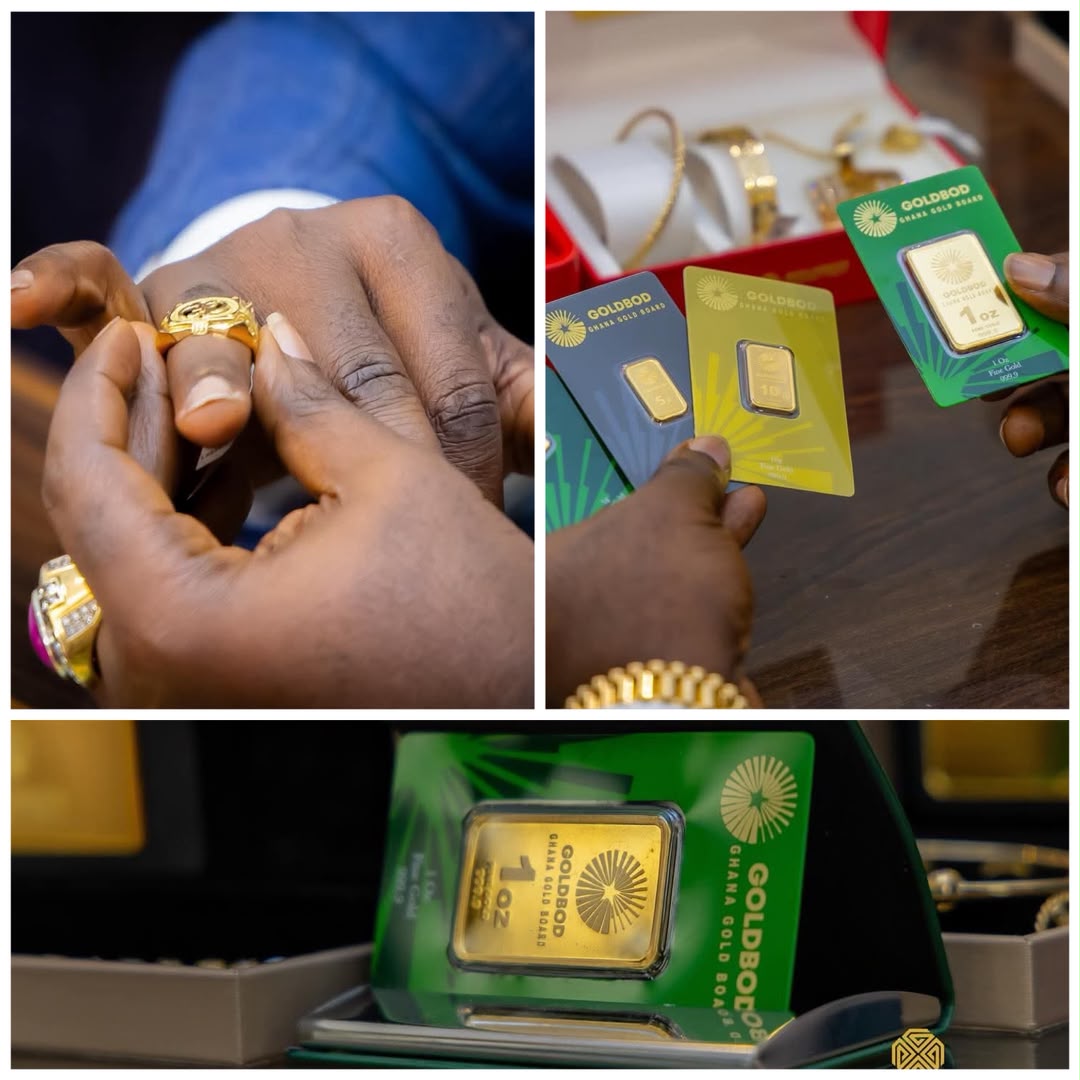
In a major move toward economic inclusion, the Ghana Gold Board (GoldBod) is preparing to launch a national gold tokenisation initiative in 2027, enabling everyday Ghanaian citizens and African retail investors to acquire fractional ownership in physical gold reserves with minimal capital.
Speaking at the National Mining Dialogue in Accra under the theme “Rethinking the Social License to Operate,” GoldBod Chief Executive Officer Sammy Gyamfi outlined the strategy as a key pillar in transitioning Ghanaians from passive spectators to active equity holders in the domestic mineral economy. By converting gold assets into security-backed digital tokens, the program eliminates high entry barriers, allowing small-scale investors to directly benefit from the nation’s primary export commodity.
This digital financial pivot aligns with GoldBod’s broader campaign to restructure Ghana’s gold value chain from pure extraction to complete domestic retention. To curb revenue leakage and secure asset transparency, construction will commence in November 2026 on an ultra-modern, ISO-certified National Assay Laboratory at Accra’s Aviance Cargo Village, giving the state independent, world-class capacity to perform gold-standard fire assay testing on all gold output prior to export. Simultaneously, domestic processing is expanding through the planned Ghana Gold Village—a hub dedicated to local refining, jewellery fabrication, and international market integration—building on the nearly nine tonnes of gold already refined within Ghana this year.
The strategy also reinforces local dominance in primary production. In 2025, Ghana produced 5.94 million ounces of gold, generating $20.2 billion and making up 63.1 per cent of the country’s $32 billion total merchandise exports. Crucially, artisanal and small-scale mining (ASM) generated 3.11 million ounces—52.4 per cent of total national output—marking the first time in over a century of commercial mining that small-scale local miners outproduced large-scale corporate operations. By formalising ASM channels, GoldBod has facilitated the official export of over 170 tonnes of small-scale gold since 2025, injecting $17 billion in foreign exchange into the economy to stabilize reserves and support the cedi.
To ensure long-term sustainability, GoldBod’s Mining Support Programme is de-risking geological exploration by funding state surveys in Funsi and Bensere alongside the Ghana Geological Survey Authority, positioning the board to negotiate equity stakes in upcoming model mines. By integrating fractional digital ownership, domestic refining capacity, rigorous assay standards, and local exploration backing, GoldBod aims to transform Ghana’s gold resources into a direct driver of widespread, inclusive domestic prosperity.
