
Story By: Felix Ernest Odamtten / Muhammed Faisal Mustapha….
The National Anti-Illegal Mining Operations Secretariat (NAIMOS) has intensified its environmental monitoring efforts with a follow-up inspection of degraded mining sites at Apedwa and Akyem Muoso, recording significant progress in the restoration of areas affected by illegal mining activities.
The latest inspection comes after earlier enforcement operations in the two communities resulted in the arrest of two suspects allegedly connected to activities that caused damage to the surrounding land and water resources.
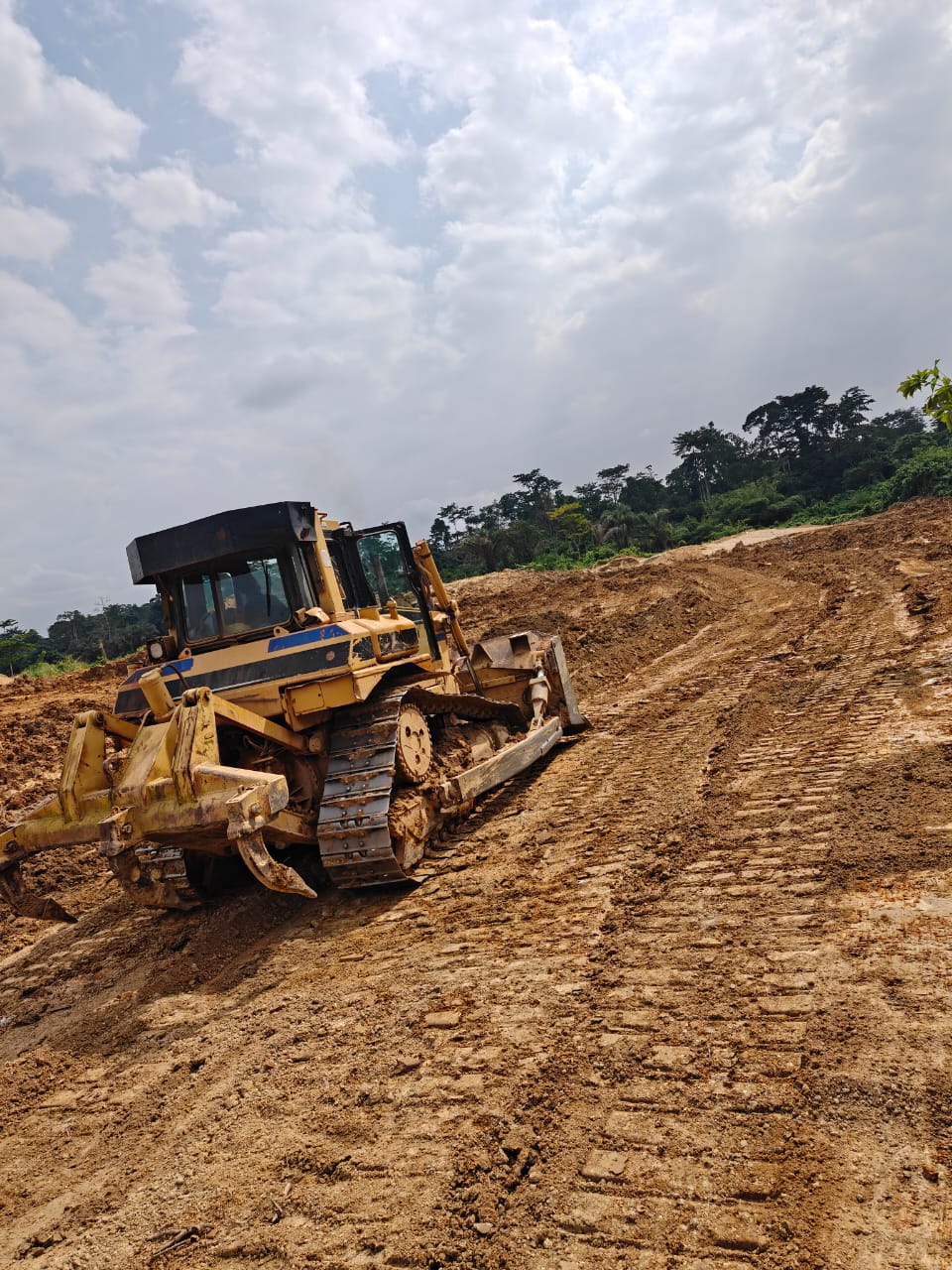
At Apedwa, the inspection team observed substantial progress in reclamation, with approximately 80 per cent of the degraded area restored and work continuing on the remaining portion.
The development represents an important step in the effort to move beyond arrests and enforcement towards ensuring that damaged landscapes are physically restored and returned to productive use.
At Akyem Muoso, reclamation work has also commenced, although the pace of restoration remains comparatively slower than that recorded at Apedwa.
The suspect involved in the Akyem Muoso case reportedly requested additional time to complete the reclamation, explaining that delays were partly associated with his earlier detention following the enforcement action.
NAIMOS, however, has maintained that restoration obligations remain essential to addressing the environmental consequences of illegal mining and will continue to monitor the affected site.
One of the most encouraging developments was observed along the affected section of the River Bonemaa, where restoration activities have resulted in significant improvement.
The condition of the affected river section was described as nearing completion of the restoration process, offering an indication of what targeted intervention can achieve when environmental rehabilitation is pursued alongside enforcement.
The inspection therefore provides a practical example of an increasingly important principle in Ghana’s fight against illegal mining: enforcement should not end with arrests, but should also require meaningful efforts to repair the environmental damage caused.
For communities whose livelihoods depend on farming, water resources and healthy ecosystems, the restoration of degraded land and polluted waterways is as important as bringing offenders before the law.
The progress at Apedwa is particularly significant because the reclamation of approximately four fifths of the affected area demonstrates that damaged mining landscapes can be restored when corrective measures are properly implemented and monitored.
The slower progress at Akyem Muoso, meanwhile, highlights the need for sustained supervision, clear restoration deadlines and firm enforcement of environmental obligations.
NAIMOS’ follow-up inspection sends a broader message that environmental restoration is not an optional component of the fight against illegal mining. It is a central part of the response.
“Enforcement must not end with an arrest; it must end with restoration.”
The approach also places greater responsibility on individuals whose activities have contributed to the degradation of land and water bodies, requiring them to participate in remedying the damage rather than leaving the burden entirely on the state and local communities.
The River Bonemaa intervention is particularly noteworthy because water bodies remain among the most vulnerable environmental assets in mining communities, where uncontrolled mining can alter river channels, destroy vegetation and compromise water quality.
The improvements recorded at the affected section of the river demonstrate the potential benefits of timely intervention and consistent environmental monitoring.
Nevertheless, NAIMOS faces the continuing challenge of ensuring that reclamation work is completed to acceptable environmental standards rather than merely undertaken to satisfy immediate enforcement requirements.
That distinction is critical. Genuine reclamation must restore the ecological and physical integrity of degraded areas and create conditions under which communities can once again use the land and depend on surrounding natural resources sustainably.
“Restoration is the measure of whether enforcement has truly succeeded.”
The latest inspection further underscores the importance of follow-up operations in Ghana’s campaign against illegal mining. Without subsequent inspections, restoration commitments could remain incomplete or deteriorate after initial intervention.
NAIMOS is expected to continue monitoring both Apedwa and Akyem Muoso to ensure that outstanding reclamation activities are completed and that the restored areas meet the necessary environmental requirements.
The real victory against illegal mining is not simply an arrest;it is a restored landscape, a recovering river and a community with its environmental future secured.”
The developments at the two sites offer cautious optimism in a national struggle that has often been defined by the scale of environmental destruction. They show that enforcement, accountability and rehabilitation can work together when authorities maintain pressure beyond the initial operation.
As Ghana continues its broader campaign against illegal mining, the experience at Apedwa, Akyem Muoso and the River Bonemaa provides an important lesson: protecting the country’s natural resources requires not only stopping destructive activities, but also restoring what has already been damaged and ensuring that environmental recovery becomes a measurable outcome of every enforcement intervention.
