
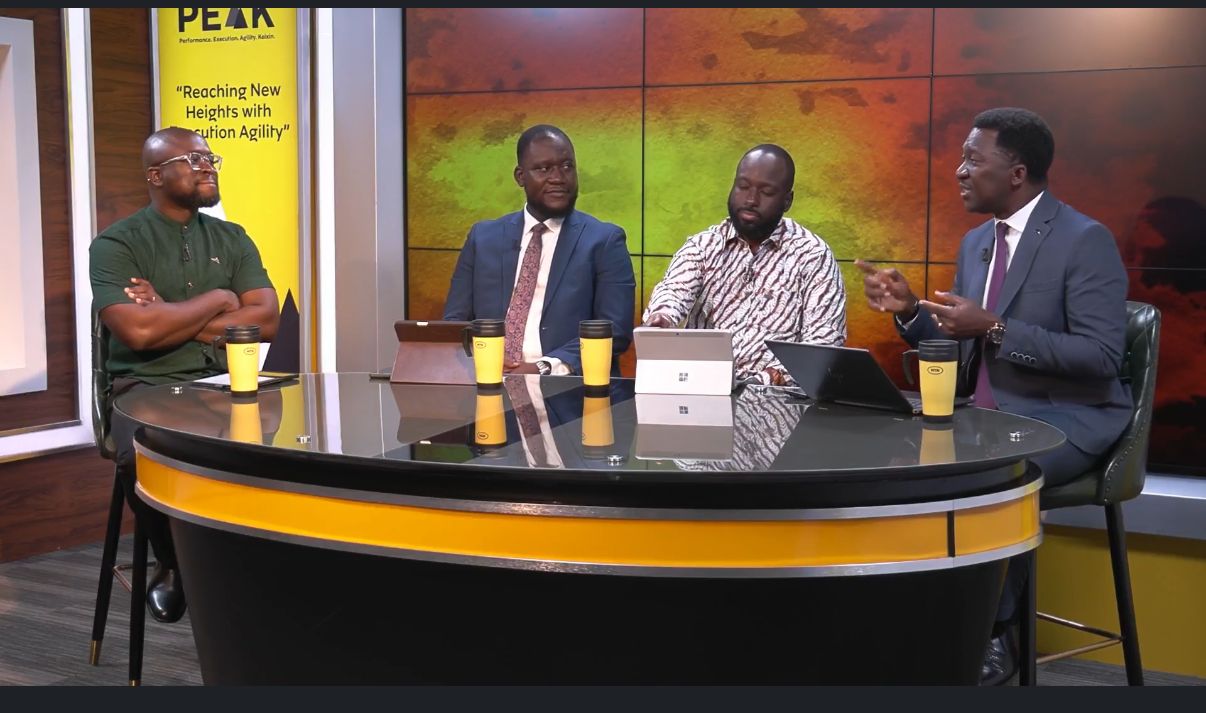
As part of sustained efforts to promote financial literacy and strengthen the capacity of entrepreneurs, MTN Ghana has held a virtual financial literacy webinar to equip business owners with practical knowledge to build financially smart and sustainable enterprises.
The webinar, held formed part of activities marking MTN Ghana’s 30th anniversary and was organised under the theme, “Making Money Moves: Building a Financially Smart and Sustainable Business.”
It featured Yaw Saifah, Senior Manager for BankTech at MobileMoney Fintech Limited; Paul Mante, Managing Director of EDC Investments; and Desmond Bredu, Head of Client Coverage at Stanbic Investment Management Services. The speakers shared practical insights into financial discipline, business sustainability, digital payments, cash-flow management, investment and wealth creation.
Separate Personal and Business Funds
Speaking during the webinar, Yaw Saifah, Senior Manager for BankTech at MobileMoney Fintech Limited, urged entrepreneurs to separate their personal mobile money wallets from their business accounts to improve financial visibility and discipline.
He said mixing personal and business funds made it difficult for entrepreneurs to distinguish revenue from profit and determine how much should be allocated to salaries and other expenses.
Mr Saifah explained that MobileMoney Fintech Limited provided separate digital platforms to help customers manage their finances effectively the MoMo app for personal transactions and the MoMo Merchant app for business activities.
According to him, the merchant app allows business owners to monitor cash inflows and outflows and access tools such as invoicing, which can be used to remind customers about outstanding payments.
He cautioned that entrepreneurs who repeatedly withdrew money from their business accounts for personal use risked depleting their working capital without realising it.
“Separating personal and business funds gives you visibility and discipline,” he said, adding that the MoMo and MoMo Merchant apps were available separately on the Google Play Store and Apple App Store.
Technology Improving Business Management
Mr Saifah further said technology had democratised access to knowledge, information and business insights, enabling small enterprises to adopt some of the management practices used by major global companies.
He said the MoMo Merchant app allowed business owners with multiple branches to monitor sales remotely, issue invoices and track payments from a single platform.
Digital payments, he explained, provided transaction values, timestamps and customer details, giving business owners verifiable payment records and reducing the need to second-guess employees entrusted with daily operations. The platform also enables entrepreneurs to determine how many invoices have been issued and paid within a particular day, week or month and to follow up with customers who have outstanding payments.
Mr Saifah encouraged businesses to complement digital payment tools with Enterprise Resource Planning systems to manage customer records, inventory and other operational activities effectively.
He explained that even a basic point-of-sale system could help retailers monitor stock levels and identify products approaching their expiry dates, allowing them to introduce promotions and sell the items quickly.
Mr Saifah warned that poor inventory management could lock up cash and cause businesses to lose money, sometimes creating the false impression that they lacked capital and needed to borrow.
“Your problem may not be limited capital or illiquidity. It may be that you are not managing your inventory properly,” he said.
He added that access to accurate and timely business data would enable entrepreneurs to make informed decisions, reduce losses, improve cash flow and serve customers more effectively.
Revenue Is Not Profit
Paul Mante, Managing Director of EDC Investments, identified the confusion between revenue and profit as one of the major financial mistakes responsible for the collapse of many small businesses.
He said some entrepreneurs began financing expensive lifestyles immediately after their businesses started generating revenue, without calculating costs or determining whether they were making profits.
According to him, business owners must understand their financial figures, including sales, profit and cash flow, before spending or making major decisions.
“Don’t spend before you calculate your profit. You make a profit before you start spending; you don’t spend before you start making a profit,” he advised.
Mr Mante also cautioned entrepreneurs against mixing personal and business funds, explaining that the practice encouraged business owners to use operating capital for donations, social obligations and other personal expenses.
He also cautioned against opening too many branches without enough working capital, pointing out that expanding too quickly could hurt a business even if sales seemed solid. “Sales do not mean profitability. You can be making sales and still collapse,” he said.
Mr Mante emphasised that entrepreneurs must look beyond impressive sales figures and pay close attention to profitability, liquidity and reinvestment. “Revenue makes the noise, profit creates wealth, and cash keeps an SME alive,” he stated.
He urged entrepreneurs to assess regularly how much profit they were making, how much they were reinvesting and whether the pace of expansion was financially sustainable.
Wealth Creation Requires Patience
Mr Mante further stressed that transforming Africa’s economic fortunes must begin at the individual and small-business levels, with entrepreneurs adopting disciplined and sustainable approaches to wealth creation.
Citing the scale of major global corporations and economies, he said Walmart’s 2025 revenue was about 2.2 times the combined gross domestic product of 30 African countries, while California’s economy was approximately 1.5 times the GDP of the entire African continent.
He said the figures underscored the need for African entrepreneurs to build stronger and more sustainable businesses capable of contributing meaningfully to the continent’s economic transformation.
Mr. Mante warned against the urge to get rich quickly, emphasizing that achieving financial independence takes patience, discipline, and steady effort. “Building wealth is not a sprint; it is a marathon. It cannot happen overnight,” he said.
He noted that the pursuit of quick money also contributed to dishonesty among some employees, who might exploit business owners whenever supervision was weak. “Wealth is built little by little over time. Let us be patient. It will eventually happen, but it is not going to happen overnight,” Mr Mante added.
Start Investing with What You Have
The Head of Client Coverage at Stanbic Investment Management Services, Mr Desmond Bredu, said people did not need large sums of money to begin investing and building wealth.
He explained that the One Million Club initiative was established to encourage young Ghanaians to save and invest consistently, with the goal of becoming millionaires by 2030 or 2035.
According to him, the initiative was inspired by reports that the number of everyday millionaires had increased significantly, particularly in North America, with about 1,000 people reportedly becoming millionaires every day in the United States in 2024.
Mr Bredu said the initiative sought to replicate that wealth-building culture in Ghana while taking the country’s different economic circumstances into account.
He identified the belief that investment required a large amount of money as one of the biggest misconceptions discouraging people from securing their financial futures.
“You do not need a huge amount of money to invest. You can start with GH¢50,” he said.
Mr Bredu cited the example of a woman who consistently invested GH¢50 and occasionally increased her contributions, resulting in significant growth in her investment portfolio.
He also referred to a member of the One Million Club who began investing GH¢100 monthly but later increased the amount to GH¢300 and GH¢500 as investing became a regular financial habit.
He encouraged entrepreneurs without fixed monthly salaries to invest small amounts whenever possible instead of waiting until they earned substantial income.
Mr Bredu further cautioned people against leaving money idle at home or in accounts that offered no meaningful returns, explaining that inflation gradually reduced its purchasing power.
“If you keep GH¢100 under your bed or leave it idle, it may still be GH¢100 after one year, but inflation would have reduced what it can buy,” he explained.
He said some people failed to invest because they did not understand the available options, while others were afraid of losing their money.
Mr Bredu therefore encouraged prospective investors to seek professional guidance, overcome their fears and use credible investment platforms.
Managing Money Requires Discipline
Mr Bredu also said making money and managing it required different mindsets and skills. He explained that entrepreneurs needed to take calculated risks to generate income, including purchasing inventory or opening new branches. Managing the resulting income, however, required frugality and discipline. “Making money requires taking risks, but managing money requires frugality and discipline,” he said.
He warned that the arrival of substantial revenue could become one of the greatest threats to an entrepreneur if it encouraged extravagant spending and an unsustainable lifestyle.
Mr Bredu urged business owners to avoid lifestyle inflation and use tools such as the MoMo Merchant app and spreadsheets to track expenditure on rent, transportation, inventory and other operational costs.
He also encouraged entrepreneurs to balance the acquisition of new customers with the retention of existing ones, noting that repeat business was essential to sustainable growth.
According to him, generating income alone was not enough because entrepreneurs must retain and reinvest part of their earnings to expand their businesses.
“Having the money coming in is not enough. You need to retain it because retaining the money is what enables you to scale up and move to the next level,” Mr Bredu said.
Source: Isaac Kofi Dzokpo
