The Citizens Platform on Constitutional Review (CPCR), a coalition of more than 100 civil society organisations, labour unions and professional bodies, has called for a clear constitutional separation between Ghana’s Executive and Parliament as part of the ongoing review of the 1992 Constitution.
The coalition wants Members of Parliament (MPs) to be barred from simultaneously serving as Ministers, Deputy Ministers, or Regional Ministers, arguing that separating the two arms of government would strengthen parliamentary independence and improve checks and balances in Ghana’s governance system.
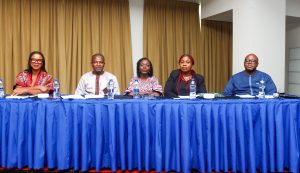
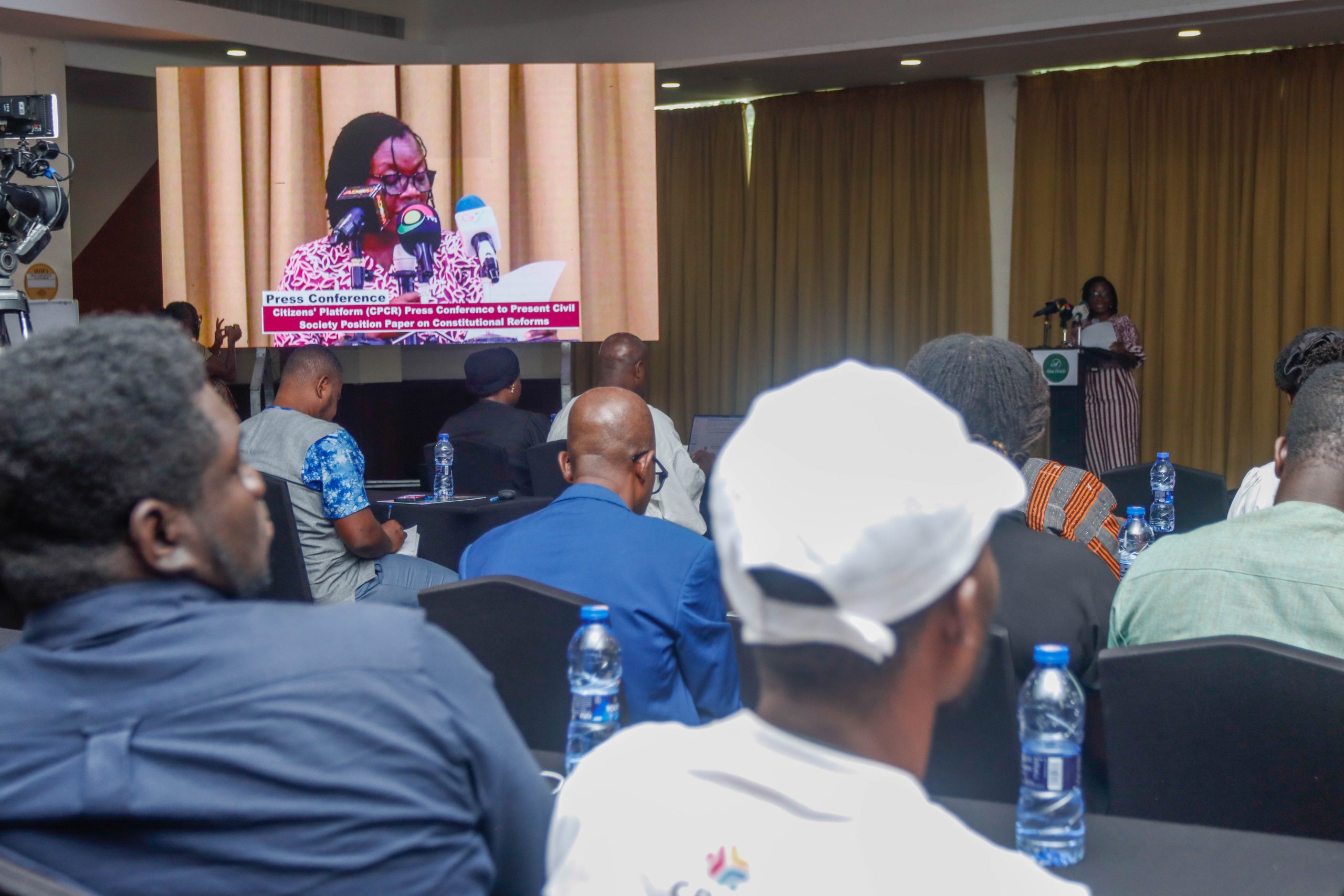
The CPCR made the call at a press conference in Accra on Tuesday, September 15, 2026, where it presented its civil society position paper on the ongoing constitutional reform process.
Prof. Akosua Keseboa Darkwah, Chairperson of the CPCR Steering Committee, said the coalition also wanted MPs to be prohibited from serving on boards, governing councils, and procurement committees of publicly funded institutions.
She said the proposals were part of broader reforms the coalition considered necessary to strengthen democratic accountability and clarify the respective roles of Parliament and the Executive.
Clear separation of powers
The coalition’s position seeks to address the longstanding overlap between legislative and executive responsibilities under Ghana’s constitutional arrangement, particularly the practice of appointing sitting MPs to ministerial positions.
The CSOs argued that MPs should be able to perform their legislative and oversight functions without simultaneously occupying executive positions.
They said a clearer separation would help Parliament exercise its constitutional responsibilities, including scrutinising government policies, legislation, and public expenditure.
The coalition also linked the proposed separation to the need for stronger institutional checks and balances and greater accountability in the exercise of executive power.
MPs and public boards
Beyond ministerial appointments, the CPCR called for restrictions on MPs serving on boards, governing councils, and procurement committees of publicly funded institutions.
It said public officials should operate within clearly defined constitutional roles and responsibilities to avoid situations that could create conflicts between legislative oversight and executive or administrative functions.
The coalition said strengthening institutional boundaries was particularly important as Ghana undertook what it described as far-reaching constitutional reforms.
Rejects expansion of Parliament to 300 MPs
The CPCR’s call for a clearer separation of the Executive and Parliament forms part of a wider position on the future structure and functioning of Ghana’s Parliament.
The coalition rejected the proposal to increase the number of MPs from the current 276 to 300 through the addition of 24 constituency seats.
Instead, it called for proportional representation to be studied and implemented within the existing ceiling of 276 MPs.
The CSOs said proportional representation could help broaden political participation and improve the representation of women, young people, and persons with disabilities without necessarily increasing the size of Parliament.
Calls for stronger parliamentary role
The coalition also supports proposals that would strengthen the legislative role of Parliament, including allowing MPs to introduce bills and giving Parliament a binding vote of censure.
It said such measures, together with a clearer separation between the Executive and Parliament, could strengthen Parliament’s ability to perform its legislative and oversight functions.
The coalition further called for constitutional recognition of citizens’ right to meaningful participation in lawmaking, including a clear duty on government to consult citizens before important laws are passed.
CSOs reject five-year term
The CPCR also rejected the proposed extension of the presidential and parliamentary tenure from four years to five years.
Prof. Darkwah said the coalition preferred the existing four-year term to be maintained, noting that other proposed reforms relating to election dates, the transition period, and the powers of an outgoing administration could address concerns cited in support of a longer tenure.
The coalition also opposed the proposed framework for limiting presidential appointment powers, instead calling for appointments to independent oversight institutions to be transparent, competitive, and merit-based.
Demand legally binding reform roadmap
The CSOs further called on the government to introduce a Constitutional Reform Implementation and Roadmap Act to give the implementation process the force of law.
According to the coalition, the legislation should establish clear institutions, timelines and milestones covering public consultation, civic education, legislation, parliamentary consideration and referenda.
It said the need for such a framework was particularly important because the proposed reforms affect more than 50 constitutional provisions, including more than 20 entrenched provisions, and could involve more than 14 bills.
The coalition warned that constitutional reform should not be allowed to depend on the political calendar or be derailed by a change in government.
Separation must form part of broader democratic reforms
The CPCR also called for an independent constitutional Devolution Commission to coordinate fiscal and administrative decentralisation and prepare the country for the election of local Chief Executives.
It rejected any arrangement under which Metropolitan, Municipal and District Chief Executive elections would be subject to presidential nomination, shortlisting, or vetting by institutions under the Executive.
The coalition wants such elections to be open and unfiltered to give every qualified citizen an opportunity to contest.
It also called for constitutional protection for funding for democratic institutions, including the Electoral Commission and National Commission for Civic Education, as well as a protected Democracy Fund.
Civic education and referendum
The coalition further called for adequate and legally protected funding for civic education ahead of any referendum on entrenched constitutional provisions.
It said the National Commission for Civic Education should receive the necessary resources sufficiently early to enable citizens to understand and deliberate on the proposed amendments.
The CSOs also opposed bundling more than 20 different amendments into a single referendum question, arguing that voters should be presented with a manageable number of clearly defined questions on related proposals.
Broader constitutional reform agenda
Despite the areas of disagreement, the CPCR said it supported several proposals contained in the Government’s position paper.
These include the creation of an independent political parties regulatory commission, regulation of campaign periods and expenditure, stronger financial disclosure requirements, measures against abuse of incumbency, holding presidential and parliamentary elections on the same day, proportional representation and reforms to strengthen human rights and democratic participation.
The coalition also supports separating the Office of the Attorney General from the Cabinet and establishing a separate Minister of Justice, strengthening the NCCE’s functions, creating a direct route for citizens to propose constitutional amendments, passing a comprehensive Human Rights Act and completing the abolition of the death penalty.
Prof. Darkwah said the coalition’s position was ultimately anchored in the principle that constitutional reform must be a genuinely national undertaking.
She said the Constitution belonged to the Ghanaian people and that citizens must be informed, consulted, and given meaningful opportunities to participate in the process.
The CPCR, convened by CDG Ghana, Democracy Hub and Star-Ghana Foundation, has grown into a coalition of more than 100 civil society organisations, labour unions, professional bodies, and individual citizens.
The coalition said its broader objective was to ensure that the constitutional reform process strengthened democratic accountability, institutional independence, citizen participation, and public confidence in Ghana’s constitutional order.