
The African Continental Free Trade Area (AfCFTA) Secretariat has urged African businesses, particularly small and medium-sized enterprises, to take advantage of the Agreement’s mechanisms for reporting and resolving non-tariff barriers encountered in cross-border trade.
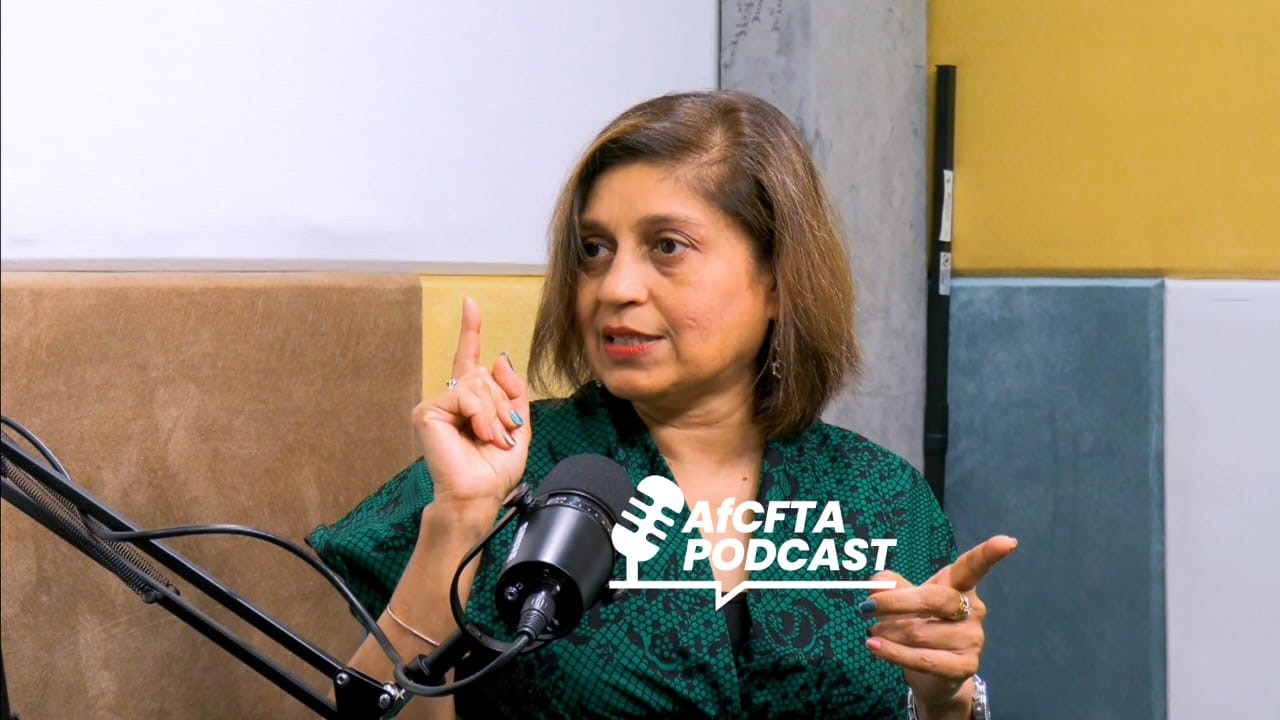
Speaking on the AfCFTA Podcast, Ms. Poonam D. Mohun, Head of the Non-Tariff Measures Division at the AfCFTA Secretariat, explained that removing customs duties alone would not guarantee seamless trade across the continent. Businesses must also comply with product standards, safety requirements, certification procedures and other regulations in importing countries.
Non-tariff measures are official requirements intended to ensure that goods entering a country meet established health, safety, quality and labelling standards. For instance, imported food products may be subject to sanitary and phytosanitary requirements, while textiles, cosmetics and manufactured goods may require testing, certification or conformity assessments.
While these measures serve legitimate regulatory purposes, they can become barriers when they are applied inconsistently, create unnecessary delays or impose excessive costs on traders.
Ms. Mohun said the AfCFTA Secretariat has worked with State Parties and continental institutions to harmonise standards and promote the mutual recognition of certificates and conformity-assessment results.
“The aim is that a certificate issued in one AfCFTA country should be recognised in another,” she explained, noting that repeated product testing can be particularly costly for small businesses. In some cases, an enterprise may be required to pay hundreds of dollars for certification for each consignment, reducing its competitiveness in regional markets.
To address such challenges, the Secretariat has established an online non-tariff barrier reporting mechanism. Traders experiencing difficulties can submit details of the affected product, its customs classification, the countries involved and the specific obstacle encountered.
Once a complaint is officially lodged, the Secretariat engages designated focal points in the relevant countries and facilitates dialogue among the traders, government authorities and other responsible institutions. More complicated cases may be referred to the AfCFTA Sub-committee on Non-Tariff Barriers for further consideration.
Ms. Mohun stressed that formal reporting is essential because it gives the Secretariat the mandate and information required to intervene.
“Please tell us your problem so that we can address it,” she appealed to African businesses. “It is the only way the Secretariat can officially address an issue.”
According to her, approximately 900 participants joined a Secretariat webinar on the use of the reporting mechanism, with about 500 successfully completing an assessment and receiving certificates as champions of the initiative.
She also highlighted the importance of certificates of origin, explaining that traders seeking AfCFTA preferential treatment must demonstrate that their products qualify as originating goods under the Agreement. Some businesses, she noted, mistakenly expect to enjoy tariff preferences without obtaining the required documentation.
Beyond the reporting mechanism, AfCFTA structures dealing with sanitary and phytosanitary measures, technical barriers to trade and non-tariff barriers are bringing national authorities together to address regulatory challenges. State Parties are also expected to establish national monitoring committees comprising customs authorities, trade and finance ministries, standards bodies, food and drugs regulators, chambers of commerce and private-sector representatives.
Ms. Mohun described the progress towards a continental Mutual Recognition Agreement as a significant achievement. The proposed framework is intended to reduce duplication by enabling countries to recognise testing and certification carried out by competent institutions elsewhere in Africa.
She acknowledged that harmonising national systems and implementing continental decisions would take time but said the necessary political will was increasingly evident.
“The first thing we have to do on our continent is implement,” she said. “We must implement what we have signed.”
Ms. Mohun encouraged African enterprises to diversify beyond traditional overseas markets and explore commercial opportunities within the continent. Unlike unilateral trade preferences that may be withdrawn or changed, she said, the AfCFTA is a legally binding agreement offering businesses a more predictable foundation for long-term continental trade.
“The AfCFTA is not a book sitting in a library or on a laptop,” she emphasised. “It is a concrete tool that businesses can use to trade across the continent. It is the future, so please make use of it.”
