
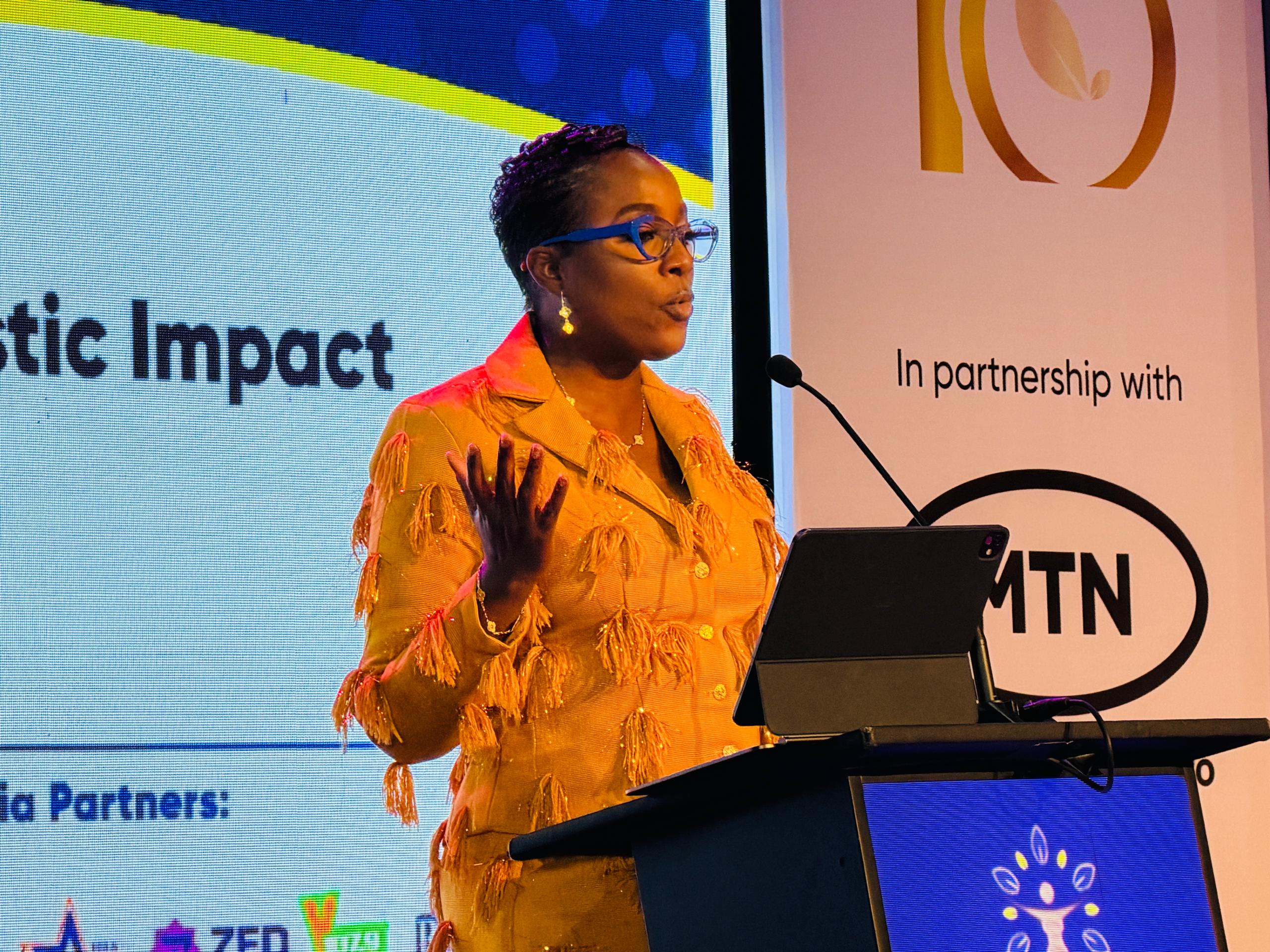
The Executive Women Network (EWN) has held its 10th Anniversary Conference and Expo in partnership with MTN Ghana under the theme: “A Decade of Leadership, A Future Toward Holistic Impact – Self and Family, Career, Legacy.”
MTN Ghana: ‘One hand cannot lift a load alone’
Speaking at the event at the Palms Convention Centre, La Palm Royal Beach Hotel, in Accra, the Chief Financial Officer of MTN Ghana, Ms. Antoinette Kwofie, lauded the leadership and members of EWN, highlighting that the network’s journey embodies the core Ghanaian belief that success is never achieved alone.
“A decade ago, a group of visionary women came together with a conviction deeply rooted in our Ghanaian values that no one succeeds alone.
They understood that leadership becomes stronger when opportunity is shared, experiences are passed on, and women support one another’s journey to the top,” Ms. Kwofie said.
She noted that leadership is ultimately measured not only by personal success, but by the opportunities created for others.
Mrs. Kwofie explained that this belief shapes MTN Ghana’s approach to inclusion, leading to the establishment of the Yellow Ladies Network an employee network for women, which she chairs as founding chair.
“The network has provided space for women across the organization to connect, learn, and support one another, and we have had the support of EWN in this journey,” she noted.
She stated that through mentorship, leadership development programs, career conversations, and wellness initiatives, MTN continues to strengthen confidence and expand opportunities. Programs such as Embrace Your Health have encouraged open discussions on resilience, well-being, and personal growth.
Ms. Kwofie disclosed that MTN Ghana is advancing its commitment to achieving gender balance across the organization by 2030, because diverse leadership strengthens organizations, broadens perspectives, and drives innovation.
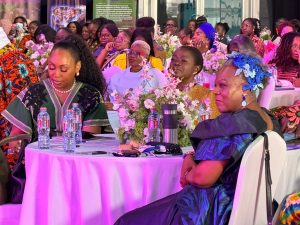
She stressed that the company’s commitment extends beyond the workplace, noting that when women succeed, families thrive and economies move forward.
To illustrate this, she shared the story of a Ghanaian woman entrepreneur, who runs her business from her phone contacting suppliers, confirming deliveries, advertising products, and receiving payments while managing her responsibilities as a mother and caregiver.
“A few years ago, business was great. She had built a loyal customer base and was slowly expanding. Then life happened. A family emergency forced her to spend much of her savings. Shortly afterwards, tragedy struck and she lost a significant amount of stock overnight,” Ms. Kwofie recounted.
“For women like this, these moments are about much more than business losses. When her business struggles, school fees become uncertain. Household expenses become difficult. Yet what is remarkable is not the setback; it is her determination to keep going.”
According to her, women like this do not seek handouts, but access to information, business support, financial protection, digital skills, and networks.
“That is precisely where we come in. We recognize that connectivity alone is not enough. A woman may have a smartphone and access to the internet, but she also needs the tools, knowledge, and support that can help turn ambition into sustainable growth,” she said.
She stated that through MTN’s Adwuma platform, the company brings together digital skills, digital tools, business support services, and protection that enable women entrepreneurs to thrive.
“Because when women thrive, communities grow. Her family becomes more secure. Her children gain greater opportunities. Jobs are created, and our economy benefits,” she said. Ms. Kwofie challenged the accomplished women present to mentor young women and open doors for others.
“Each of us has reached this point because someone opened a door, shared advice, offered encouragement, or believed in our potential. The powerful legacy we can leave is not the title we hold, but the lives we help change,” she said.
“Somewhere in a classroom, a boardroom, a marketplace, or a startup, a young woman is waiting for someone to recognize her potential and say, ‘I see you. I believe in you. Let’s walk this journey together.'”
She added that this year marks MTN Ghana’s 30th anniversary, noting that Ghana’s future will be shaped significantly by the progress of its women.
“Congratulations once again on 10 outstanding years of leadership and impact. MTN Ghana is proud to be part of this journey, and we look forward to supporting your next chapter of growth, transformation, and opportunity.”

CEO Blewett delivers virtual goodwill message
Delivering a virtual goodwill message, the Chief Executive Officer of MTN Ghana, Mr. Stephen Blewett, also congratulated EWN on reaching the milestone.
“Firstly, let me send my heartfelt congratulations to the Executive Women Network on reaching this remarkable milestone: 10 years of championing leadership, empowering women, fostering entrepreneurship, and creating meaningful impact across business and communities is an achievement worthy of celebration,” Mr. Blewett said.
He said that although he was unable to attend in person, he did not want to miss the opportunity to acknowledge EWN’s contribution to shaping and elevating women leaders across Ghana and beyond.
“We live in a world where inclusive leadership is no longer optional. It is essential. Organizations, economies, and societies perform better when women are empowered to lead, innovate, and influence decision-making at every level,” he stated.
“The progress we have witnessed over the last decade demonstrates what is possible when intentional platforms such as EWN invest in developing talent, creating opportunities, and building networks that inspire confidence and ambition.”
Mr. Blewett stated that MTN Ghana firmly believes diversity and inclusion are critical drivers of innovation and sustainable growth.
“We remain committed to creating opportunities for women to thrive, lead, and contribute meaningfully to the digital and economic transformation of our continent. As you reflect on the accomplishments of the past decade, I encourage you to also look boldly to the future.
There are still barriers to break, opportunities to create, and countless young women and girls who need role models, mentors, and champions,” he said.
“Together, we can help build a future where leadership is defined not by gender, but by purpose, competence, integrity, and impact.”
He thanked the organizers, sponsors, speakers, and members of EWN for their dedication and vision, noting that their work continues to inspire positive change and create lasting value for future generations.
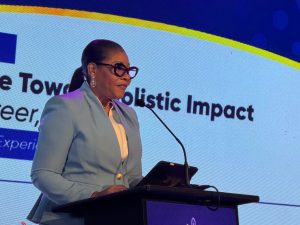
BoG Second Deputy Governor: Which burning idea have you executed?
The Conference Chairperson, the Second Deputy Governor of the Bank of Ghana, Ms. Matilda Asante-Asiedu, commended EWN for its decade of leadership.
She recalled that when the network launched 10 years ago at the Labadi Beach Hotel, she was working with Access Bank, where the W Initiative to inspire and empower women was launched with EWN as a partner.
She posed a reflective question to the audience: “Which of the burning ideas in your belly have you executed? And what change has that caused?”
“This is where leadership becomes impact,” she said, adding that what began as an idea has evolved into a community built on the conviction that women in leadership need more than positions they need spaces to learn, connect, and create opportunities for future generations.
She noted that Ghanaian women have moved from being observers to leading complex institutions across banking, energy, telecommunications, health, education, entrepreneurship, and digitalization.
Reflecting on the theme, she offered three key takeaways: measuring leadership by holistic impact, equipping oneself for the decade ahead, and actively opening doors.
She explained that while an early career is often focused on proving oneself, mature leadership asks whether institutions became stronger, whether younger colleagues gained confidence, and whether influence was used to create room for others.
She noted that success is not about achieving perfect balance, but about intentional living across different seasons of work and family life.
Looking to the future, she stated that Artificial Intelligence and cybersecurity are rapidly reshaping the nature of work noting that she had engaged bank boards on the subject that very morning and urged women to remain lifelong learners. She also encouraged a strong focus on asset building, investment, and wealth creation as owners and investors.
On the topic of opening doors, she said institutions must be judged by who receives key assignments, visibility, and succession opportunities.
“Mentors give guidance, but sponsors give access. Advocacy is transformative,” she said, calling for leaders who will step up and say, “I have watched her work; she’s ready. Give her the chance.”
She cited Ghana’s Affirmative Action Act with its first 30% milestone due this year and McKinsey’s 2023 research showing that companies in the top quartile for gender diversity on executive boards outperform their peers by more than 30%, stressing that elevating women is both an economic and social imperative.
However , she challenged each participant in the room to write down the name of one woman they will actively support over the next 30 days.
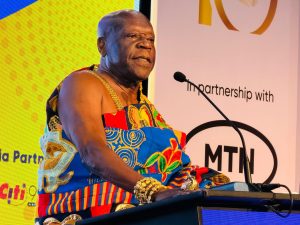
Traditional Ruler: Ancestors settled women’s leadership question
In his keynote address, Ehunabobrim Prah Agyensaim VI—known in private life as Wellington Eshun Jonah, President of the Assin Owirenkyi Traditional Council and Member of the Central Regional House of Chiefs said the question of whether women can lead was settled by ancestors long before modern boardrooms existed, highlighting Yaa Asantewaa rallying chiefs in 1900.
He noted that while Article 277 of the 1992 Constitution and Section 57 of the Chieftaincy Act, 2008 define a chief to include a Queen Mother, the National and Regional Houses of Chiefs currently have no female members.
In Akan tradition, he explained, it is the Queen Mother who nominates the chief based on character and competence, and she remains his primary counselor. “When I sit on my throne, I sit there because a woman judged me fit,” he noted.
He stated that the conversation around women’s advancement has shifted from capability to access, opportunity, influence, and ownership.
He argued that the pipeline to the boardroom begins at the breakfast table, urging men to be actively present at home at the school gate, during PTA meetings, and in caregiving rather than leaving family management solely as a woman’s responsibility.
He noted that perfect balance is a myth because life comes in seasons, and urged women to protect their personal health, emphasizing that “rest is not weakness.”
He added that women should hold CEO positions and board leadership roles not as a favor, but strictly on merit. He further distinguished mentorship which happens through advice and conversation from sponsorship, which occurs when a leader uses their influence to create opportunities for someone when that person is not in the room.
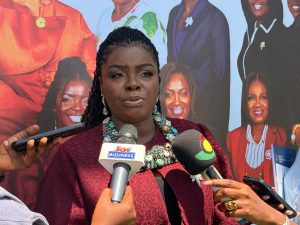
EWN Impacts Over 10,000 Lives, Eyes Bigger Reach
The Chairperson of the Executive Women Network (EWN), Janet Sunkwa-Mills, disclosed that the network has directly impacted more than 10,000 lives through mentoring, capacity building and youth empowerment programmes over the past decade.
She said EWN, which started with six founders 10 years ago, has grown to 200 members across 28 industries in Ghana’s public and private sectors.
Ms Sunkwa-Mills said the network’s interventions have benefited both members and non-members through corporate mentoring, coaching, CSR initiatives and youth empowerment programmes.
Among them is EWN Elevate, an initiative launched in Tamale four years ago to mentor senior high school girls, build their confidence and expose them to accomplished female role models.
“When they believe they can succeed and see role models before them, they begin to recognise what they can achieve,” she said.
Despite the network’s achievements, Ms Sunkwa-Mills identified sustainable funding and sponsorship as a major challenge limiting its ability to expand its programmes.
She said EWN relies on sponsorship, institutional support, membership dues and corporate contributions to finance its activities.
Ms Sunkwa-Mills therefore appealed for stronger corporate partnerships and sponsorship as the organisation moves into its next phase, dubbed EWN 2.0.
“We are committed to achieving more through EWN 2.0. To realise that vision, we need additional support and sponsors to help us take our work forward,” she said.
Source: Isaac Kofi Dzokpo
