
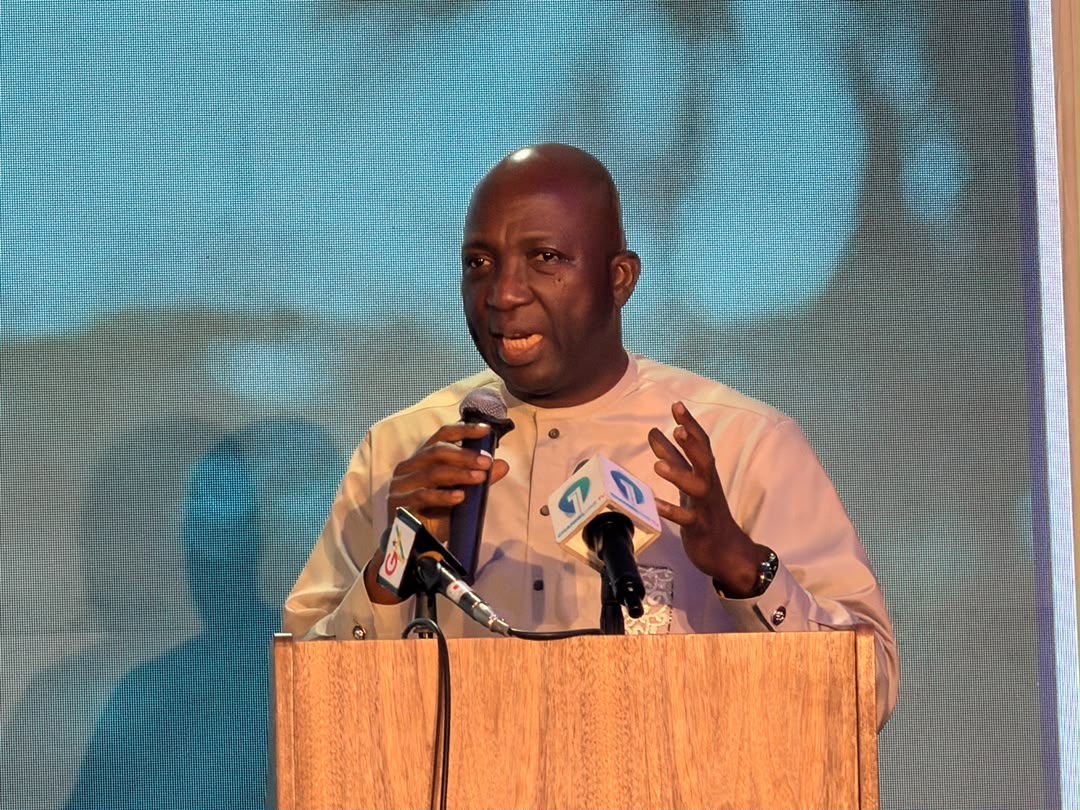
The Chief Executive Officer of MobileMoney Fintech LTD (MMFL), Mr Shaibu Haruna, has outlined an ambitious strategy to transform Ghana’s informal economy by expanding access to credit, empowering microenterprises and leveraging digital financial services to drive sustainable economic growth.
The initiative forms part of the company’s broader vision to deepen financial inclusion, strengthen financial security and create opportunities for millions of underserved individuals and small businesses to build sustainable livelihoods.
Mr. Haruna shared this during his address to editors and senior journalists at the second edition of the MMFL Media Development Series, a platform aimed at fostering collaboration with the media and enhancing understanding of developments in Ghana’s digital financial ecosystem.
He said although Ghana had made remarkable progress in mobile money adoption, the next phase of financial inclusion must focus on translating digital access into tangible economic opportunities, particularly for micro, small and medium-sized enterprises (MSMEs).
According to him, millions of small businesses remain trapped in subsistence operations despite the increasing availability of digital financial services, a situation that continues to undermine their growth potential and contribution to national development.
“We need to begin to build the next businesses that are going to shape Ghana’s economic development, create employment and build an ecosystem that fosters growth,” he stated.
Transforming Microenterprises into Sustainable Businesses
Mr Haruna identified the transformation of microenterprises as a central pillar of MMFL’s long-term growth strategy, stressing the need to move informal businesses beyond basic financial transactions towards structured enterprise development.
He explained that many traders and small business operators continued to use personal mobile money wallets for commercial transactions, making it difficult to distinguish business income from personal expenditure.
The practice, he noted, undermined effective financial management, complicated credit assessment and limited opportunities for business expansion.
To address the challenge, MMFL intends to collaborate with financial institutions and other strategic partners to develop tailored financial solutions that will enable microentrepreneurs to separate personal finances from business transactions.
The approach is expected to strengthen financial discipline, improve access to appropriate credit facilities and support the transition of informal businesses into sustainable enterprises.
“For us, we want to profile such a person as a small merchant because we want to take them on a certain growth journey,” he explained.
Illustrating the financial vulnerabilities confronting informal businesses, Mr Haruna recounted the experience of a small-scale avocado trader who relied on digital loans to sustain her operations but was compelled to divert her working capital to meet medical expenses.
He said the trader subsequently recovered and resumed her business, demonstrating both the importance of accessible financing and the need for financial products that respond to the realities of microentrepreneurs.
According to him, millions of similar businesses across Ghana require targeted interventions to strengthen their financial resilience, expand operations and create employment.
Digital Lending to Unlock Business Growth
Touching on access to credit, the MMFL CEO said digital financial technology was creating new opportunities for individuals and small businesses traditionally excluded from formal lending systems.
He explained that transaction histories and payment patterns could provide financial institutions with valuable information to assess creditworthiness, particularly among customers without conventional collateral or extensive financial records.
Unlike traditional lending arrangements, which often require substantial documentation and security, digital lending solutions could support alternative credit assessments and expand financing opportunities for underserved customers.
Mr Haruna, however, stressed the importance of responsible borrowing, repayment discipline and customer education to ensure the long-term sustainability of digital credit services.
He reaffirmed MMFL’s commitment to working with financial institutions and technology partners to develop accessible and responsible lending solutions capable of supporting enterprise growth.
Ghana’s Mobile Money Transactions Exceed GH¢4 Trillion
Highlighting the growing significance of digital financial services, Mr Haruna disclosed that Ghana’s mobile money industry processed transactions valued at more than GH¢4 trillion in 2025, reflecting the increasing integration of digital payments into everyday economic activities.
He clarified that the transaction value represented the total movement of funds within the mobile money ecosystem and should not be interpreted as revenue generated by service providers.
According to him, the figure included transactions involving agents, financial institutions, merchants and individual customers, with a substantial proportion attracting no service charges.
He explained that such transactions were essential to maintaining liquidity and ensuring the smooth functioning of the mobile money ecosystem.
Mr Haruna further noted that Ghana’s mobile money pricing structure incorporated transaction fee thresholds intended to promote affordability and encourage wider participation in digital financial services.
MMFL Processes Over 26 Million Transactions Daily
The CEO also revealed that MMFL currently processes more than 26 million transactions daily, reinforcing its position as a major player in Ghana’s digital financial infrastructure.
He said the volume of transactions placed considerable responsibility on the company to maintain reliable systems, strengthen cybersecurity and ensure uninterrupted service delivery.
To meet growing demand, MMFL undertook a major technological upgrade in 2025, nearly doubling its transaction-processing capacity.
Mr Haruna explained that the company continued to invest in infrastructure improvements, security updates and system enhancements to safeguard customer transactions and strengthen operational resilience. “We view ourselves as a national transaction rail,” he stated.
He emphasised that maintaining public confidence in digital financial services required sustained investment in technology, system reliability and customer protection.
Rising Digital Fraud Threatens Financial Inclusion
Mr Haruna expressed concern over the growing sophistication of digital financial fraud, warning that cybercriminals were increasingly exploiting vulnerabilities across interconnected digital platforms.
He described fraud as a major threat to financial inclusion, explaining that security breaches and fraudulent activities could undermine customer confidence and discourage the adoption of digital financial services.
According to him, fraudsters were extending their operations beyond mobile money platforms to social media, online marketplaces, messaging applications and other digital channels.
Recounting a personal experience, he disclosed that fraudsters attempted to compromise his WhatsApp account after he contacted what appeared to be a legitimate pizza outlet through an online search.
He explained that the perpetrators had used a deceptive online listing to initiate communication before attempting to obtain information that could facilitate an account takeover.
The incident, he said, demonstrated the increasingly sophisticated methods employed by cybercriminals to exploit unsuspecting internet users.
Mr Haruna stressed that combating digital fraud required coordinated action among financial institutions, telecommunications operators, technology companies, regulators and customers.
He also underscored the need for sustained public education to equip customers with the knowledge to identify fraudulent schemes and protect their personal information.
Artificial Intelligence to Strengthen Fraud Prevention
On emerging technologies, Mr Haruna identified artificial intelligence (AI) as a potentially powerful tool for detecting suspicious financial transactions and strengthening fraud prevention.
He explained that while criminals could exploit AI to develop sophisticated fraudulent schemes, financial institutions could equally deploy the technology to identify unusual transaction patterns and respond more effectively to security threats.
He advocated stronger collaboration and real-time information sharing among digital financial service providers to improve the detection and prevention of financial crimes.
According to him, fraudsters frequently move funds across multiple financial platforms, making it difficult for individual institutions to independently track suspicious transactions.
He maintained that integrating fraud-monitoring capabilities across the industry could significantly improve the effectiveness of financial crime prevention.
MMFL Pushes Adoption of MoMo App
Mr Haruna also outlined plans to accelerate the adoption of the MoMo mobile application as part of efforts to improve customer experience and expand access to digital financial products.
He acknowledged the critical role of Unstructured Supplementary Service Data (USSD) technology in Ghana’s mobile money development since 2009 but explained that the growing complexity of financial services required more convenient and integrated digital platforms.
According to him, customers accessing multiple products through USSD often had to navigate several menus, making transactions less convenient.
Mobile applications, he said, offered opportunities to simplify transactions, personalise services and integrate products from different financial service providers.
He disclosed that approximately 70 per cent of MMFL agents had smartphones, presenting significant opportunities to accelerate app-based service delivery.
The CEO, however, assured customers that the company would not discontinue USSD services, stressing that existing channels would remain available to those who depended on them.
He further revealed that MMFL was exploring the development of a broader digital ecosystem through which customers could access banking, fintech and other related services from a single application.
The proposed approach, he explained, could reduce the need for customers to install multiple applications while improving convenience and access to financial products.
Embedded Finance to Expand Savings and Insurance
Mr Haruna identified embedded finance as another strategic opportunity to deepen financial inclusion by integrating savings, investment and insurance products into everyday transactions.
He explained that many individuals struggled to make regular contributions towards insurance and investment products when such payments were treated as separate financial obligations.
Integrating these services into routine transactions, he said, could make financial planning more convenient and encourage consistent saving.
Illustrating the concept, he explained that a customer spending GH¢1,000 at a retail outlet could voluntarily allocate GH¢1 or GH¢2 towards an investment or insurance product.
Such arrangements, he noted, could enable customers to gradually accumulate savings and obtain financial protection without placing significant pressure on their daily expenditure.
He disclosed that MMFL was exploring opportunities with partners to develop embedded financial solutions tailored to customer needs.
Mr Haruna also called for innovative insurance products designed around the financial behaviour of customers rather than merely transferring conventional insurance services onto digital platforms.
Digital Gold Investment Could Become Accessible to Ordinary Ghanaians
The MMFL CEO further highlighted the potential of regulated virtual assets and asset tokenisation to broaden investment opportunities, particularly for individuals with limited financial resources.
He explained that emerging digital technologies could enable investors to acquire fractional interests in valuable assets, including gold, without purchasing large quantities.
Despite Ghana’s position as a major gold-producing country, he observed that many citizens had limited opportunities to invest directly in the precious metal.
Through asset tokenisation, he said, individuals could potentially acquire small fractions of gold using digital platforms and gradually build their investment portfolios.
He cited a hypothetical investment of GH¢10 as an example of how fractional ownership could make gold investment more accessible.
Mr Haruna, however, stressed that such innovations must operate within appropriate regulatory frameworks to safeguard investors and protect financial stability.
He disclosed MMFL’s interest in collaborating with regulated institutions to explore opportunities within the emerging digital asset ecosystem.
He expressed optimism that the necessary regulatory guidelines could be introduced before the end of 2026 to support the possible rollout of relevant services in 2027.
Cross-Border Payments to Boost African Trade
Mr Haruna also called for greater interoperability among African digital financial systems to facilitate cross-border payments and strengthen regional economic integration.
He observed that differences in regulatory frameworks continued to create barriers to seamless financial transactions between African countries.
According to him, addressing these challenges would enable microenterprises to participate more effectively in regional trade and take advantage of opportunities under the African Continental Free Trade Area (AfCFTA).
He said Ghana’s experience in mobile money interoperability offered valuable lessons for other African countries seeking to modernise their financial infrastructure.
Improved cross-border payment systems, he maintained, could reduce transaction barriers, expand market access and unlock new opportunities for small businesses engaged in regional commerce.
He consequently advocated closer collaboration among governments, regulators and private sector operators to develop interoperable financial systems capable of supporting trade and investment across the continent.
Bridging Gender and Identity Gaps in Financial Inclusion
The MMFL CEO further drew attention to persistent inequalities in access to digital financial services, particularly among women and informal business operators.
He acknowledged progress in narrowing gender disparities but maintained that structural barriers continued to prevent some individuals and businesses from participating fully in the formal financial system.
Among the challenges he identified were limited access to identification documents, business registration and financial products suited to the needs of underserved groups.
He observed that some businesses were registered in the names of men despite being operated and managed by women.
Addressing such disparities, he said, would strengthen women’s economic participation and ensure that the benefits of digital financial inclusion reached a broader segment of society.

MMFL Deepens Industry Collaboration
Mr Haruna reaffirmed MMFL’s commitment to strengthening partnerships with banks, fintech companies, regulators, industry associations and other stakeholders to accelerate innovation and support Ghana’s digital economic transformation.
He stressed that sustainable development of the financial technology sector required collaboration, knowledge sharing and coordinated efforts rather than isolated initiatives.
He cited the company’s participation in stakeholder engagements and the Bank of Ghana-led 3i Africa Summit as evidence of its commitment to supporting the broader fintech ecosystem.
He also referenced a fintech engagement held in September, which provided opportunities for Ghanaian industry players to interact with counterparts from other African markets.
According to him, MMFL remained interested in supporting Ghanaian fintech companies seeking to expand their operations beyond the country’s borders.
He expressed confidence in Ghana’s technological talent and innovation capabilities, stressing that these could be harnessed to develop competitive digital financial solutions for the African market.
Mr Haruna further commended editors and senior journalists for their continued engagement with the company, describing the Media Development Series as an important platform for promoting financial literacy, exchanging knowledge and strengthening public understanding of emerging financial technologies.
He reiterated that MMFL’s ultimate ambition was to build a more inclusive and resilient digital financial ecosystem in which individuals and businesses could move beyond basic transactions to access meaningful economic opportunities.
The company, he assured, would continue working with stakeholders to ensure that Ghana’s expanding digital financial sector translated into sustainable businesses, employment opportunities and improved financial well-being for citizens.
Source: Isaac Kofi Dzokpo
