
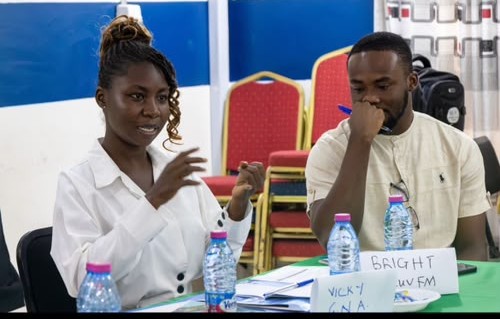
Ms Victoria Agyemang, a gender advocate, has called on individuals, families, communities and institutions to take personal responsibility for ending violence, discrimination and harmful practices against girls, stressing that the fight for a safer society must begin with individual attitudes and actions.
She said violence against girls could not be eliminated through legislation, policies and public campaigns alone without a conscious commitment by individuals to challenge harmful social norms, promote equality and protect the dignity of every girl.
In a statement to commemorate the 2026 International Day of the Girl Child, observed annually on October 11, Ms Agyemang emphasised that protecting girls was a collective responsibility that required deliberate action from every member of society.
“Violence ends with you as an individual. Before we point fingers at institutions, governments and society, we must first examine our own attitudes, actions and silence towards the abuse and discrimination girls experience daily,” she said.
Ms Agyemang noted that despite progress in promoting girls’ education, gender equality and child protection, many girls continued to face challenges, including sexual harassment, child marriage, domestic violence, exploitation and limited opportunities to achieve their full potential.
She expressed concern that some harmful practices had become normalised in communities, making it difficult for victims to speak out or seek justice.
She said society must move beyond commemorating the International Day of the Girl Child with speeches, social media campaigns and public declarations to taking practical steps that guarantee the safety, education and empowerment of girls.
“Every girl deserves to grow up in an environment where she feels safe, valued, respected and empowered to pursue her dreams without fear of violence or discrimination.
“We cannot continue to celebrate girls on October 11 and remain silent when their rights are violated on October 12 and beyond,” she stated.
The gender advocate urged parents and guardians to create safe environments where girls could freely express themselves, report abuse and receive the necessary support without fear of intimidation or victim-blaming.
She also encouraged boys and men to become active partners in preventing gender-based violence by rejecting harmful stereotypes, promoting respectful relationships and challenging behaviours that undermine the dignity of girls and women.
Ms Agyemang said the responsibility to end violence should not be placed solely on victims, stressing that perpetrators must be held accountable while communities worked collectively to prevent abuse.
She called on educational institutions to strengthen child protection mechanisms, promote gender-sensitive education and establish accessible reporting systems to address harassment, bullying and other forms of violence.
She further urged traditional authorities, religious leaders and community influencers to use their platforms to challenge discriminatory cultural practices and promote positive attitudes towards girls.
“Sometimes, violence thrives not because people support it openly, but because those who witness it choose to remain silent.
“Our silence can protect perpetrators, but our voices and actions can protect vulnerable girls. We must therefore become the change we want to see in our communities,” she said.
Ms Agyemang stressed that empowering girls through quality education, mentorship, leadership opportunities and access to essential services was critical to building an inclusive and sustainable society.
She said investing in girls was not merely a gender issue but a development priority, as educated, healthy and empowered girls contributed significantly to the social and economic advancement of their communities and nations.
She urged the Government and relevant institutions to strengthen the enforcement of existing child protection laws and ensure that survivors of violence had access to justice, counselling and other essential support services.
Ms Agyemang encouraged young girls to believe in their abilities, pursue their ambitions and refuse to allow discriminatory societal expectations to define their future.
“To every girl out there, your voice matters, your dreams are valid, and your future should never be limited by violence, fear or discrimination.
“You deserve a society that protects your rights, respects your choices and provides opportunities for you to become everything you aspire to be,” she said.
She called on Ghanaians to use the International Day of the Girl Child as an opportunity for personal reflection and renewed commitment to protecting girls.
“Ending violence is not only the responsibility of government, law enforcement agencies or gender advocates. It begins with how you treat the girl in your home, the girl in your classroom, the girl in your community and every girl whose path crosses yours.
“Violence ends with you. Be the reason a girl feels safe, respected and empowered, not the reason she lives in fear,” Ms Agyemang added.
