
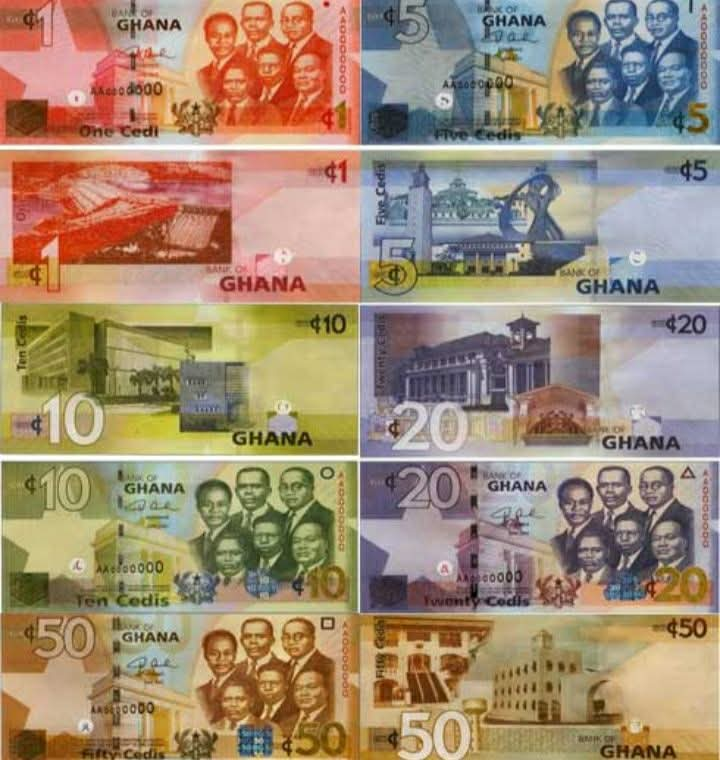
Ghana’s stock market maintained its upward momentum during the review week, pushing its year-to-date return to 57.63%. However, demand for government Treasury bills weakened, resulting in an undersubscribed auction, while the cedi lost ground against the US dollar and euro.
The Ghana Stock Exchange (GSE) Composite Index closed at 13,824.50 points, buoyed by price gains in CPC, GOIL, SCB PREF, FML, MMH, DIGICUT, IIL, SIC and GCB.
Trading activity improved significantly, with share volumes increasing by 86.72% to 14.57 million shares, compared with 7.80 million shares recorded in the previous week. The total value of shares traded amounted to approximately GH¢69.31 million.
CPC emerged as the week’s top performer, gaining 18.84% to close at GH¢0.82. GOIL and SCB PREF followed, each advancing by 10% to GH¢5.72 and GH¢0.99, respectively. FML rose 7.69% to GH¢14.00, while MMH gained 6.25% to GH¢0.17.
On the losing side, SOGEGH recorded the steepest decline, shedding 5.23% to GH¢4.17. CAL fell 2.63% to GH¢0.74, KASA declined 1.72% to GH¢1.71, while MTNGH lost 0.76% to close at GH¢6.56. GLD also edged lower by 0.01% to GH¢462.30.
Looking ahead, market watchers anticipate that financial stocks and companies within the information and communications technology (ICT) sector will continue to play a significant role in shaping market performance in the coming week.
Fixed-Income Market Sees Softer Trading and Treasury Bill Demand
Activity on the Ghana Fixed Income Market (GFIM) weakened during the week, with secondary-market trading volumes declining by 14.6% to GH¢9.76 billion.
Domestic Debt Exchange Programme (DDEP) bonds dominated transactions, accounting for 58.58% of total activity. Treasury bills followed with a 26.68% share, while sell-buyback transactions represented 14.54%.
Commercial paper contributed 0.16% of trading activity, while corporate bonds and old Government of Ghana notes each accounted for 0.02%.
In the primary market, demand for Treasury bills declined to GH¢3.64 billion from GH¢4.33 billion in the preceding week. Against the government’s target of GH¢4.254 billion, the auction recorded an undersubscription of 14.43%, highlighting softer investor appetite for short-term government securities.
The government accepted 92.70% of bids submitted for 91-day bills, 91.42% for 182-day bills and 62.95% for 364-day bills.
Despite the lower demand, Treasury bill yields declined across all maturities. The 91-day bill rate fell by four basis points to 4.52%, while the 182-day yield dropped by five basis points to 6.12%. The 364-day rate recorded a marginal one-basis-point decline to 9.45%.
The government is targeting GH¢5.192 billion in its next Treasury bill auction.
Cedi Loses Ground Against Major Currencies
On the foreign exchange market, the Ghana cedi weakened against the US dollar and euro during the review period, although it recorded a marginal appreciation against the British pound.
The local currency depreciated by 0.93% against the US dollar to close at GH¢11.80, taking its year-to-date depreciation to 11.44%.
Against the euro, the cedi shed 0.30% to settle at GH¢12.96, bringing its cumulative depreciation for the year to 5.29%.
However, the cedi gained 0.09% against the British pound, closing at GH¢15.46. Despite this marginal improvement, it remained 9.07% weaker against the pound on a year-to-date basis.
The exchange rate figures are based on Bank of Ghana interbank mid-rates.
Meanwhile, indicative open-market mid-rates closed at GH¢11.85 to the US dollar, GH¢15.68 to the British pound and GH¢13.18 to the euro.
Overall, the week reflected contrasting developments across Ghana’s financial markets, with equities sustaining strong gains, fixed-income activity softening and renewed pressure on the cedi against selected major international currencies.
