Creating more jobs, attracting investment into productive sectors, expanding African businesses and improving the availability of goods and services are among the potential benefits of a predictable and well-coordinated continental investment framework being advanced under the African Continental Free Trade Area (AfCFTA).
As Africa moves towards establishing a single continental market, the AfCFTA Protocol on Investment seeks to create an enabling environment that gives investors greater confidence to establish businesses, expand production and invest across African borders, contributing to economic growth and improved livelihoods.
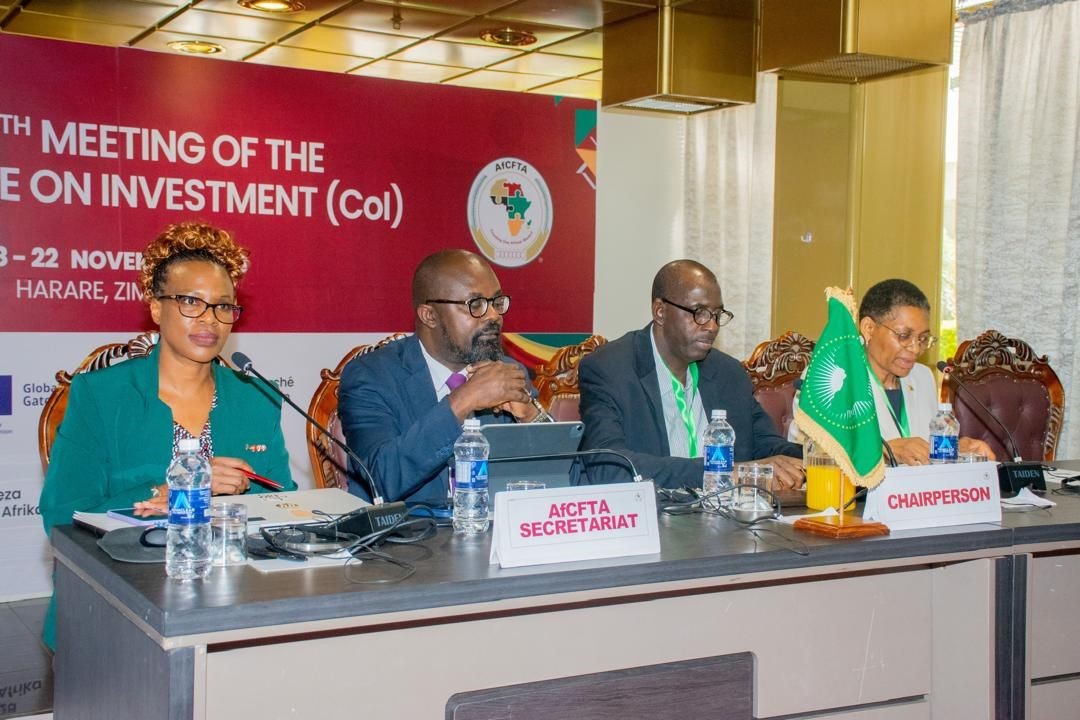
These ambitions were central to the 13th Meeting of the AfCFTA Committee on Investment, which brought together Member States in Harare, Zimbabwe, to advance the implementation of the Protocol and negotiations towards finalising the Annex on the Prevention, Management and Resolution of Disputes.
Turning investment into jobs and economic opportunities
For the ordinary African, the significance of a continental investment framework lies in its potential to translate increased investment into employment opportunities, business expansion and improved living standards.
Greater investment in manufacturing, agriculture, technology, infrastructure and services could strengthen Africa’s productive capacity, create employment for young people and generate new opportunities for local suppliers and entrepreneurs.
For consumers, increased investment in local production could also contribute to a wider range of goods and services, improved quality and more competitive prices.
For micro, small and medium-sized enterprises (MSMEs), an enabling investment environment could facilitate business partnerships, access to new markets, participation in regional value chains and opportunities to expand their operations beyond national borders.
Building investor confidence and reducing uncertainty
A major consideration for businesses seeking to invest across Africa is the predictability of national laws, regulations and institutional arrangements governing their operations.
The ongoing negotiations on investment dispute prevention, management and resolution are therefore important to building confidence among investors and strengthening the institutional environment within which investments take place.
By promoting greater regulatory coherence and effective mechanisms for addressing investment-related disputes, the continental framework seeks to reduce uncertainty and encourage sustainable investment across African markets.
Moving from negotiations to implementation
During the meeting, the AfCFTA Secretariat outlined the technical assistance being extended to Member States, including assessing national legislation for alignment with the Protocol, supporting legal reforms and strengthening the capacity of National Focal Points.
The Secretariat’s Chief Technical Advisor, Gilberto Antonio, underscored the urgency of moving beyond negotiations and translating the continental investment framework into practical action.
He expressed the ambition that “by the time we meet again, we will be discussing implementation”.
He also encouraged Member States to demonstrate flexibility and build consensus around the outstanding provisions of the draft Annex.
The meeting was scheduled to conclude on 22 November 2026.
Making investment work for ordinary Africans
The ultimate value of Africa’s continental investment framework will depend on its ability to deliver tangible economic and social benefits to its people.
For the unemployed graduate, the expectation is greater access to employment opportunities. For the small business owner, it is the prospect of new partnerships and expanded markets. For the ordinary consumer, it is improved access to quality and competitively priced goods and services.
Through the implementation of its Protocol on Investment, the AfCFTA seeks to make Africa not only a more attractive investment destination but also a continent where investment drives productive economic activities, entrepreneurship, job creation and shared prosperity.
Trending
- G/A MMDAs Move to Strengthen Air Pollution Controls With New Bye-Law
- WAEC Says 12, But The Minister Says 15: Who Is Changing The BECE Rules? Opoku Mensah Fires Back.
- AfCFTA Investment Framework Seeks to Unlock Jobs, Business Growth and Better Opportunities for Africans
- Kasapreko Records GH¢296m Nine-Month Profit As Earnings Rise 14.3%
- Fair Competition for All: How the AfCFTA Is Working to Deliver Better Prices, More Choices and Equal Business Opportunities
- AfCFTA Secretariat Calls For Commercially Viable Regional Projects, Stronger Investment Conditions And Cross-Border Industrial Partnerships At COP31.
- AfCFTA Markets Are Open For Opportunity, But Businesses Must Prepare To Take Advantage- Joyce Letswalo
- Air Pollution Fight: 13 Accra Assemblies Join Forces With A Joint Bye-Law
AfCFTA Investment Framework Seeks to Unlock Jobs, Business Growth and Better Opportunities for Africans
 By Prosper Kay
