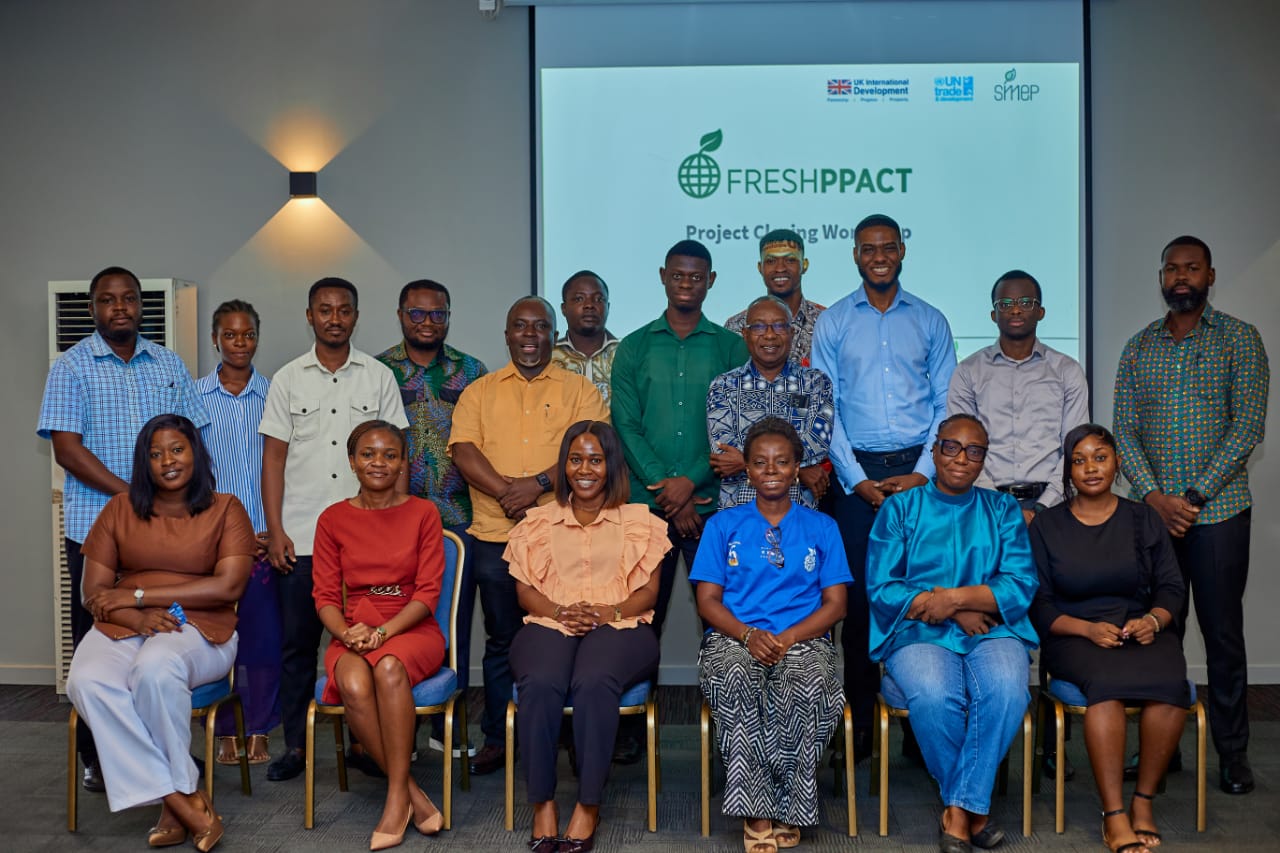
FRESHPPACT has reiterated that Ghana was on course toward reducing plastic pollution with coordinated effort, innovation, and commitment.
That would build a resilient and environmentally responsible future with the intervention of Blue Skies, the Environmental Protection Agency, and partners paving the way for plastic alternatives in Ghana.
At a closing ceremony for the groundbreaking policy blueprint aimed at accelerating Ghana’s transition to sustainable plastic alternatives, marking a significant milestone in the country’s environmental sustainability journey.
The initiative, led by FRESHPPACT in collaboration with Blue Skies and key partners, represents the first comprehensive policy framework of its kind in the West African sub-region.
It provides a strategic roadmap for reducing dependence on conventional plastic packaging while promoting the development and commercialization of locally produced, eco-friendly alternatives.
The bold vision of the initiative was to transition Ghana towards a sustainable materials economy, leveraging innovations such as biodegradable cocomulch fibre and other organic packaging solutions derived from agricultural waste.
Speaking at the launch, Dr. Ebenezer Laryea, the Project Director of FRESHPPACT emphasised that addressing plastic pollution requires more than incremental improvements in recycling systems.
“An effort to transition away from conventional plastic products is the correct and sustainable approach to addressing the plastics challenge,” he stated.
Dr. Laryea further highlighted that Ghana’s recycling rate remains critically low, and even with improvements, recycling alone cannot provide a long-term solution.
“This report sets out a clear policy blueprint by which Ghana can transition away from conventional plastics. It gives us great pride to witness the beginning of this journey” he added.
Drawing from insights presented during the FRESHPPACT stakeholder engagements, he noted that plastic pollution poses increasing risks to agriculture, soil health, and food systems, reinforcing the urgency for systemic change.
The project showcases transformative approaches such as converting coconut waste into biodegradable packaging, developing eco-friendly mulch alternatives for agriculture and supporting local manufacturing ecosystems for sustainable materials
These innovations not only address environmental concerns but also create new economic opportunities, particularly for farmers and rural communities.
Madam Dorothy Deadoo, representing Blue Skies, reaffirmed the company’s commitment to sustainable production systems.
She noted that the company is actively collaborating with local communities and farmers to develop and scale sustainable packaging solutions.
“Our work is focused on reducing plastic pollution while creating jobs and new income streams for farmers through sustainable alternatives.”
The Zoomlion Foundation, a key partner in the initiative, is leading efforts to drive behavioural change among young people.
According to Thomas Narh Korley, the National Coordinator of Zoomlion Foundation is leveraging school-based outreach and environmental education programmes to raise awareness and empower the next generation.
READ ALSO:Why set up an anti-corruption agency while shielding GoldBod at the same time? – IERPP queries govt
“Our role is to disseminate knowledge on plastic pollution and inspire young people to adopt sustainable practices that will shape Ghana’s future.”
The initiative demonstrates that sustainability is not merely an environmental concern, but a development imperative touching agriculture, livelihoods, industry, and national identity.
By prioritising home-grown innovation, inclusive partnerships, and policy alignment, Ghana is positioning itself as a regional leader in sustainable material transitions.