
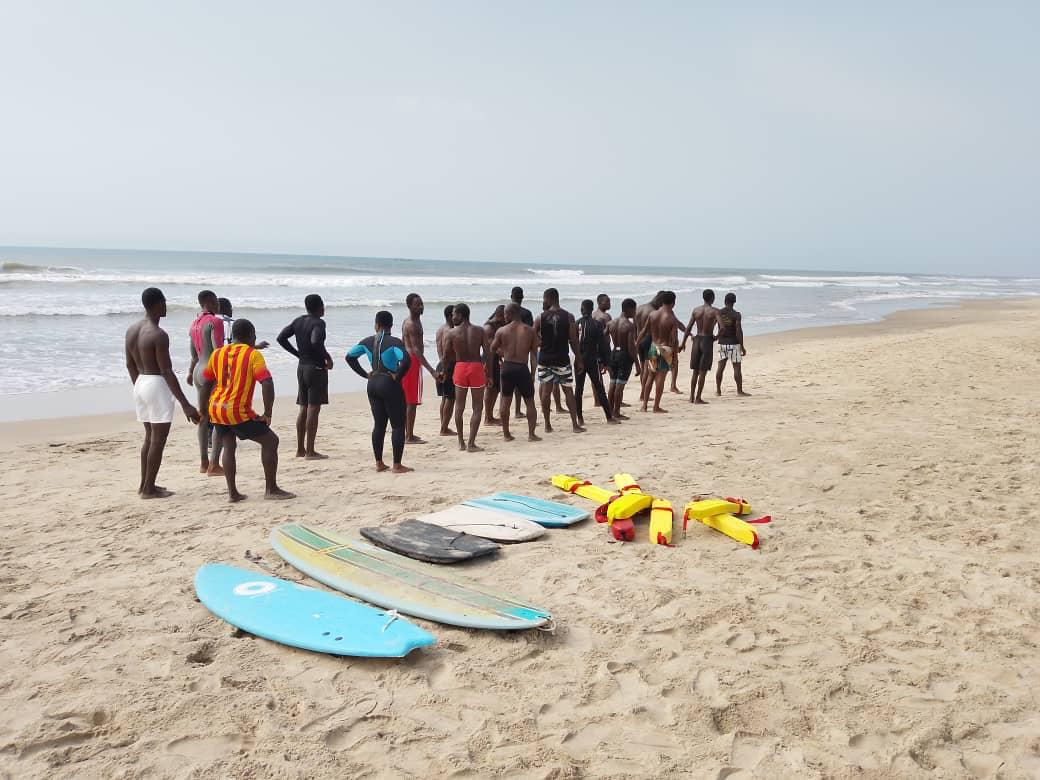
The Government of Ghana has launched a nationwide lifeguarding initiative aimed at reducing drowning incidents, which claim an estimated 1,400 lives annually.
The programme forms part of a broader national effort to strengthen water safety systems, improve emergency response, and build local capacity through structured lifeguard training and deployment.
Drowning as a National Priority
Deputy Interior Minister Ebenezer Okletey Terlabi described drowning as a pressing public safety and national security issue requiring urgent, coordinated action. Citing recent fatalities at Aboadze Beach, he emphasized the need to address drowning as a systemic national concern.
“Drowning is not theoretical. It is immediate, real, and affecting Ghanaian families today,” he said. “Citizen security must extend to safety in and around water bodies.”
Multi-Sector Partnership
The initiative is being implemented through a multi-sector partnership involving key state institutions, including the Ghana National Fire Service, Ghana Police Service, Ghana Navy, National Disaster Management Organisation, National Ambulance Service, Ghana Health Service, and the Ghana Tourism Authority. Technical support is provided by the Johns Hopkins International Injury Research Unit, alongside local expertise from the Kwame Nkrumah University of Science and Technology, with financial support from Bloomberg Philanthropies.
Lifeguards at the Center of the Initiative
At the center of the initiative is the training and deployment of certified lifeguards to high-risk coastal and inland areas. Authorities report that early implementation efforts have already led to improved monitoring, hazard identification, and rapid rescue response at selected sites.
Policy and Legislative Action
Government is also considering amendments to existing legislation, including Act 537, to formally incorporate drowning prevention into the mandate of the Ghana National Fire Service. The proposed reforms are expected to strengthen coordination, clarify institutional roles, and support sustained implementation of water safety measures nationwide.
Stakeholder Perspectives
Stakeholders at the launch reaffirmed their commitment to the initiative. Ben Baba Abdul of the Ghana Navy highlighted the importance of maritime safety collaboration, particularly in coastal communities.
From the research community, Abdulgafoor Bachani of the Johns Hopkins International Injury Research Unit called for sustained investment in data-driven interventions, while Emmanuel Nakua of the Kwame Nkrumah University of Science and Technology emphasized the importance of research, training, and community education—especially for children and other high-risk groups.
Community Engagement
Officials emphasized that community awareness and participation will be critical to the initiative’s success. With water bodies central to livelihoods, transportation, and recreation in Ghana, public education on water safety and risk awareness will play a key role in reducing preventable deaths.
