
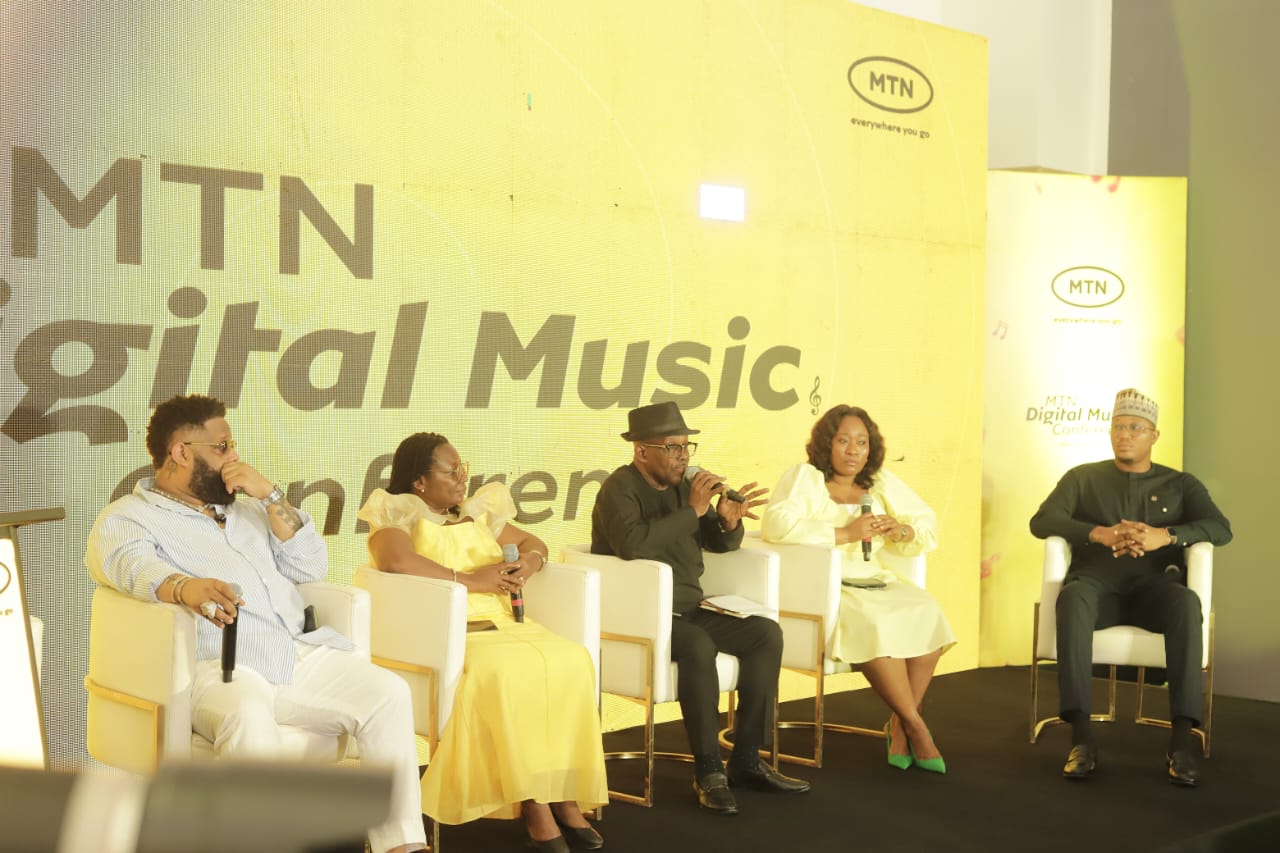
MTN Ghana has held its first Digital Music Conference in Accra, bringing together musicians, producers, managers, rights holders and media partners to discuss how digital platforms can create sustainable income opportunities for Ghanaian artists.
Speaking at the conference, Acting Chief Digital Officer of MTN Ghana, Bless Sefenu Agordjo, said the event was aimed at addressing key challenges in Ghana’s creative economy, particularly the difficulty many artists face in turning visibility into long-term earnings.
He noted that while digital streaming platforms such as Spotify, Audiomack and Apple Music have expanded the global reach of Ghanaian music, many musicians still struggle to generate meaningful revenue from their work.
According to him, the music industry must move beyond exposure and focus on building realistic and transparent revenue systems that can support both emerging and established artists.
“Ghanaian music is a powerful cultural export that connects generations and reaches audiences across the world. However, many artists still face the challenge of converting visibility into sustainable income,” he said.
Mr Agordjo explained that diversifying revenue streams has become critical in an increasingly competitive digital music landscape, stressing that local digital platforms can offer artists more direct access to listeners while creating more consistent income.
MTN Backs Local Platforms
He said MTN Ghana’s digital music platforms, supported by partnerships and mobile services, are designed to help artists monetise their content locally while maintaining stronger connections with fans.
He added that participation by Ghanaian artists on local platforms remains below its full potential due to limited awareness, misconceptions about revenue sharing and the strong preference for international streaming services.
“This conference seeks to change that by creating awareness and building trust. Artists deserve accessible income opportunities, transparency and platforms that reward consistency,” he stated.
Mr Agordjo said MTN Ghana plans to increase the number of Ghanaian artists using its digital platforms while strengthening collaboration with producers, managers and rights holders to ensure fairness and confidence within the music ecosystem.
He reaffirmed the company’s commitment to supporting the growth of Ghana’s music industry through stronger digital partnerships and innovation.

Digital Monetisation
Gospel singer with E-Verticals, MTN Ghana, Nsroma Amoateng, also emphasised the importance of digital monetisation and content aggregation systems in supporting artistes’ earnings.
She explained that MTN works with multiple content aggregators and distribution partners to ensure that music is properly registered, tracked and monetised across various digital platforms.
According to her, while earnings per stream may appear small, the real value of digital platforms lies in scale, consistency and long-term audience engagement.
She noted that many artistes underestimate the long-term earning potential of digital distribution because they focus on immediate returns rather than cumulative growth over time.
Nsroma Amoateng encouraged musicians to take digital platforms seriously, stressing that MTN’s large subscriber base presents significant opportunities for revenue generation if properly leveraged.
She added that multiple digital channels, including USSD and online systems, now make it possible for songs to be uniquely identified and monetised across different platforms.
According to her, artistes should view the digital ecosystem as a long-term investment, where consistency, strategy and audience engagement are key to sustainable income.
Artists Urged to Think Business
The former Chief Executive Officer of 3Music Networks, Abdullai Abu Sadiq also known as Baba Sadiq and Ghana’s Ambassador to Nigeria, said the music industry has become more expensive and competitive, making it necessary for artists to approach their careers with stronger business strategies and a long-term vision.
He noted that while streaming platforms and social media have opened up new opportunities for visibility, many musicians still struggle to convert popularity into sustainable income because they often overlook the business side of their careers.
According to him, the digital era has changed the way music is created, distributed and consumed, meaning artists can no longer rely solely on talent to succeed in the industry.

He explained that in the past, musicians could focus mainly on recording songs and performing, but today’s environment demands much more, including brand building, digital marketing, fan engagement and strategic partnerships.
“Today, being a musician is no longer just about making music. It is about understanding the business around the music and making deliberate decisions that can sustain a career,” he said.
Call for Industry Education
Mr Sadiq pointed out that many musicians invest heavily in production, videos and promotion, yet fail to create structures that can help them generate long-term returns from those investments.
He stressed that artists must consistently create content throughout the year instead of appearing only when they are releasing a new song.
He said regular engagement through interviews, live sessions, social media content and performances can help musicians remain relevant and strengthen their connection with fans.
Mr Sadiq also urged musicians to be cautious when signing agreements with record labels and distributors, warning that a lack of knowledge can lead to poor decisions that affect ownership and revenue.
He emphasised that musicians must educate themselves on contracts, royalties and publishing rights so they can protect their work and negotiate from a position of strength.
According to him, the future of Ghana’s music industry will depend not only on creativity but also on how well artists, managers and industry stakeholders build systems that support sustainable growth.

MUSIGA Supports Awareness
President of the Musicians Union of Ghana (MUSIGA), Bessa Simons, also underscored the importance of such industry gatherings in educating artists about alternative revenue streams in the digital age.
He described the conference as a necessary platform for engagement among stakeholders, saying the music business has evolved beyond physical formats such as CDs and flash drives.
He added that many musicians across the country are still unaware of the income opportunities available through digital platforms and other rights-based systems.
According to him, there are plans to deepen education within the industry so that independent musicians without management or record labels can also understand how to earn from their craft.
He said the union remains committed to the welfare of musicians by providing legal support, life insurance and pension schemes for members.

Royalties Under Spotlight
Founder and Director of GHMusic Publishing, Diana Hopeson, said the conference was timely as the music ecosystem continues to shift rapidly into the digital space.
She congratulated MTN Ghana for organising the event and described it as an important step toward educating musicians on how to protect and monetise their creative works.
She said one of the biggest challenges facing many musicians is poor management of metadata, which often prevents artists from receiving the full royalties due them.
According to her, beyond direct sales, musicians are entitled to several income streams, including performance rights, neighbouring rights and sync licensing. She also encouraged artists to make better use of caller ring back tone services as an additional source of income.

D-Black Calls for Transparency
Ghanaian hip-hop and Afrobeat musician, artist manager, and Chief Executive Officer of Black Avenue Musik, Desmond Kwesi Blackmore, popularly known as D-Black, also called for greater transparency and education within the music industry, saying many artists and producers still do not fully understand how royalties are calculated and distributed.
He said musicians often create songs without knowing the various income streams attached to their work, including performance royalties, publishing rights and producer shares.
According to him, this lack of knowledge has left many artists unaware of earnings generated from their music in other countries and across digital platforms.
READ ALSO: MTN Ghana, Nova launch 2026 Mini MBA to empower SMEs
D-Black stressed that stronger industry structures and transparent collection systems are needed to ensure musicians can properly track income generated from their songs.
He revealed that some artists only discover years later that their songs were registered or earning revenue in foreign markets without their full knowledge.
He added that proper education is essential, as many creatives focus solely on making music while ignoring the business processes that determine how income is generated and shared.
Future of Music Monetisation
The conference also provided a platform for stakeholders to discuss digital ownership, fair compensation and the future of music monetisation in Ghana’s evolving creative sector.

Source: Isaac Kofi Dzokpo
