
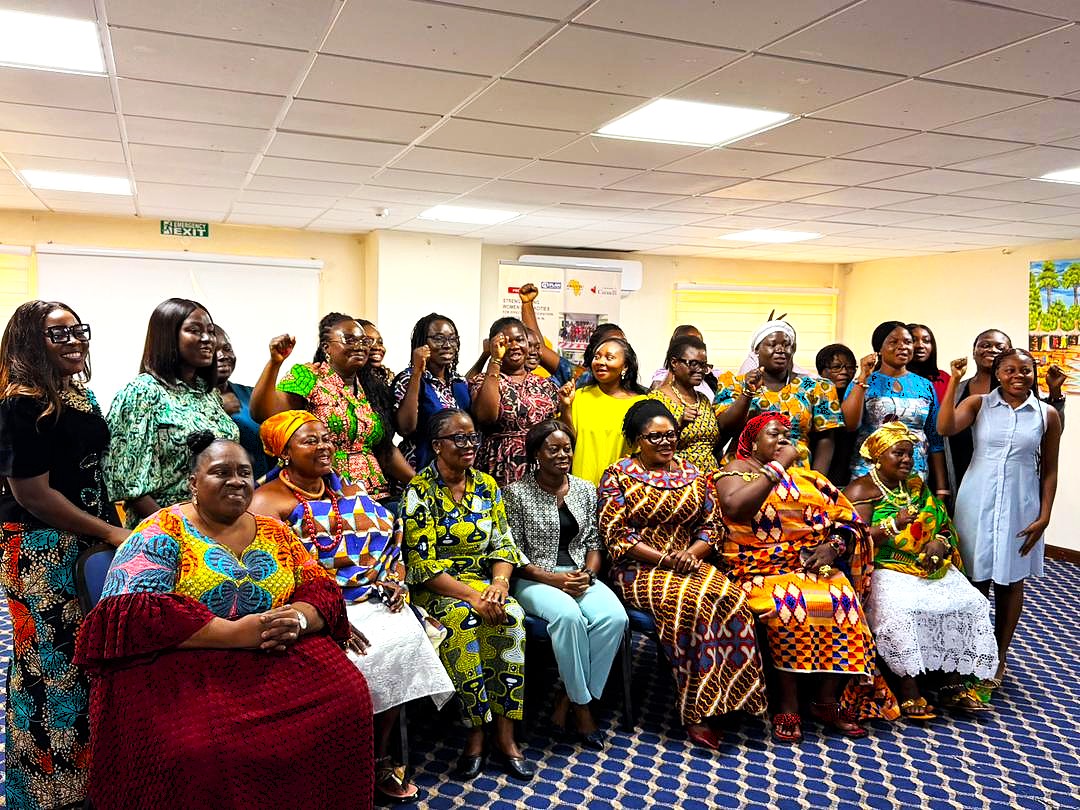
ABANTU for Development, in partnership with Plan International Ghana and with support from the Government of Canada, has launched a major initiative aimed at increasing women’s participation and representation in Ghana’s local governance system ahead of the 2027 District Level Elections.
The project, titled “Strengthening Women’s Capacities for Effective Participation and Representation in Ghana’s Local Governance System,” seeks to equip women particularly young women and women with disabilities with leadership, advocacy and campaign skills to enable them to contest and influence local governance processes.
It is also expected to support the implementation of the Affirmative Action (Gender Equity) Act, 2024 (Act 1121), while advancing inclusive and gender-responsive governance in Ghana.
Addressing Persistent Gender Gaps in Local Governance
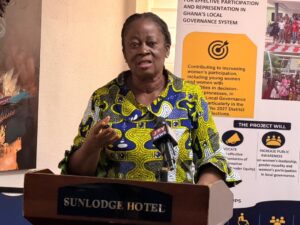
Speaking at the launch, the Executive Director of ABANTU for Development, Dr. Rose Mensah-Kutin, described the initiative as a strategic intervention aimed at addressing the persistent underrepresentation of women in local governance.
She explained that the project is being implemented under the Renewed Women’s Voice and Leadership (RWVL) Programme, funded by Global Affairs Canada through Plan International Ghana.
Dr. Mensah-Kutin noted that despite decades of advocacy and policy reforms, women’s representation in local governance remains below 10 per cent.
“We are saddened by the fact that our representation and our voices in local government still remain very limited because we do not even have 10 per cent representation. We still have a long way to go,” she said.
She stressed that the passage of the Affirmative Action Act presents a critical opportunity to reverse long-standing gender disparities in governance.
According to her, the project will identify, mobilise and train prospective female aspirants, equipping them with the tools and support needed to contest local elections and assume leadership positions.

Government Reaffirms Commitment to Gender Equality
The Minister for Gender, Children and Social Protection, Dr. Agnes Naa Momo Lartey, speaking at the event described the initiative as a timely investment in women’s leadership ahead of the 2027 District Level Elections.
She said the programme will help identify, mentor and support a new generation of women leaders capable of shaping governance and development at the local level.
“This gathering is not merely the beginning of a project; it is a continuation of a long and important journey towards gender equality and inclusive governance,” she stated.
Dr. Lartey commended ABANTU for Development, Plan International Ghana and the Government of Canada for their sustained commitment to women’s empowerment and leadership.
She added that the initiative aligns with national efforts to implement the Affirmative Action Act and accelerate progress towards gender-balanced representation.
“We are not simply preparing women to contest elections. We are investing in a future where leadership is more inclusive, representative and responsive to the needs and aspirations of all citizens,” she said.
Affirmative Action Targets and Policy Measures
The Minister underscored the importance of women’s participation in governance, describing it as central to national development and democratic growth.
She described the Affirmative Action Act as a landmark legislation providing a clear roadmap toward gender parity in leadership.
Dr. Lartey disclosed that the Act sets targets of 30 per cent female representation between 2024 and 2026, 35 per cent between 2027 and 2028, and 50 per cent by 2034.
She further revealed that the Ministry has established a Gender Equity Committee, submitted a Legislative Instrument to Parliament, conducted nationwide stakeholder engagements and set up a dedicated secretariat to support implementation.
The Minister also highlighted the National Gender Policy 2025–2034, which focuses on leadership development, economic empowerment, education and gender-responsive governance.
She acknowledged the role of former President John Dramani Mahama in advancing gender equality and women’s empowerment.
Dr. Lartey announced that 30 prospective female candidates will directly benefit from targeted training and mentorship under the project, urging them to build confidence and strengthen their leadership capacity.

Plan International Ghana Reaffirms Support for Women’s Leadership
Project Manager of the RWVL Programme at Plan International Ghana, Theodora Asare, described the initiative as a timely intervention to strengthen women’s participation in local governance.
She said the project reflects a shared commitment to ensuring women are not only represented in governance structures but are also empowered to influence decision-making processes.
Ms. Asare noted that women’s participation is often influenced by confidence levels, access to opportunities and supportive systems.
She said the programme seeks to address these barriers by equipping women—including women with disabilities with the skills and knowledge required for effective participation in the 2027 elections.
She reaffirmed Plan International Ghana’s commitment to gender equality, describing it as a fundamental human right and essential for sustainable development.
Affirmative Action Coalition Calls for Stronger Implementation
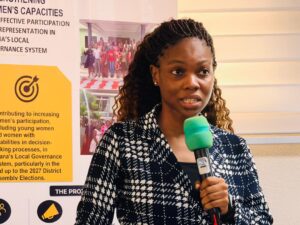
Speaking on behalf of the Convener of the Affirmative Action Law Coalition, Sheila Minkah-Premo, the Coordinator, Ms. Becky Ahadzi, described the initiative as a timely intervention supporting the implementation of the Affirmative Action (Gender Equity) Act, 2024 (Act 1121).
She commended ABANTU for Development, Plan International Ghana and the Government of Canada for investing in efforts to increase women’s representation in local governance.
Ms. Ahadzi noted that women currently account for only about 4.1 per cent of elected assembly members, highlighting the urgent need for deliberate action.
She described the Affirmative Action Act as a landmark framework that sets clear targets of 30 per cent representation, rising to 35 per cent by 2028 and achieving parity by 2034.
She stressed that the 2027 District Level Elections will be a critical test of the law’s implementation, calling for immediate action to prepare women candidates.
Ms. Ahadzi further called for constitutional reforms to introduce quotas in Parliament and local government assemblies to strengthen women’s political participation.
She emphasized that women’s representation in local governance is not only a gender issue but also a governance and development imperative, given the impact of district assemblies on essential services such as education, health, sanitation and infrastructure.
READ ALSO: Ashie Moore “Sweats” in Court during Cross-Examination
She urged stakeholders to provide mentorship, dismantle barriers and support women to contest and win elections, noting that the success of the Affirmative Action Act depends on deliberate implementation.
She reaffirmed the Coalition’s commitment to working with ABANTU and partners to ensure effective implementation of the project ahead of the 2027 elections.
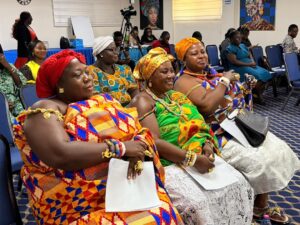
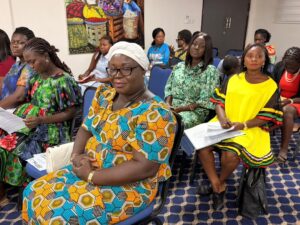
The launch brought together stakeholders from government bodies, district assemblies, women’s rights groups, civil society organizations, development partners, the media, people with disabilities, young women leaders, and community representatives to explore ways of working together to boost women’s political participation and representation in Ghana.
Source: Isaac Kofi Dzokpo
