
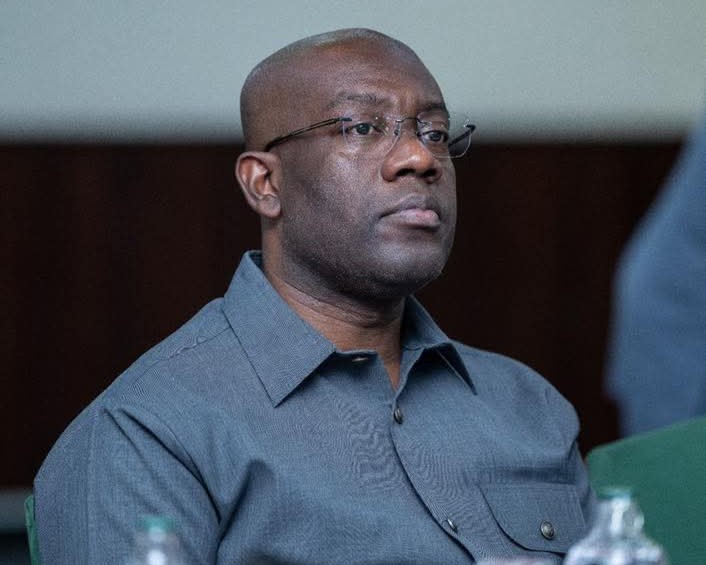
The Ranking Member on Parliament’s Economy and Development Committee, Kojo Oppong Nkrumah, has cautioned that Ghana’s celebrated economic stability under the International Monetary Fund (IMF) programme will amount to little if it fails to create jobs and ease the burden on struggling households.
Speaking during a parliamentary debate on Ghana’s economic outlook following the completion of the IMF Extended Credit Facility (ECF) programme, the Ofoase-Ayirebi MP argued that government is focusing too heavily on positive macroeconomic indicators while ordinary citizens continue to grapple with unemployment, high living costs and economic hardship.
According to him, economic recovery cannot be measured solely by declining inflation figures, exchange rate stability or improved fiscal balances when many young people remain unemployed and families continue to struggle to make ends meet.
“The numbers that the Ghanaian people are watching in their day-to-day lives are actually getting worse,” he told Parliament.
Youth unemployment casts shadow over recovery
Mr Oppong Nkrumah said the biggest test of Ghana’s economic recovery is whether it is generating employment opportunities, particularly for young people.
Citing data from the Ghana Statistical Service’s Quarterly Labour Force Survey for the third quarter of 2025, he noted that youth unemployment among persons aged 15 to 24 increased from 32 per cent in December 2024 to 32.5 per cent by the third quarter of 2025.
While acknowledging that the IMF programme helped restore macroeconomic stability, he maintained that such gains have not yet translated into meaningful employment opportunities for thousands of young Ghanaians seeking work.
He expressed particular concern about Greater Accra, where youth unemployment has reached 49.3 per cent.
According to him, nearly one in every two young people in the region is unemployed, a situation he described as alarming and a serious threat to the country’s social and economic future.
Mr Oppong Nkrumah further cited statistics showing that seven out of every ten unemployed persons in Ghana are below the age of 35, insisting that these figures should feature more prominently in discussions about economic recovery.
For him, any recovery that leaves a significant proportion of young people without jobs cannot be considered fully successful.
IMF programme completed, but not an IMF exit
The former Information Minister also questioned government’s description of Ghana’s completion of the ECF programme as an “exit” from the IMF.
He argued that the term creates a misleading impression that Ghana’s engagement with the Fund has ended.
According to him, Ghana remains a member of the IMF and continues to work with the institution, noting that government is already pursuing another arrangement known as the Policy Coordination Instrument (PCI).
Mr Oppong Nkrumah therefore urged government to be transparent with citizens about the nature of Ghana’s continuing relationship with the Bretton Woods institution.
Households still battling high costs
Beyond unemployment, the MP argued that many households are yet to feel the benefits of economic stabilisation.
Although inflation has fallen significantly from the peaks recorded during the economic crisis, he said the cost of essential services such as rent, electricity and other household expenses continues to place considerable pressure on families.
He maintained that citizens judge economic performance based on the realities they encounter in markets, workplaces and homes rather than on economic reports and statistical presentations.
According to him, many Ghanaians remain concerned about whether their incomes can cover basic necessities and whether they can secure sustainable employment.
Questions over tax relief
Mr Oppong Nkrumah also challenged government claims that taxpayers have received substantial relief.
He argued that while some taxes have been abolished, Parliament has simultaneously approved several new revenue measures, raising concerns about the overall tax burden on citizens and businesses.
He further questioned the effectiveness of government’s revenue strategy, noting that authorities have struggled to meet revenue targets despite the introduction of additional tax measures.
Growth must improve lives
The Ranking Member stressed that macroeconomic stability should be viewed as a foundation for broader economic transformation rather than an achievement in itself.
According to him, the true measure of economic success lies in the creation of jobs, improved incomes, affordable living conditions and expanded opportunities for citizens.
His intervention highlights the growing debate over whether Ghana’s post-IMF recovery is producing tangible benefits for ordinary people.
READ ALSO: It Is now a Crime to Engage Unlicensed Agents or Brokers in Ghana — GAREB President
While government continues to point to declining inflation, a stronger cedi and improved fiscal indicators as signs of recovery, Mr Oppong Nkrumah insists that the ultimate verdict will come from the lived experiences of Ghanaians.
For millions of young people still searching for work and households struggling with rising expenses, he argued, economic stability without jobs and improved living standards remains an incomplete victory.
