
Africa’s Continental Free Trade Area is pushing a wave of digital and administrative reforms to modernise customs operations across the continent, as officials warn that outdated systems, poor infrastructure and even language barriers are still slowing goods at many borders.
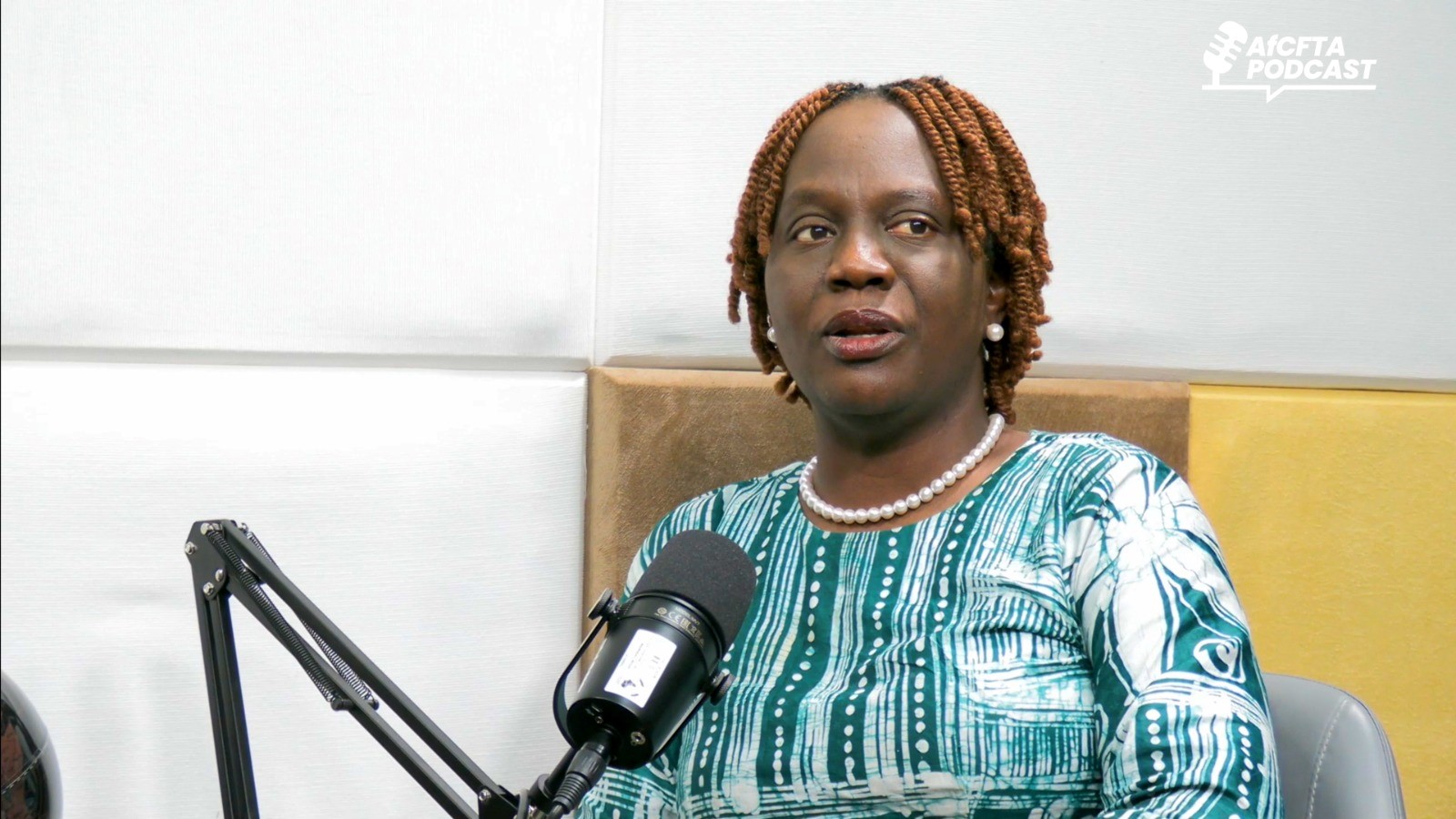
Speaking on the African Continental Free Trade Area’s (AfCFTA) official podcast, Director Demitta Gyang, who heads customs administration at the AfCFTA Secretariat, said customs officers are central to making the single market work. She estimated that roughly 95% of the agreement’s provisions on trade in goods ultimately depend on customs officials to implement them, from applying agreed tariff preferences to checking rules of origin.
The AfCFTA has already issued 5,800 certificates of origin to businesses trading under the agreement, a milestone Gyang said shows the continent has moved from negotiating the trade deal to actually implementing it.
Rather than replacing the customs systems already used by individual countries, the Secretariat’s approach is to harmonise them, she explained. She said the goal is an “integrated customs administration” in which national systems, whether a country runs ASYCUDA, a home-grown platform, or South Korea’s UNIPASS system, can talk to each other through shared interfaces and standardised data, without countries having to overhaul what they already use. She said the Secretariat has found that around 36 African countries currently run some version of ASYCUDA, a widely used customs software, while others use their own in-house systems.
Several digital tools are already in motion, according to Ms. Gyang. An e-tariff book, developed with support from the World Customs Organisation, lets traders check applicable tariffs and rules of origin for a product before exporting it. An electronic certificate of origin pushes certification digitally from an exporting country to its destination through a central AfCFTA platform, cutting paperwork, cost and processing time. A single bond guarantee scheme is being built to let goods transit multiple countries under one bond, rather than requiring traders to post a separate bond in each country they cross, a process Director Gyang said can leave trucks stranded for lack of funds.
Director Gyang said her team has carried out corridor assessments — following trucks along routes such as Abidjan to Lagos, or Mombasa port to the Democratic Republic of Congo — to identify what is slowing goods down. She described the causes as “multifaceted,” spanning poor physical infrastructure, patchy or unconnected digital systems, undertrained officers, and gaps in coordination between agencies such as customs, immigration and food safety authorities.
Among the examples she cited: a border post with no electricity that must close at sundown, forcing trucks that arrive late to wait until the next day; neighbouring countries operating on different closing times — even where the time difference is just one hour — leaving trucks waiting a full day for clearance; more than 60 checkpoints on some West African corridors between the port of Tema in Ghana and the Paga border crossing into Burkina Faso; and language barriers at borders, such as English-language paperwork presented to a French-speaking customs officer, sometimes requiring a wait for translation.
Director Gyang said the Secretariat is exploring fixes including training officers to be multilingual, using shared local languages common on either side of a border, and producing documentation in multiple languages.
Asked how customs agencies reconcile their traditional role collecting government revenue with the AfCFTA’s push to ease trade, she said the two goals are not in tension. Drawing on the World Trade Organisation’s Trade Facilitation Agreement, she argued that simplifying and speeding up procedures increases revenue rather than reducing it, since goods and trucks held up at borders generate no revenue while they sit idle. She said more customs administrations are turning to risk management and trader databases to selectively target inspections, rather than treating every shipment the same way.
The Secretariat has run capacity-building programmes for customs officers since 2024, based on a needs assessment carried out with national customs administrations, and delivered them on a regional basis across the continent’s five regions. It is targeting about eight capacity-building activities, combining virtual and in-person sessions, in 2026, and is working with regional training centres and customs institutes to embed AfCFTA content into standard training curricula. The Secretariat also collaborates with the World Customs Organisation on technical support, including the harmonised system migration and benchmarking of its e-certificate of origin data model.
