
Story By: Felix Ernest Odamtten / Mohammed Faisal Mustapha….
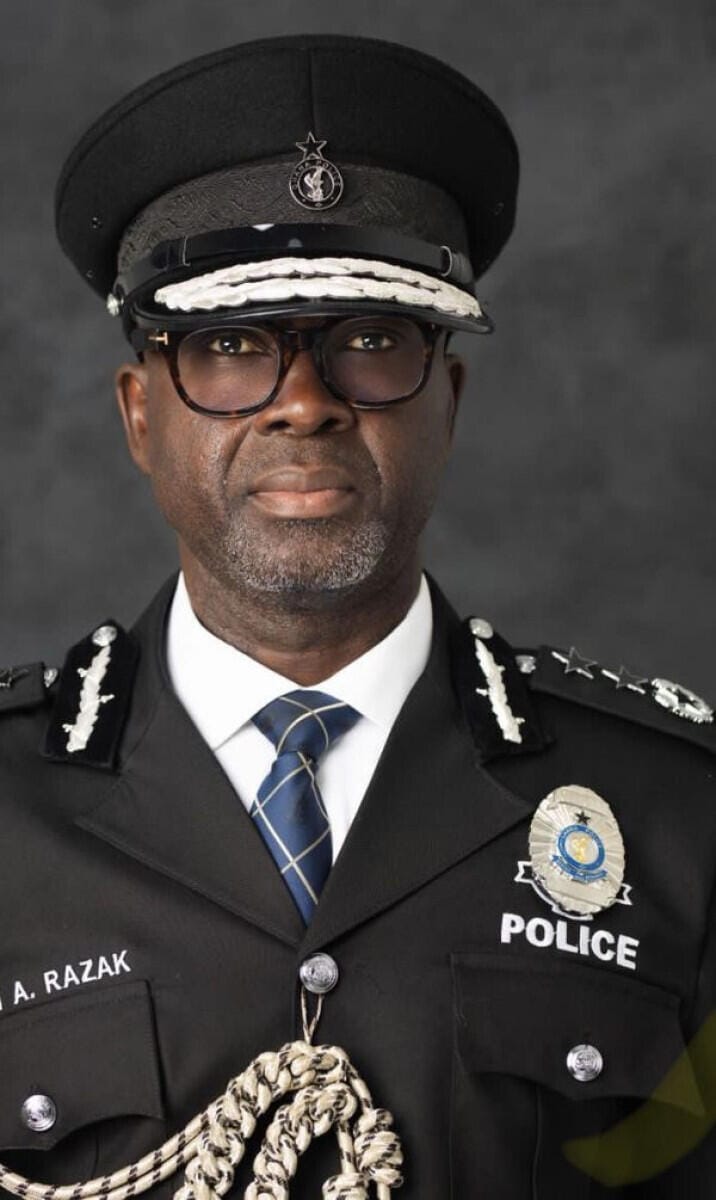
National Security Coordinator COP Osman Abdul-Razak has called for tougher and more consistent enforcement of the Vigilantism and Related Offences Act, 2019 (Act 999), warning that Ghana must not return to an era in which political violence, intimidation and organised groups threaten the country’s democratic gains.
Delivering the keynote address at a National Policy Dialogue organised by Election Watch Ghana at the Kofi Annan International Peacekeeping Training Centre (KAIPTC) in Accra, COP Abdul-Razak said the effective implementation of Act 999 must be anchored in professional, impartial and politically neutral security institutions.
The dialogue was held under the theme, “Assessing the Implementation of the Vigilantism and Related Offences Act, 2019 (Act 999) and Its Implications for National Security and Democratic Governance,” bringing together stakeholders to examine the country’s experience with political vigilantism and the effectiveness of the legal framework introduced to confront it.
COP Abdul-Razak traced the development of political vigilantism in Ghana to the 1990s, explaining that what began largely as informal youth mobilisation for political visibility gradually evolved into organised groups associated with political confrontation and violence during successive electoral cycles.
According to him, some of the groups eventually assumed characteristics resembling informal paramilitary formations, including identifiable uniforms, masks and weapons, creating security concerns beyond ordinary political mobilisation and raising questions about the ability of state institutions to maintain public order.
He argued that political vigilantism must no longer be treated simply as a partisan or electoral matter, but as a national security challenge capable of affecting social cohesion, public order, investor confidence and the credibility of Ghana’s democratic institutions.
The National Security Coordinator warned that election related violence and intimidation could erode citizens’ confidence in the democratic process, weaken trust in state institutions and undermine the peace and stability Ghana has painstakingly built over the years.
He described the passage of Act 999 as an important national response to the threat posed by vigilante groups and organised intimidation, stressing that the legislation emerged from bipartisan political consensus and represented a collective determination to prevent political competition from degenerating into violence.
“The law will be respected equally, institutions will act professionally,” COP Abdul-Razak stressed, underscoring the principle that the enforcement of Act 999 must not depend on political affiliation, influence or the identity of those involved.
He said the neutrality of security institutions was fundamental to the credibility of the law, insisting that every Ghanaian must receive equal treatment and that security agencies must be allowed to discharge their constitutional responsibilities without partisan interference.
COP Abdul-Razak further emphasised that security agencies must protect citizens’ rights to political participation, peaceful assembly and freedom of expression while simultaneously maintaining public order and safeguarding national security.
He also challenged political parties to take greater responsibility for the conduct of their supporters, urging them to mobilise citizens responsibly and avoid activities capable of creating conditions for violence, intimidation or confrontation.
The National Security Coordinator advocated awhole of society approach to national security, arguing that protecting Ghana’s democratic stability cannot be left solely to the security agencies or the Electoral Commission.
“National security is a responsibility of the whole society,” he said, calling for stronger collaboration among political parties, state institutions, traditional authorities, religious leaders, civil society organisations, the media and ordinary citizens.
He urged traditional authorities to strengthen their role in conflict prevention and resolution, particularly at the community level where tensions can escalate quickly, while religious leaders should use their influence to promote tolerance, dialogue and peaceful political engagement.
The media, he said, also had a crucial responsibility, particularly during politically sensitive periods, urging journalists to maintain accuracy and professionalism while investigating emerging forms of political violence, intimidation and organised criminal activity.
Civil society organisations, he added, must continue investing in civic education and public awareness, arguing that an informed citizenry is an important line of defence against political manipulation, intolerance and violence.
COP Abdul-Razak outlined five priorities for strengthening the implementation of Act 999: effective enforcement and the de politicisation of security institutions; early identification and prevention of threats; real time coordination among security agencies and relevant stakeholders; visible and consistent accountability; and adequate resources and institutional capacity.
He warned that legislation alone could not solve the problem if institutions responsible for enforcing it lacked the personnel, logistics, intelligence capabilities and resources required to perform their duties effectively.
The National Security Coordinator also called for stronger action against related forms of organised violence and criminality, including landguardism, warning that groups that use intimidation, force or organised violence to achieve unlawful objectives can pose serious threats to public safety, property rights and community stability.
He cautioned against any attempt to recreate an environment in which political parties or organised groups could employ violence and intimidation to pursue political objectives, delivering a stark message that has become a central theme of Ghana’s continuing democratic security debate.
“We must not go back,” he stressed, urging stakeholders to protect Ghana’s democratic reputation through strong institutions, professional security services, responsible political leadership and sustained vigilance.
COP Abdul-Razak said the effectiveness of Act 999 should not be measured only by the number of arrests, cases or prosecutions recorded, but by the capacity of state institutions to identify threats early and prevent political violence before it occurs.
He further urged political leaders to redirect political competition towards issues that directly affect citizens’ lives, including employment, education, wealth creation, social development and improved living conditions, rather than allowing intimidation and violence to dominate political mobilisation.
He called on political leaders, security agencies, civil society organisations, traditional and religious authorities, the media and citizens to commit themselves to a common national effort to protect Ghana’s democratic stability and ensure that political differences are settled through lawful and peaceful means.
The National Security Coordinator concluded by challenging participants in the policy dialogue to move beyond expressions of concern and develop a practical, measurable and adequately resourced roadmap for strengthening Act 999, insisting that Ghana’s democratic future depends on institutions capable of enforcing the law impartially and preventing organised violence before it takes root.
24. From Election Violence to Landguardism: COP Abdul-Razak Calls for Stronger State Response
25. “We Must Not Go Back”: COP Abdul-Razak’s Defining Message on Ghana’s Democratic Security
