
The Ghana Chamber of Telecommunications has stepped up its campaign against mobile money fraud, warning Ghanaians never to disclose their MoMo PINs as fraudsters deploy increasingly sophisticated tactics to steal from unsuspecting customers.
The Chamber said criminals were exploiting methods including social engineering, SIM-swap schemes, phishing messages and fake customer-service calls, making individual vigilance critical to protecting digital financial transactions.
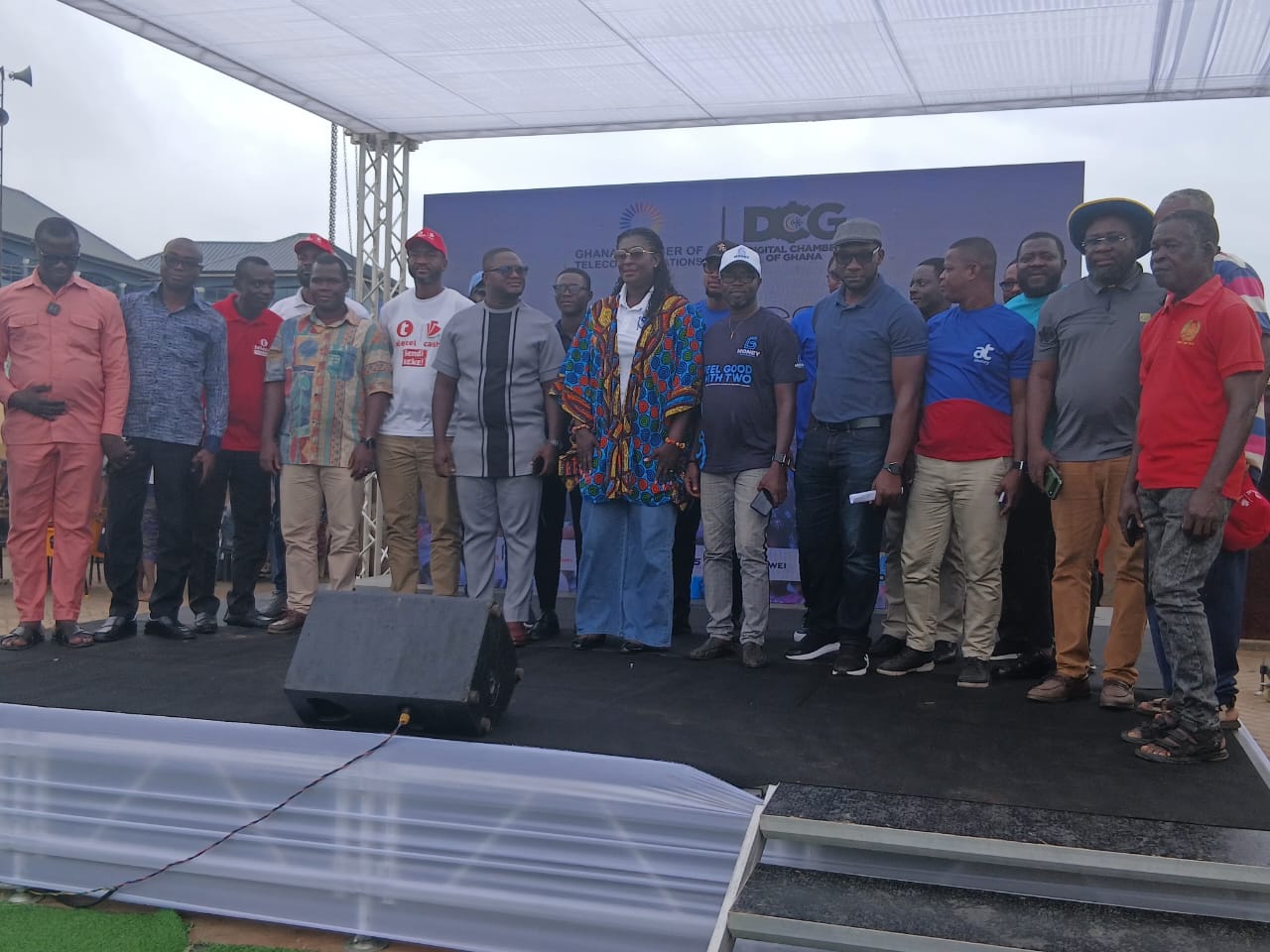
The warning was issued during a public education exercise for traders, drivers and residents at the Mankessim lorry station in the Mfantseman Municipality of the Central Region.
Dubbed the “Mankessim Market Storm,” the outreach brought together telecommunications operators in Ghana and other stakeholders to educate the public on mobile money services, fraud prevention and safe digital transactions.
Chief Executive Officer of the Ghana Chamber of Telecommunications, Ms Sylvia Owusu-Ankomah, stressed that while telecommunications companies continue to strengthen security systems and fraud-detection mechanisms, customers also have a critical role to play.
“The battle against MoMo fraud requires a partnership between service providers, law enforcement and the public,” she said.
“While the industry continues to strengthen system security and fraud-detection tools, customers must also adopt basic safety habits to reduce their risk of being defrauded.”
She urged customers to verify requests for money or personal information and immediately report suspicious activities to their service providers or the police.
Ms Owusu-Ankomah particularly cautioned customers against sharing their MoMo PINs through text messages, WhatsApp, phone calls or any other channel, regardless of who makes the request.
“Treat your MoMo PIN with the same level of care as your bank PIN. Fraudsters can only succeed if we make their job easy,” she cautioned.
Telecommunications operators participating in the exercise also demonstrated safe transaction practices and educated traders and drivers on how to identify suspicious calls and messages.
Assistant Superintendent of Police Hayford Alavi, Mankessim Divisional Crime Officer, advised the public not to respond to unsolicited calls or messages requesting money or personal information.
He also encouraged victims and people who encounter suspicious activities to report them promptly to the appropriate authorities for action.
The programme additionally addressed public concerns surrounding telecommunications infrastructure.
Dr Philip Deatanyah, a Radiation Protection Physicist at the Radiation Protection Agency, together with officials from the National Communications Authority and Environmental Protection Authority, rejected claims that telecommunications masts cause cancer.
They explained that telecom masts play an important role in providing reliable mobile and internet connectivity to communities, supporting businesses, education, emergency services and social communication, while operating under established safety standards and regulatory oversight.
Some participants, including Madam Salamatu, Mr Maximus Otoo Hackman and Kofi Mensah, described the sensitisation exercise as useful, saying it had improved their understanding of how fraudsters operate and the steps needed to protect their money.
They said lessons on safeguarding PINs, avoiding suspicious calls and verifying transactions before approval would help customers reduce their exposure to mobile money fraud.
The Chamber maintained that combating MoMo fraud requires collective action, with customers staying alert and protecting sensitive information while telecommunications companies continue strengthening security systems and customer-support mechanisms.
