Silent Epidemic: Why Ghana Must Adopt A Mandatory Front-of-Pack Warning Labels Before It’s Too Late
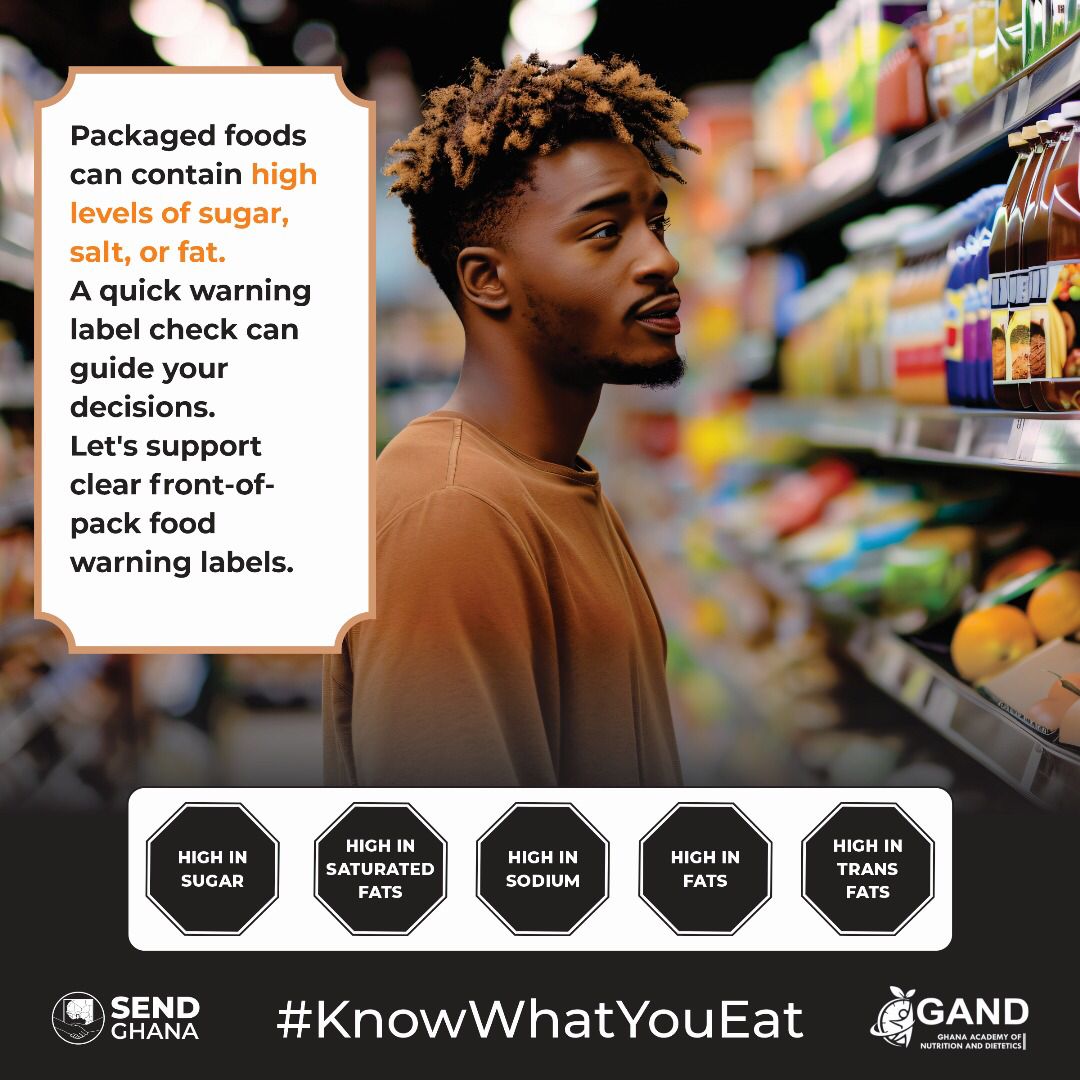
Ghana’s traditional diet once shielded its population from many lifestyle diseases. Today, that shield is breaking.
Our markets and shops are flooded with ultra-processed foods and sugary drinks that are gradually replacing wholesome meals. The result is becoming painfully clear in our hospitals and communities.
According to national data presented by the Ghana Health Service and confirmed by Dr. Kwabena Sarfo, a medical doctor and the Chief Executive Officer (CEO) of OKS Medical Consult. during the 2025 World Food Day Dialogue, non-communicable diseases (NCDs) now account for nearly 45% of all deaths in Ghana.
This mirrors the findings of the World Health Organization’s Ghana STEPS Survey (2023), which reported widespread risk factors for NCDs among adults, driven largely by diet and lifestyle changes.
Even more troubling are facility-based studies such as a cross-sectional assessment published by the University of Health and Allied Sciences in 2024, which found that more than one in four adults screened at outpatient departments lived with at least one chronic NCD, particularly hypertension and diabetes.
What is clear is that these conditions are no longer limited to the elderly. Younger adults are being diagnosed. Children are at risk. Ghana is losing its healthy future.
Why Prevention Must Start With Information
Treatment and management of NCDs are critical, but far better than cure is prevention. Managing NCDs drains families emotionally and financially. Prevention is far cheaper and far more humane. But prevention depends on one important factor: the right to know what we are eating.
Today, many processed foods sold locally contain dangerously high levels of sugar, salt, and unhealthy fats, and areas often disguised at the back, with figures and jargon that most consumers cannot decipher. That’s where front-of-pack warning labels (FOPWL) come in.
Under a robust FOPWL policy, any packaged product with excessive sugar, salt, saturated fat or calories would carry a prominent, easy-to-read warning label on the front. No jargon, no technical tables – just clear warnings like “High in Sugar”, “High in Salt”, or “High in Fat.” This simple transparency empowers consumers to make informed choices at a glance. This allows consumers to make healthier choices instantly, without needing a nutrition degree.
SEND Ghana and GAND:
Leading the Fight for Clear Labelling Recognizing the urgency, SEND GHANA and the Ghana Academy of Nutrition and Dietetics (GAND) are leading a national advocacy effort calling for mandatory Front-of-Pack Warning Labels. Their campaign, amplified during the 2025 World Food Day, emphasizes that consumers must be informed of the content of their food so they able to make informed choices.
Academic institutions are also joining the fight. In a stakeholder forum hosted by the Department of Food Science and Technology at the Kwame Nkrumah University of Science and Technology (KNUST), experts warned that Ghana’s rising NCD crisis demands stronger policy measures.
They recommended FOPWL as a scientifically backed intervention that can transform health behaviors and push manufacturers to reformulate products.
READ ALSO:MTN Savanna Fest Health Walk Draws Huge Community Participation in Tamale
Countries such as Chile, Mexico and Peru have adopted mandatory warning labels and recorded reductions in the purchase of unhealthy foods. Ghana can reverse the rising tide of preventable sickness with one simple, cost-effective, public health tool.
Call to Action
Individuals: Question what you buy. Demand that the government formulates and implements a mandatory front of pack warning label policy.
Government & Regulatory Bodies: Adopt mandatory FOPWL immediately. Public health should outweigh commercial interests.
Ghana stands on the edge of a preventable health crisis. Clear food warning labels are not just a policy, but also a form of protection. The choice is ours: prolong disease or empower people with information. The time to decide is now.
Written By: Helena Amoah (Nana Aba Appiatewaa)