
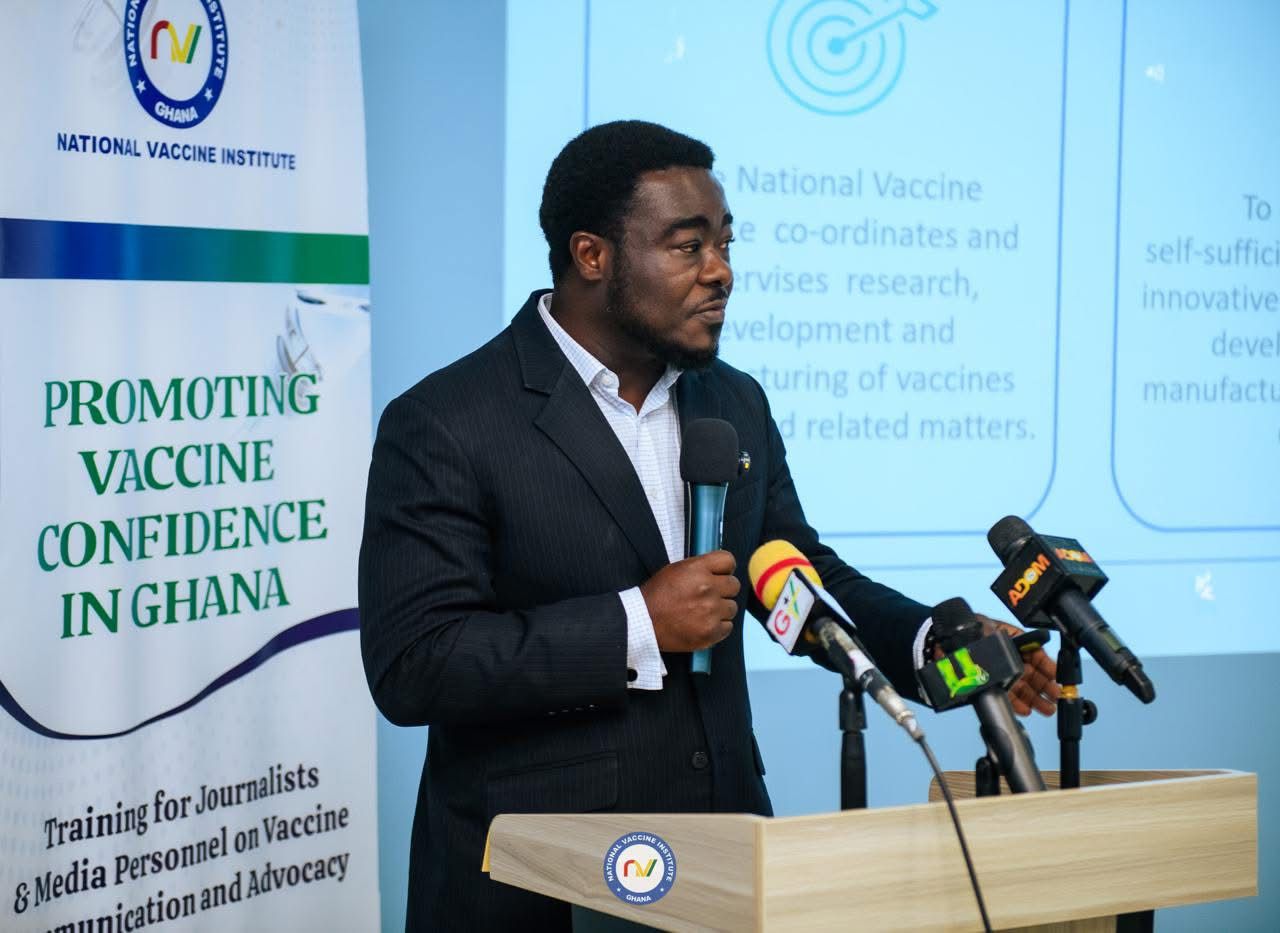
Ghana has taken a bold and strategic step toward funding its own vaccine supplies and safeguarding public health, as it prepares to transition from support from the Global Alliance for Vaccines and Immunization (GAVI) by 2030.
This transition marks a defining moment in the country’s journey toward vaccine sustainability,
sovereignty, and long-term health security.
National Vaccine Perception Survey aimed at strengthening work and ensuring that locally manufactured vaccines are trusted and accepted.
The initiative was launched by the National Vaccine Institute (NVI) to generate evidence-based insights rooted in community realities, ensuring that Made-in-Ghana vaccines meet not only the highest quality and safety standards, but also engender trust and confidence among end users.
The survey is being conducted in Fifty -five districts across all sixteen Regions of Ghana and runs for two months, from Saturday February 16 to Tuesday March 10, 2026.
It includes quantitative data collection from 11,077 respondents through structured interviews using random sampling and seven focus group discussions in strategically selected districts to gather qualitative insights.
The study assesses public attitudes toward vaccines, identifies drivers of confidence, examines barriers to acceptance of Made-in-Ghana vaccines, and maps misinformation trends that undermine uptake.
By combining quantitative data (prevalence, demographics) with qualitative insights (belief systems, trusted messengers), the survey enables geographically tailored and evidence-driven interventions.
Conducting research across all 16 regions ensures that policies reflect Ghana’s diversity and address the realities of both high-confidence and high-hesitancy communities.
The survey aims to generate evidence that will inform communication strategies and
identify trusted messengers for the Made-in-Ghana vaccine rollout distinguish between attitudinal hesitancy and structural barriers to enable targeted interventions.
Ghana’s health security transition by aligning manufacturing capacity with public acceptance and build sustained public trust through transparent, evidence-based communication.
Additionally, the survey will establish a national baseline for vaccine confidence by region and demographics, identify drivers and barriers to uptake, assess the misinformation landscape, and examine the influence of Food and Drugs Authority (FDA) approval o n vaccine acceptance.
The National Vaccine Institute is appealing to residents n the 55 selected district to actively support the research. The voices of respondents are important.
Their feedback, concerns, questions, and experiences will directly shape government
communication strategies and ensure that Made-in-Ghana vaccines reach every household
Participation is voluntary, and all information collected will remain strictly confidential”. As the CEO o f NVI, Dr. Sodzi Sodzi-Tettey, emphasizes, “This is not a sales pitch.
We genuinely want to listen and understand. The information provided is strictly confidential. Together, we build vaccine confidence that protects every Ghanaian.”
READ ALSO: Metro Mass to receive 100 new buses in March; 300 planned for 2026
“Local vaccines must inspire confidence to succeed. Ghana has long been a leader
in immunization in West Africa, built o n trust in health workers and vaccines.
As we begin manufacturing our own vaccines, we must carry that legacy forward through transparency, engagement, and listening to communities,” he further noted.
By Victoria Agyemang
