
By Linda Dede Nyanya Godji Incoom
The dinner rush hour had begun at Tetegu Junction in Accra when Akos Maame, a noodles vendor, reached for another white foam takeaway container. Just as she was about to scoop the noodles into it, the customer interjected: “Madam, please don’t use that. Put it in another container,” the customer said. This reaction didn’t surprise the vendor.
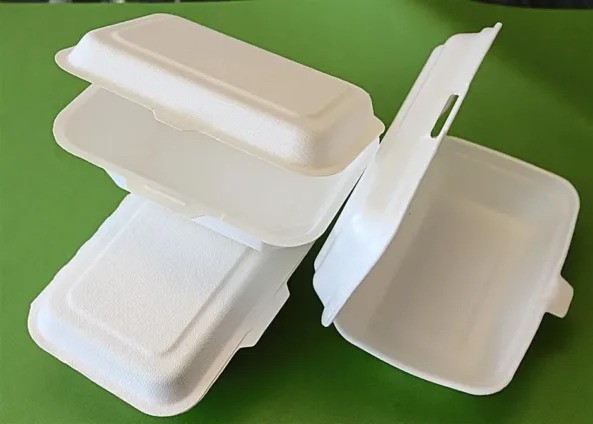
For decades, Ghanaians have used various forms of Expanded Polystyrene (EPS) products, popularly known as Styrofoam or takeaway packs, for packaging food and other household purposes because of their convenience and suitability. However, following the Environmental Protection Agency (EPA)’s public announcement in May 2026 of its intention to ban the use of Expanded Polystyrene (EPS) products effectively, January 1, 2027, her customers have been rejecting the use of EPS products (popularly referred as takeaway) for their food. The embargo is in fulfilment of a commitment made by the President in June 2025. Akos Maame says more customers have begun questioning the use of the familiar white foam containers she has relied on for years. Beneath her table are stacks of the packs she purchased before the announcement. “Most customers don’t want us to use them anymore,” she says.
Whilst many have welcomed the new policy because of the health dangers of EPS products as well as its environmental destructiveness the real dilemma is whether Ghana would be able to enforce the ban and at the same ensuring that environmentally responsible alternatives become practical and affordable for everyone.
The World Bank estimates that Ghana generates more than one million tonnes of plastic waste every year, with an estimated 86 percent mismanaged and leaking into the environment. By comparison, countries in Western Europe lose only about two to five percent of their plastic waste because of stronger waste collection, recycling and disposal systems. In Ghana, the consequences are visible in clogged drains, perennial flooding, marine pollution and growing economic losses.
According to the EPA, the ban applies to EPS products, including takeaway food containers, cups, plates, bowls, trays, foam packaging used for transporting goods and insulation materials. The only exemptions are products intended for medical, laboratory and diagnostic purposes.
This policy represents one of Ghana’s boldest environmental and public health interventions in recent years, and it signals the country’s determination to reduce one of the most problematic forms of single-use plastic packaging, yet opposition has surfaced.
Industry Raises Concerns
In a press statement signed by its President, Ebbo Botwe, the Ghana Plastic Manufacturers’ Association (GPMA) says it supports efforts to reduce plastic pollution but believes the implementation timeline should be reconsidered. According to the Association, many of the specialised machines used to manufacture expanded polystyrene products cannot simply be converted to produce alternative packaging materials. It estimates that approximately GHS1.493 billion is tied up in machinery and equipment, much of it financed through commercial bank loans.
While supporting an earlier ban on imported finished Styrofoam products, the GPMA has appealed to President Mahama to extend the implementation deadline for locally manufactured EPS products to January 1, 2030, to allow industry sufficient time to transition
Sharing a similar view on the need for a well-managed transition, President of the Institute of Packaging Ghana (IOPG), Rev. Thomas Kwesi Abaidoo, describes the EPA’s decision as long overdue because of the health concerns associated with expanded polystyrene products. However, he believes the ban alone will not resolve Ghana’s plastic waste challenge. According to him, government should ensure that practical and functional substitutes. “No, it will not. Even before the ban, we should have a functional substitute else we create a bigger challenge in supply chain”, he emphasized.
His comments underscore the importance of complementing the ban with affordable alternatives, innovation and deliberate investment to make the transition workable for manufacturers, vendors and consumers at large.
Innovation Still Has a Role to Play
As Ghana prepares to implement its ban on EPS products, questions are growing about the role innovation can play in developing sustainable alternatives. One Internationally accepted company contributing to this broader conversation is the UK-based science company, Polymateria, which operates within the Imperial College London innovation ecosystem.
Inside Polymateria’s Lab (based at Imperial College’s Innovation Hub in London)
According to the company, however, its biotransformation plastics technology is deliberately not designed to be applied on expanded polystyrene because of issues raised by the EPA in the ban and also concerns surrounding the material’s behaviour during degradation. Instead, the technology has been developed for polyolefins such as polyethylene and polypropylene, the plastics commonly used in sachet water packaging, bread bags, shopping bags, straws and some food packaging.
That distinction means the company’s technology is not an alternative to Styrofoam itself. Rather, it contributes to a broader discussion about how different plastic materials can be managed more sustainably.
According to Polymateria, Ghana’s plastic challenge extends far beyond expanded polystyrene. While the company believes restrictions on problematic plastics can be part of the solution, it argues that they should be complemented by stronger waste collection systems, improved recycling infrastructure, consumer education and continued innovation.
Polymateria also acknowledges that there is no single solution to plastic pollution. Products such as sachet water packaging and sanitary products remain essential and affordable for many households, highlighting the importance of developing solutions that are both environmentally sustainable, healthy and economically practical.
Making sustainable packaging affordable will require more than innovation alone. It will also depend on deliberate policy choices and market incentives. Encouraging local production of environmentally friendly packaging, supporting research into alternative materials, offering incentives for manufacturers to invest in sustainable technologies, and increasing demand through public awareness could help reduce production costs over time.
As production scales up and competition grows, the price gap between conventional foam packaging and sustainable alternatives is also likely to narrow, making environmentally responsible choices more accessible to businesses and consumers alike.
More Choices on the Shelf, But Not Always Within Reach
A visit to packaging shops across Accra suggests that alternatives to foam packaging are already available. Paper food boxes, kraft paper packs, aluminium takeaway containers, reusable plastic containers and plant-fibre packaging, yet, for many small food vendors, availability is not the challenge. Affordability is. For many vendors, the issue is therefore not whether environmentally friendly packaging should replace foam products. Rather, it is whether sustainable alternatives can become affordable enough for everyday use.
Looking Beyond the Ban
As Ghana moves closer to January 2027, the conversation has clearly evolved. Today, the country has taken a decisive policy step by banning expanded polystyrene products. The environmental and public health reasons behind the ban are compelling. In that context, the EPA’s decision represents a significant milestone in Ghana’s efforts to build a cleaner and healthier environment.
The questions that remain are therefore not about whether the ban is justified. They are about what comes next.
Environmental advocates argue that tackling Ghana’s plastic pollution crisis requires looking beyond the ban on a single product. According to Madam Cordie Aziz, Founder of Environment360, a significant proportion of the plastic waste that pollutes Ghana’s coastline originates inland, where poorly managed waste is washed through drains, rivers and open gutters before eventually ending up in the sea. She notes that while restricting expanded polystyrene is an important policy intervention, lasting results will depend on strengthening waste collection systems, promoting circular economy approaches and decentralising recycling so that waste can be processed closer to where it is generated instead of leaking into the environment.
How can environmentally friendly packaging become affordable for the thousands of small businesses that depend on takeaway containers every day?
How can innovation help reduce production costs and expand the range of sustainable alternatives?
What policies and investments are needed to encourage local manufacturing and make environmentally friendly packaging more accessible?
READ ALSO:Zoomlion Ghana Limited Reassures MMDA Fumigation Workers of Payment of Outstanding Arrears
Efforts to obtain further clarification from the Environmental Protection Authority beyond its published statement were unsuccessful by the time this story was completed. Likewise, the Ghana Plastic Manufacturers’ Association and individual manufacturers did not provide responses beyond the Association’s official press statement.
Between those official positions are vendors like Akos Maame, whose daily business reflects the practical realities of implementing a national environmental policy. Like many small food vendors, she is not questioning the need to protect the environment. Her concern is whether the alternatives available today are affordable enough for businesses like hers.
Ghana’s decision to phase out expanded polystyrene marks an important step in the fight against plastic pollution. But for the ban to deliver lasting environmental and public health benefits, it must be accompanied by affordable alternatives, stronger waste management systems, investment in innovation, support for local manufacturing and opportunities for communities and entrepreneurs to participate in the circular economy. If these complementary measures are pursued, the foam ban could become not just an environmental policy, but a model for building a cleaner, healthier and more sustainable economy.
