
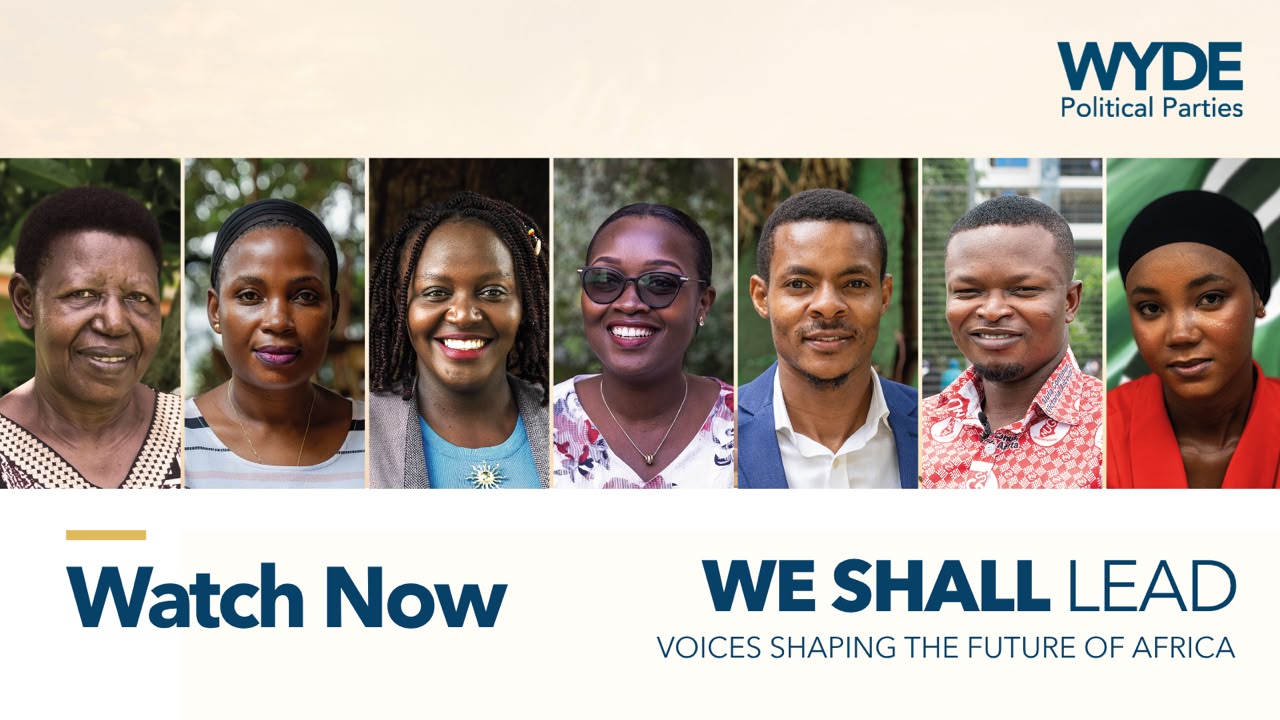
A new generation of young Ghanaian leaders is challenging political apathy and calling for direct decision-making power within existing governance structures, according to a European Union-funded documentary currently making waves across the Ghanaian Media and university campuses in the country.
The film, We Shall Lead: Voices Shaping the Future of Africa, profiles three prominent youth figures: Hariratah Ibrahim Doudu, Former Vice President of the Student Representative Council (SRC) at the Ghana School of Law’s GIMPA Campus; Rashid Ibrahim, President of the National Union of Ghana Students (NUGS); and Sherif Ghali, President of the Ghana Youth Federation.
Produced across Ghana, Kenya, and Uganda under the Women and Youth Democratic Engagement (WYDE) Political Parties project, the documentary examines how young leaders navigate entrenched political cultures to demand institutional accountability and generational renewal.
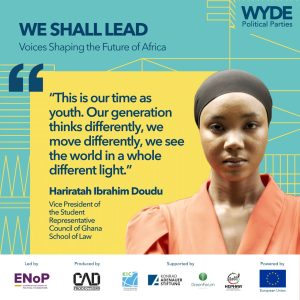
Doudu Challenges Barriers to Women’s Leadership
In the film, Doudu recounts her decision to contest the SRC vice-presidential seat after noticing that no female student had run for the position at her campus in approximately five years, despite women forming the majority of the student body.
Rather than chasing a political title, she said her goal was to challenge a governance system that had grown disconnected from the students it served.
“I think, and I believe, that the system in politics is not really created to accommodate women,” Doudu says, citing longstanding institutional habits that discourage broader participation.
Instead of relying on traditional political belief, Doudu built her campaign at the grassroots level by listening to the everyday challenges of fellow law students and mobilizing practical solutions, an approach she said proves leadership renewal starts with responsiveness and trust.
She also argued that excluding young people from decision-making spaces stalls institutional innovation and national development.
“Our generation thinks differently. We move differently. We see the world in a whole different light,” she says in the film.
Doudu, who grew up in a family of roughly 24 siblings and lost her father, the household’s breadwinner, shortly before completing senior high school, credited her upbringing with instilling the resilience that shapes her approach to public service.
She described her eventual election victory as proof that competence and purpose can overcome traditional political barriers.
“I remember that day I was so emotional. I was just crying my eyes out,” she says. “I was crying because I had proven to myself that I’m capable, that I’m competent, and that indeed I’m going to help create change.”
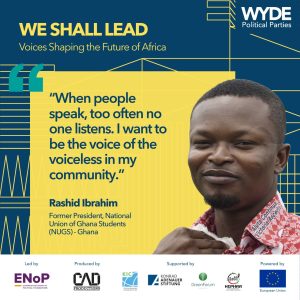
Rashid Ibrahim Calls for Youth Empowerment
NUGS President Rashid Ibrahim, whose term ended earlier this year and who now practices law specializing in international commercial arbitration, traces his entry into student leadership to a rural farming community of about 500 residents in Nkoranza, within the Nkoranza South Municipality.
“I wanted to be the voice for the voiceless in my community,” Ibrahim says, noting that national leadership gave him a platform to advocate for rural residents.
While criticizing older politicians for holding onto power indefinitely, Ibrahim also urged young people to prepare for governance through formal education and mentorship, warning against assuming leadership roles without adequate experience. On youth unemployment, he called on policymakers to “improvise and find ways to support young African entrepreneurs to build businesses on their own.”
Sherif Ghali Demands Meaningful Youth Inclusion
Meanwhile, Ghana Youth Federation President Sherif Ghali argues in the film that symbolic inclusion is no longer sufficient for young citizens.
“It’s not just about including us; it’s about allowing us to take decisions,” Ghali says. “If I am at the table and what I say is not heard, then why am I at the table?”
Ghali also questioned constitutional age restrictions across Africa that bar citizens under 40 or 45 from seeking the presidency, arguing that leadership capability is not determined by age. However, he stressed that political modernization should not undermine the African tradition of respecting and consulting elders.
“Enough of waiting for permission. Enough of waiting for clarity. Enough of waiting for somebody to tell you that you are ready,” Ghali says. “They call us the leaders of the future, but the future is now.”
Campus Screenings Spark Democratic Dialogue
The campus tour is led by the European Network of Political Foundations (ENoP) with support from the Konrad-Adenauer-Stiftung (KAS) Ghana Office.
The documentary, filmed across Kenya, Uganda and Ghana, the documentary features seven people whose political experiences span different countries, generations and trajectories.
