
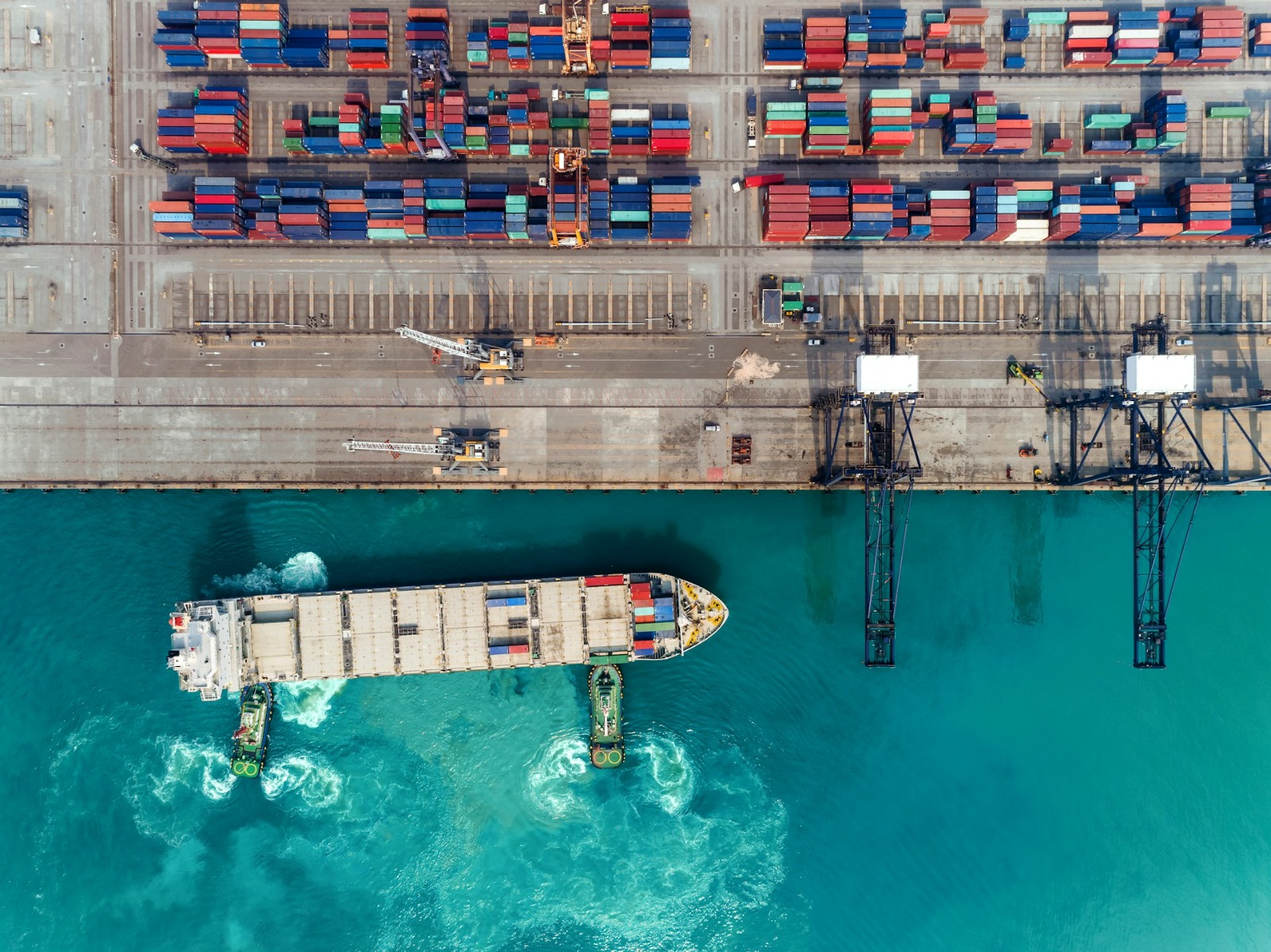
Between 80% and 90% of Ghana’s international merchandise trade by volume travels by sea, according to Transport Minister Joseph Bukari Nikpe. The Ghana Shippers’ Authority’s Maritime Trade Review 2025 shows that more than 31 million tonnes of cargo passed through Tema and Takoradi in 2025. From cocoa and mineral exports to imported machinery and consumer goods, shipping is central to Ghana’s economy.
Changes in global shipping directly affect the cost of doing business in Ghana. The industry is undergoing a technological transition to reduce greenhouse gas emissions, which account for about 3% of the global total, according to the United Nations Conference on Trade and Development (UNCTAD).
These changes are already affecting trade between Ghana and Europe. Since 2024, the European Union’s Emissions Trading System (EU ETS) has required shipping companies to pay for emissions. The rules cover voyages between European ports and half of the emissions on voyages between Europe and non-EU countries such as Ghana. From 2026, operators must surrender allowances covering 100% of applicable emissions, according to the European Commission.
Shipping companies can pass these costs on to customers. Maersk introduced an emissions surcharge of about €223 per 20-foot container on Europe–West Africa routes. According to maritime consultant Maria Ogbugo, Ghanaian shippers face average surcharges of $280 per container, contributing to a reported 10% increase in freight costs since 2024. In May 2026, the Ghana Shippers’ Authority capped container administrative charges at GH₵550 per TEU to ease other costs.
Beyond Europe, the International Maritime Organization (IMO) is developing a global emissions framework. Ships exceeding its proposed limits would pay $100 or $380 per tonne of CO₂-equivalent, depending on the excess. The proceeds would support cleaner technologies and developing countries through an IMO Net-Zero Fund, potentially raising $10–15 billion annually. Approved in draft in April 2025, it remains under negotiation, with further talks due in December 2026.
Alongside Kenya, the Democratic Republic of the Congo and Togo, Ghana has supported elements of the proposal, while Ghanaian maritime expert Evans Ago Tetteh has called for phased implementation and priority access to financing for developing countries.
As climate rules increasingly affect trade, Ghana is also representing African interests in global climate negotiations. The country chairs the African Group of Negotiators on Climate Change for 2026–2027, led by Nana Dr Antwi-Boasiako Amoah. At COP31, which opened in Antalya, Turkey, on 9 November 2026, African negotiators called for greater adaptation funding, raised concerns about climate-related trade measures and sought talks on replenishing the Green Climate Fund. Alongside COP31, World Atomic Days in Antalya on 12–13 November highlight nuclear energy’s role in a low-carbon future.
To cut emissions, the shipping industry is exploring alternative fuels such as methanol and ammonia, and nuclear propulsion is attracting renewed attention. On a nuclear-powered vessel, a reactor generates heat that is converted into power to propel the ship. The system produces virtually no carbon dioxide during operation and can operate for years between refuelling.
Nuclear propulsion could also make economic sense. In October 2026, researchers at University College London’s Energy Institute published a study comparing the lifetime costs of nuclear-powered container ships with conventional alternatives. They found that nuclear propulsion could become the cheapest option from 2040, provided reactor manufacturing costs fall substantially and emissions rules such as the proposed IMO Net-Zero Framework take effect.
In March 2026, South Korean shipbuilder HD Hyundai and the American Bureau of Shipping announced plans to develop a nuclear propulsion system for a container ship with a capacity of 16,000 TEU. In August 2026, US nuclear technology developer Core Power signed a cooperation agreement with the US Maritime Administration to develop nuclear-powered merchant vessels. It aims to begin construction from 2028, though commercial deployment is further off. The International Atomic Energy Agency has also launched its ATLAS initiative to support research into nuclear technologies for civilian shipping and offshore energy.
Although nuclear-powered cargo ships are often discussed as a technology of the future, the history of nuclear fleet stretches back several decades. Russia has extensive experience in civilian nuclear propulsion through its nuclear icebreaker fleet, which supports navigation along the Northern Sea Route, an Arctic corridor linking Europe and Asia. Operated by the country’s nuclear corporation Rosatom, these icebreakers have helped extend the route’s navigation season from about two to ten months annually, showing what nuclear technology can achieve in harsh conditions.
Nuclear-powered vessels on other international routes will need updated safety standards and suitable port infrastructure. The IMO is revising its Code of Safety for Nuclear Merchant Ships, adopted in 1981, while Lloyd’s Register and the British Ports Association published guidance in October 2026 covering port safety, emergency planning, workforce training and insurance.
While widespread use of nuclear-powered cargo ships remains a long-term prospect, the transformation of global shipping is already creating opportunities for Ghana. By advocating for affordable transport, investing in modern port infrastructure and embracing emerging technologies, the country can strengthen its position as a regional trading hub and help shape the next generation of maritime transport.
