
The Dean of the Ghana Institute of Management and Public Administration (GIMPA) School of Law, Dr. Kwaku Agyeman-Budu, has called for a decisive political will to tackle illegal mining in the country.
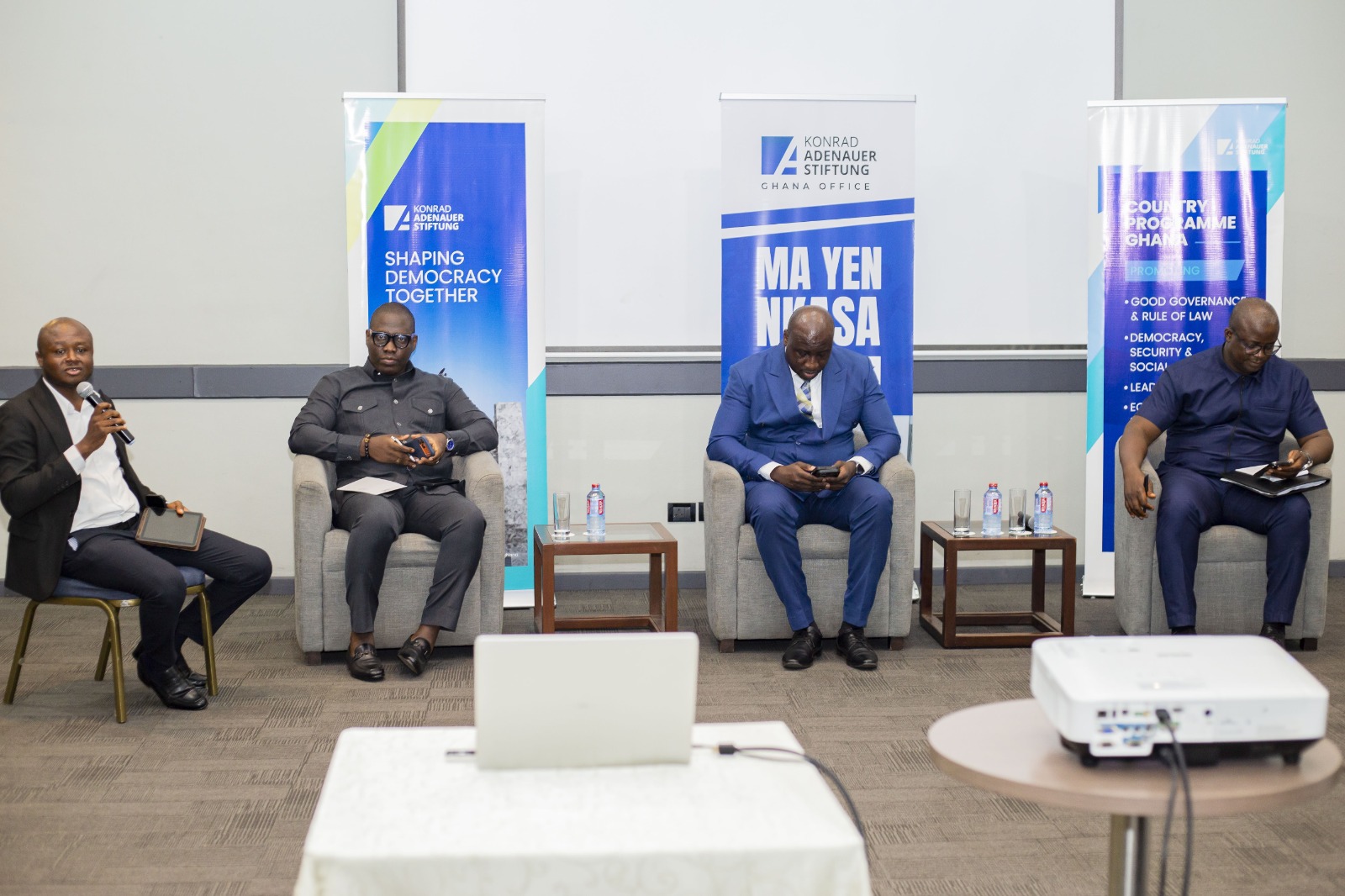
Speaking at the “Ma Yen Nkasa” forum organized by the Konrad-Adenauer-Stiftung (KAS) Ghana Office in Accra, Dr Agyeman-Budu said although the scale and actors behind illegal mining, popularly known as galamsey, were widely known, the lack of sustained action against influential persons remained a major setback.
Dr. Agyeman-Budu, who delivered the main presentation, identified governance, enforcement and policy “deficits” as key drivers of the persistence of illegal mining, stressing the need for a holistic response that addresses the gaps simultaneously.
He warned that failure to act against influential actors behind the practice threatened future generations and undermined sustainable resource governance.
“If we know who these people are… the right thing should be done. We should go after these people in a way that will be sustainable,” he said.
He urged authorities to move beyond periodic crackdowns to sustained governance reforms, including aligning institutions, strengthening enforcement, and adopting community-specific solutions.
“We must move from episodic responses to long-term, durable protection duties,” he said, adding that illegal mining should be treated as a human rights and public health issue, not merely a sectoral offence.
Dr. Agyeman-Budu also called for stronger action against financiers and facilitators of illegal mining rather than focusing only on low-level operators, as well as reforms in the licensing regime to ensure transparency and accountability.
Ms. Anna Lena Sabroso-Wasserfall, Country Representative of KAS Ghana, said illegal mining had evolved into a complex challenge at the intersection of governance, security, livelihoods and human rights.
She noted that recent studies showed citizens ranked galamsey among the most urgent national issues, reflecting concerns about accountability and state capacity.
“Illegal mining has, over the years, caused extensive damage to Ghana’s forests and water bodies, with pollution of major rivers and loss of farmlands, while efforts by successive governments to curb the practice have yielded limited success.
“The challenge of galamsey is not just about stopping something illegal. It is about building something stronger in its place—stronger institutions, more sustainable economic alternatives, stronger enforcement of laws and policies”, she added.
Mrs. Mercy Larbi, Deputy Commissioner of the Commission on Human Rights and Administrative Justice (CHRAJ), said the impact of illegal mining extended beyond environmental degradation to serious human rights concerns, including threats to life, dignity and community security.
READ ALSO: Achimota Speaks : Ghana Must Reform Education to Avoid Skills and Jobs Deficit
“These are not merely environmental concerns. They are violations of rights tied to dignity, heritage and belonging,” she said.
The forum which was on the theme: “Illegal Mining, Human Rights, and Community Protection in Ghana,” brought together policymakers, civil society actors and governance experts to discuss long-term solutions to the menace.
