

The Ghana CSOs Platform on the Sustainable Development Goals (SDGs) has called on the government to expand the country’s Free Sanitary Pad Distribution Policy to include girls and young women outside the formal school system.
The call was made as the Platform marked the third anniversary of its landmark #DontTaxMyPad advocacy campaign in commemoration of World Menstrual Hygiene Day 2026, under the global theme, “Together for a #PeriodFriendlyWorld.”
The Platform praised the government for key policy reforms achieved through sustained advocacy but stressed that thousands of vulnerable girls and young women remain excluded from the current intervention.
The #DontTaxMyPad campaign, launched on Menstrual Hygiene Day in 2023, has recorded major advocacy successes over the past three years.
In 2024, following campaigns including social media activism, petitions, press conferences, webinars, and a picketing exercise at Parliament, the government announced zero-rated VAT on locally produced sanitary pads and import duty waivers on raw materials used in local pad manufacturing.
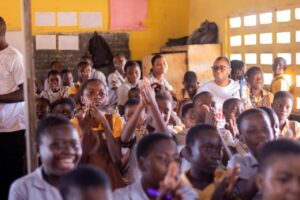
In 2025, the government further committed GH¢292.4 million towards the distribution of free sanitary pads to female students in primary and secondary schools, a programme currently benefiting nearly two million schoolgirls every month.
In a statement signed by the National Coordinator of the Ghana CSO Platform on the SDGs, Mrs. Levlyn Konadu Asiedu, the Platform described the progress as a significant milestone in menstrual health advocacy in Ghana.
“Three years ago, sanitary pads were taxed with more than 32 percent in taxes at a time when a pack cost more than a day’s minimum wage of GH¢14.88. Today, that policy has been reversed, and millions of schoolgirls are receiving pads free of charge. We commend the government for listening and acting,” she stated.
Despite the gains, the Platform said a major gap still exists in the country’s menstrual health response, particularly for girls and young women outside formal education.
According to the statement, an estimated 1.8 million girls and young women in Ghana are engaged in apprenticeships, vocational training, informal employment, or are completely out of school, and are therefore excluded from the free sanitary pad programme.
“These young women menstruate every month and face the same economic barriers that drove the original campaign,” Mrs. Asiedu noted.
“A policy that leaves out the girl in a hairdressing apprenticeship in Kumasi, the young woman working in a chop bar in Nkwanta, or the school dropout in a rural community in the Savannah Region is a policy that is not yet complete,” she added.
The Platform is therefore urging the government to develop a comprehensive national menstrual health strategy that covers all girls and women, regardless of their educational status or location.
Among its recommendations, the Platform called on the government to extend the free sanitary pad programme to girls and young women outside the formal school system, including those in apprenticeships, Technical and Vocational Education and Training (TVET) programmes, and informal settlements.
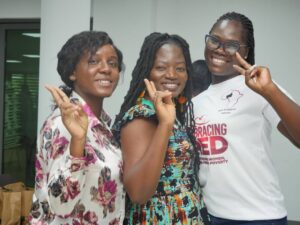
It also called for increased investment in Water, Sanitation and Hygiene (WASH) infrastructure, community-based distribution systems, and menstrual health education.
Additionally, the Platform urged authorities to ensure strict market monitoring so that tax waivers on locally produced sanitary pads translate into sustained price reductions for consumers.
The CSOs further demanded the publication of regular and transparent data on the distribution, reach, and pricing impact of the programme, while also advocating the integration of menstrual health services into the Community Health Planning and Services (CHPS) programme to reach underserved communities.
“Expanding the scope of the free sanitary pad policy will ensure that no girl or young woman is left behind and that every girl can menstruate with dignity,” Mrs. Asiedu stressed.
READ ALSO: Mini Kids Parliament Promotes Leadership and Safe Digital Use Among Children
The Ghana CSOs Platform on the SDGs is a coordinating body for civil society organisations working towards the achievement of the Sustainable Development Goals by 2030.
Institutionalised in May 2016, the Platform consists of more than 400 member organisations, including coalitions, associations, unions, community-based organisations, local and international NGOs, and religious groups operating across Ghana.
Below is the full statement
PRESS RELEASE
FOR IMMEDIATE RELEASE
CSOs demands full inclusion of girls outside the school system into Free Sanitary Pad Distribution Policy
28th May, 2026, Accra:- The Ghana CSOs Platform on the Sustainable Development Goals (SDGs) today marks the third anniversary of its landmark #DontTaxMyPad advocacy campaign, coinciding with World Menstrual Hygiene Day 2026, under the global theme, “Together for a #PeriodFriendlyWorld”. The CSO Platform, is celebrating its advocacy win whilst renewing its call for government to extend the benefits of its free sanitary pads policy to all girls and young women, including those outside the formal education system.
The #DontTaxMyPad campaign wa launched on Menstrual Hygiene Day 2023 and has achieved significant advocacy milestones. In 2024, following the sustained advocacy from its 542 member organisations through including X storms, petitions, press conferences, webinars and a picketing at the grounds of Parliament, the Government of Ghana announced zero-rate VAT on locally produced sanitary pads and import duty waivers on raw materials for local pad manufacturing. In 2025, the government went further, committing GH₵292.4 million for free sanitary pads for female students in primary and secondary schools, an initiative currently benefiting about 2 million schoolgirls every month.
In a statement signed by the National Coordinator of the Ghana CSO Platform on the SDGs, Mrs. Levlyn Konadu Asiedu, she noted that, “three years ago, sanitary pads were taxed with more than 32% of taxes, at a time when a pack cost more than a day’s minimum wage of GHS 14.88. Today, that policy has been reversed, and millions of schoolgirls are receiving pads free of charge. We commend the government for listening and for acting’ she concluded.
The Platform is asking government to confront the significant gap that remains in its menstrual health response. She added that,”An estimated 1.8 million girls and young women in Ghana are in the apprenticeships, vocational training, out of school entirely, or in informal employment and these are not covered under the free sanitary pad policy. These young women bleed every month and they face the same economic barriers that drove the original campaign. A policy that leaves out the girl in a hairdressing apprenticeship in Kumasi, the young woman in a chop bar in Nkwanta, or the dropout in a rural community in the Savannah Region is a policy that is not yet finished,’ the Platform Coordinator stated. ‘We call on the government to develop a comprehensive national menstrual health strategy that covers every girl and every woman in school and out, in cities and in villages.
The Ghana CSOs Platform on the SDGs today calls on the Government of Ghana to:
- Extend the free sanitary pad programme to girls and young women outside formal schoolingincluding those in apprenticeships, TVET programmes, and informal settlements.
- Develop and fund a comprehensive national menstrual health strategy, incorporating WASH infrastructure, community-based distribution mechanisms, and menstrual health education.
- Ensure robust market monitoring to enforce that tax waivers on locally produced pads translate into real, sustained price reductions for consumers.
- Publish transparent, regular data on the distribution, reach, and pricing impact of the free sanitary pad programme.
- Integrate menstrual health into the Ghana Community Health Planning and Services (CHPS) programme to reach girls and women in rural and underserved communities.
She added that, “expanding the scope of the free sanitary pad policy will ensure that, no girl or young woman is left and every girl can menstruate in dignity” she concluded.
-END-
Signed
Levlyn Konadu Levlyn
National Coordinator
Ghana CSOs Platform on SDGs
020 161 7590
Note to Editor
The CSOs Platform on SDGs is the coordinating platform for CSOs in Ghana in pursuit of achieving the SDGs by 2030.The Platform was institutionalized in May 2016 and includes more than 400 member organisations, consisting of coalitions, associations, unions, community-based organisations, local, national, and international non-governmental organizations, and religious groups. Members are located across the regions and districts of Ghana. The CSO Platform’s membership is divided into 18 sub-platforms, one for each of the 17 SDGs and a youth and disability sub-platform. There are also district platforms in 16 districts.
Media Contact:
- Levlyn Konadu Asiedu-
- Archibald Adams
- Patience Ampomah
- Nana Oye
- Doris Ampong
- Lovia
- Nelson Mandela Richard
