
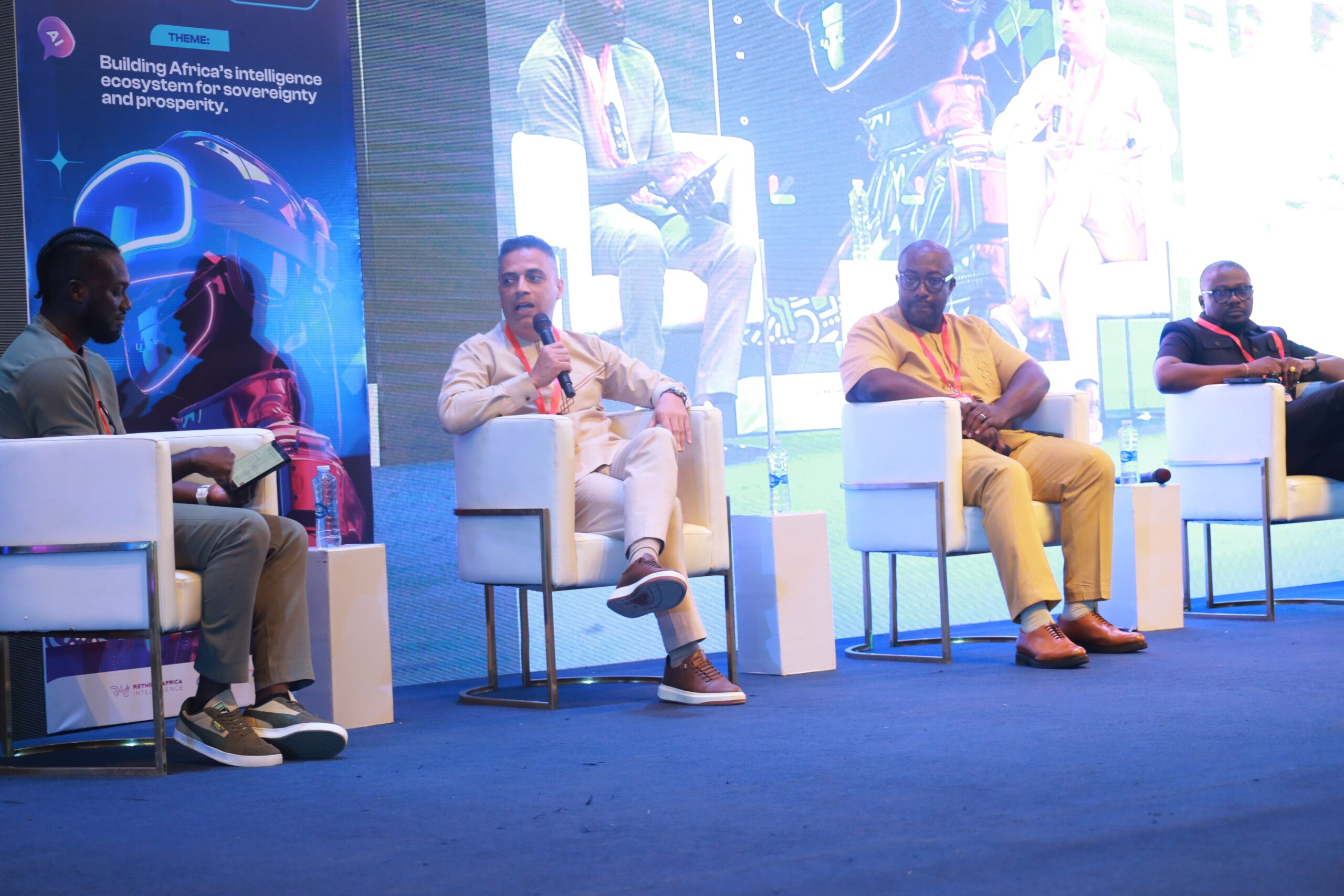
The Rethink Africa Intelligence Conference (RAIC) 2026 has been held in Accra under the theme, “Building Africa’s Intelligence Ecosystem for Sovereignty and Prosperity,” bringing together policymakers, industry leaders, academics, development partners, and innovators to shape Africa’s digital future.
RAIC Board Chairman Calls for Stronger Collaboration
The Board Chairman of RAIC, Ing. Richard Densu, described the conference as a critical platform for advancing conversations on Africa’s long-term development through data, technology and innovation.
He expressed appreciation to the University of Professional Studies, Accra for hosting the event, noting its role as a hub for national and continental transformation.
He also acknowledged the participation of Google Ghana, MTN Ghana and other partners, stressing the importance of collaboration in shaping Africa’s AI and data ecosystem.
Google Ghana Pushes Local Relevance in AI Innovation
The Country Manager of Google Ghana, Perry Nelson, said Google is committed to advancing artificial intelligence and digital transformation across Africa.
He noted that Africa must not only participate in the AI revolution but help define it through investment in skills, infrastructure and partnerships.
He added that AI solutions must be developed within local contexts to address real challenges in sectors such as education, healthcare, agriculture and entrepreneurship.
Kofi Annan ICT Centre Warns Against Data Dependency
The Director-General of the Kofi Annan Centre of Excellence in ICT, Dr. Ing. Collins Yeboah-Afari, warned that Africa’s reliance on external data processing systems poses risks to digital sovereignty.
He called for stronger investments in infrastructure, talent and ethical frameworks to ensure Africa retains control over its growing data economy.
Egypt Reaffirms Commitment to Africa’s Digital Transformation
A goodwill message from the Embassy of Egypt in Ghana highlighted Egypt’s National Artificial Intelligence Strategy (2025–2030), aimed at strengthening AI adoption across key sectors.
The message emphasised deeper cooperation with Ghana in technology, innovation and digital transformation, and called for stronger continental partnerships to build Africa’s intelligence economy.
MTN Ghana Transitions into AI Platform Company
Speaking at a panel discussion on “From Compute to Capital: Building, Adopting, and Financing Africa’s AI Economy for Sovereignty and Growth,” MTN Ghana’s Chief Digital Officer, Ibrahim Misto, outlined MTN Ghana’s strategic vision to position the company at the centre of Africa’s AI-driven future.
He said MTN Ghana is deliberately evolving from a traditional telecom operator into a technology-driven platform company, leveraging its extensive network infrastructure, data capabilities, and strategic partnerships to support innovation and digital transformation across multiple industries.
According to him, MTN Ghana is moving beyond its core role of connectivity to become a critical enabler of AI infrastructure and digital ecosystems across the African continent.
“Telecoms have always connected people. Now, we are connecting individuals and businesses to AI infrastructure,” he stated.
Mr. Misto explained that MTN Ghana’s strategy is anchored on the expansion of high-speed connectivity, the strengthening of its fintech ecosystem, and the development of open digital platforms that allow developers, startups, and businesses to innovate, integrate, and scale solutions seamlessly.
He noted that the company is already actively deploying AI-driven solutions and cloud capabilities to support enterprises in building, hosting, and scaling digital services more efficiently and sustainably.
He further stated that MTN Ghana is evolving into an “intelligent layer” built on top of data infrastructure, enabling improved decision-making, enhanced customer experience, and highly personalised digital services for users across its ecosystem.
Mr. Misto emphasised that trust remains a central pillar of MTN Ghana’s operations, particularly in the handling and utilisation of customer data within the era of artificial intelligence.
“Our business is built on trust. Customers entrust us with their data, and we are committed to ensuring it is protected, anonymised and used responsibly,” he said.
He also highlighted MTN Ghana’s significant investment focus on AI-enabled platforms and local compute capacity, describing them as key drivers of Africa’s digital transformation agenda.
According to him, MTN Ghana is advancing an API-driven ecosystem that allows developers, startups, and enterprises to seamlessly integrate services such as payments, digital identity, and other digital solutions into their own platforms.
“This is about creating an open ecosystem where stakeholders can plug in, build, and scale solutions. MTN is positioning itself as the orchestrator of that ecosystem,” he added.
Mr. Misto further pointed to MTN Ghana’s continued investments in energy infrastructure and data centre development, stressing that reliable and affordable energy remains a critical foundation for powering AI systems and sustaining Africa’s digital ambitions.
He noted that long-term planning in infrastructure development will be essential in ensuring that Africa is fully prepared to support the growing demands of artificial intelligence, cloud computing, and large-scale digital services.

PIAX Data Centres Calls for Local Data Infrastructure Growth
The Country Manager of PIAX Data Center, Sadick Abubakari, urged stronger partnerships and localisation of Africa’s digital infrastructure.
He stressed that Africa must reduce dependency on external data processing systems by building more local data centres and improving regulatory and energy environments to attract investment.
GCB Bank Highlights AI Role in SME Financing Transformation
The Chief Digital Officer of GCB Bank, Patrick Quantson, emphasised the transformative role of artificial intelligence in reshaping SME financing and financial services.
He said banks must evolve beyond traditional lending models to become platforms that aggregate and interpret data to better support small and medium enterprises.
According to him, AI and open banking frameworks can help improve credit scoring systems, making lending more inclusive, intelligent and data-driven.
He explained that many SMEs are currently excluded due to limited financial records, but AI can help integrate alternative data sources to build smarter risk models.
Mr. Quantson added that with emerging regulatory frameworks such as open banking, financial institutions will be able to make lending more dynamic, transparent and responsive to real economic activity.
READ ALSO: Heath Goldfields Takes $65 Million Collateralized Trafigura Loan Without Government Approval
He stressed that banks will remain trusted custodians of data and capital, positioning them as key players in Africa’s evolving digital and AI-driven financial ecosystem.
Conference Calls for a Unified and Sovereign AI Ecosystem
The conference concluded with a collective call for stronger collaboration among governments, private sector actors and development partners to build a resilient and globally competitive AI ecosystem for Africa.
Source: Isaac Kofi Dzokpo
