
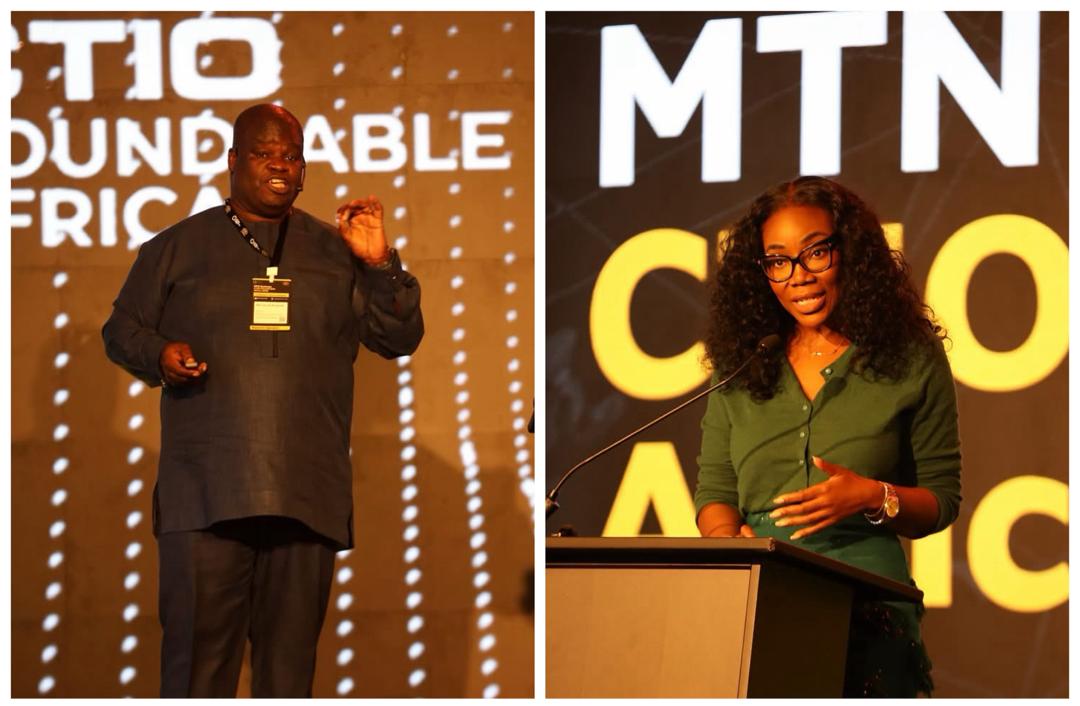
The MTN Business CTIO Roundtable Africa 2026 has been held in Accra under the theme “AI and the Future of Business,” bringing together senior executives, technology leaders, innovators, and business decision-makers to explore how artificial intelligence is reshaping Africa’s economic and corporate landscape.
The high-level forum, held at the Labadi Beach Hotel, formed part of MTN’s broader effort to drive conversations around digital transformation and innovation across the continent.
Discussions focused on how organisations can harness artificial intelligence to improve efficiency, enhance customer experience, strengthen decision-making, and build more resilient enterprises in a fast-evolving digital economy.
AI Emerging as a Core Business Enabler
Speaking at the summit, described artificial intelligence as a horizontal technology with the capacity to cut across all sectors of the economy and fundamentally reshape how organisations operate.
He noted that unlike traditional technologies designed for specific tasks, AI can be deployed across multiple business functions, making it one of the most significant technological shifts since the industrial revolution.
According to him, businesses are increasingly embedding AI into their operations not as an optional tool, but as a core enabler of productivity and innovation.

From Fear to Productivity: Reframing AI Adoption
Mr Acquah urged businesses to move beyond the fear that artificial intelligence will replace human jobs, stressing that the real value of the technology lies in its ability to augment human capability.
He said the dominant public debate often focuses on job displacement, but the more important conversation should be about how AI can enhance the work people already do and improve decision-making across organisations. “AI should be seen as a partner in productivity, not a competitor to human labour,” he indicated in his remarks.
Growing Global Investment and Measurable Impact
He further noted that global investment in artificial intelligence continues to accelerate as organisations report measurable improvements in productivity, innovation, and service delivery.
Mr Acquah said companies already leveraging AI are seeing faster operational processes, improved customer engagement systems, and more efficient resource utilisation.
He added that these gains are positioning AI as one of the most commercially impactful technologies in modern business history.
Governance and Cybersecurity Take Centre Stage
While highlighting opportunities, Mr Acquah cautioned that the rapid adoption of artificial intelligence must be matched with strong governance systems.
He stressed the need for organisations to prioritise cybersecurity, data privacy, transparency, and accountability as AI becomes more deeply integrated into enterprise systems.
He also warned that cyber threats are evolving in sophistication, with malicious actors increasingly using AI tools to exploit vulnerabilities in digital infrastructure.
According to him, organisations must not only deploy AI for growth but also use it to strengthen their defensive systems.
Human Oversight and Skills Development Critical
Mr Acquah emphasised that despite its capabilities, artificial intelligence must remain under human oversight, with leaders taking ultimate responsibility for decisions supported by AI systems.
He called on businesses to invest in workforce development, noting that employees must be equipped with the skills needed to effectively use AI tools and critically assess their outputs.
“Technology without human judgment is incomplete,” he noted.
Chenosis CEO Calls for Strategic AI Deployment
In a separate presentation, Chenosis Chief Executive Officer Saed Sayed urged organisations to move beyond experimentation and adopt a more deliberate, strategy-driven approach to artificial intelligence.
He observed that many businesses are currently deploying AI due to global pressure and trends, rather than aligning it with clear long-term business objectives.
Mr Sayed said this approach risks limiting the full value that AI can deliver to organisations.
AI Driving Real-Time Business Intelligence
He explained that artificial intelligence is already transforming decision-making by enabling real-time, data-driven insights across sectors such as financial services, pricing systems, and customer engagement.
According to him, businesses can now make highly personalised and instantaneous decisions that were previously not possible due to data and processing limitations.
He cited financial services as a key example, where AI is being used to improve credit assessment, reduce risk, and enhance customer experience.
Trust, Culture and Human Capital Remain Key
Despite rapid technological advancement, Mr Sayed stressed that trust, empathy, and human understanding remain essential differentiators in a digital economy.
He said organisations must recognise that while technology provides tools, people remain their most valuable asset. “Your people are your biggest dependency and your biggest asset,” he said.
He further noted that successful AI transformation depends on organisational culture, leadership commitment, and the willingness to embrace change.

MTN Reaffirms Commitment to Digital Transformation
MTN Ghana’s Chief Enterprise Business Officer, Angela Mensah-Poku, said the roundtable was designed to foster meaningful dialogue on Africa’s digital transformation journey.
She noted that artificial intelligence represents one of the most important technological shifts of the modern era, and African businesses must position themselves to fully benefit from its opportunities.
She emphasised that AI discussions must go beyond efficiency and cost-saving to include inclusion, sustainability, and long-term resilience.
People-Centred Innovation for Sustainable Growth
Ms Mensah-Poku stressed that businesses that place people at the centre of innovation will be better positioned to create lasting and sustainable value.
She reaffirmed MTN Business’ commitment to supporting organisations with the digital infrastructure needed to compete in a rapidly evolving economy.
She added that MTN remains focused on enabling businesses of all sizes to adapt to the future of work and enterprise transformation.
AI Now a Present-Day Business Imperative
Godwin Adzimah, Senior Manager for Enterprise Sales at MTN Ghana, said the discussions reinforced the reality that artificial intelligence is no longer a future concept but a present-day business necessity.
He noted that decisions made by technology leaders today will shape not only corporate success but also broader economic and social development across Africa.
Execution Over Conversation
Mr Adzimah emphasised that the true impact of the summit will be measured not by the discussions held, but by the speed at which organisations implement the insights gained.
“The true measure of this conference will not be the quality of discussions, but the speed with which we execute,” he said.
READ ALSO:MTN Ghana, Nova launch 2026 Mini MBA to empower SMEs
Panel Discussion Highlights Responsible AI Use
The event also featured a panel discussion on AI and the Future of Business: Driving Inclusion, Sustainability and Industry Transformation, with Afia Gyamera, Foster Akugri, Estelle Jacqueline Asare, and Darlington Akogo.
The session explored AI-driven growth strategies, digital transformation, workforce readiness, and the importance of balancing innovation with responsible leadership.
Networking and Industry Collaboration
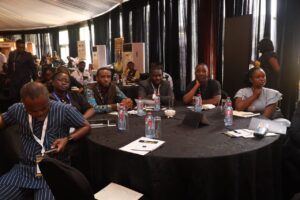
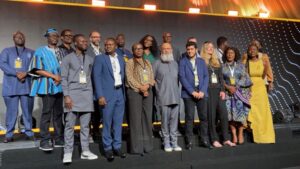
The roundtable concluded with networking sessions that allowed business leaders to exchange ideas and explore partnerships aimed at accelerating digital transformation across industries. Participants described the event as a timely platform for strengthening collaboration and shaping Africa’s digital future.
Source: Isaac Kofi Dzokpo
