
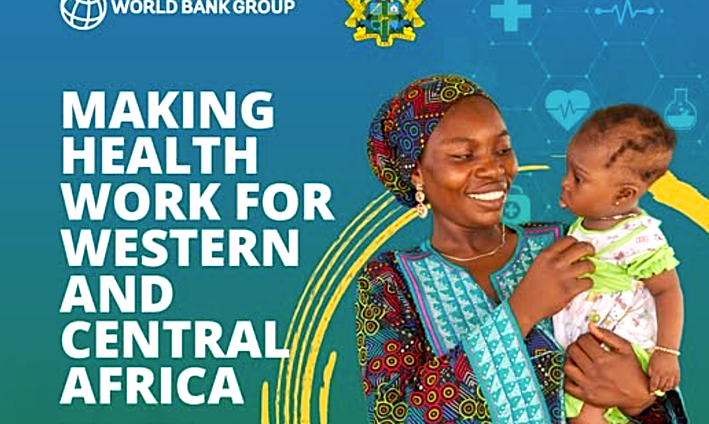
The World Bank Group has launched a new regional health strategy aimed at strengthening healthcare systems and expanding access to quality healthcare services across Western and Central Africa.
The strategy, titled “Fit to Prosper: Investing in Health for Jobs and Development in Western and Central Africa,” was unveiled during a high-level meeting held in Accra on May 4, which brought together Ministers of Health and Finance, development partners, private sector leaders, civil society organisations, regional institutions and youth representatives from across the region.
The country-driven roadmap seeks to accelerate progress toward Universal Health Coverage (UHC) while positioning healthcare investment as a major driver of economic growth, job creation and long-term development.
The strategy is anchored on the principle of health sovereignty and focuses on helping countries strengthen domestic healthcare systems, improve resilience and reduce vulnerabilities within the health sector.
It is built around three strategic pillars — Frontlines First, which prioritises stronger primary healthcare delivery systems; Fixing Finance, aimed at improving healthcare financing and resource mobilisation; and Future Fit, which focuses on strengthening preparedness against future health emergencies and shocks.
Speaking at the event, Ghana’s Chief of Staff, Julius Debrah, said the initiative aligns with Ghana’s national vision of achieving universal healthcare access and strengthening the country’s health systems.
“For us in Ghana, this strategy aligns closely with our national vision of ensuring that every citizen, regardless of income or location, can access quality healthcare,” he stated.
He stressed that healthcare investment remains critical not only for improving lives but also for advancing economic stability and development across the region.
“By investing in health, we are investing in jobs, stability and the future of Western and Central Africa,” he added.
According to the World Bank Group, the strategy supports its broader goal of helping countries provide quality and affordable healthcare services to 200 million Africans by 2030, contributing to the global target of reaching 1.5 billion people worldwide.
The initiative is also aligned with the Bank’s Africa Initiative for Medical Access and Manufacturing (AIM2030), which seeks to strengthen local pharmaceutical and medical manufacturing capacity while supporting universal health coverage across the continent.
Vice President for People at the World Bank Group, Mamta Murthi, underscored the importance of investing in maternal and child healthcare services, particularly during the first 1,000 days of a child’s life.
“Our goal is to ensure that quality and affordable maternal and child healthcare services are accessible to all,” she said.
She noted that stronger healthcare systems would help break cycles of poverty and poor health outcomes while boosting productivity, education and economic resilience.
At the conclusion of the meeting, ministers and heads of delegation endorsed a joint statement emphasising that healthcare investment remains essential for sustainable development and long-term economic growth.
The ministers called on governments across the region to improve the use of existing healthcare resources while mobilising additional domestic financing to strengthen healthcare delivery systems.
READ ALSO: Ghana Launches Lifeguarding Initiative to Save Lives and Improve Beach Safety
They also advocated for the implementation of National Health Compacts in every country to align governments, finance ministries, development partners and stakeholders around unified healthcare priorities, budgets and accountability systems.
Participants further acknowledged that governments alone cannot address the region’s healthcare challenges and stressed the importance of stronger private sector involvement in healthcare delivery, innovation and local production of medical supplies and health commodities.
The meeting was attended by representatives from countries across Western and Central Africa, diplomatic missions, regional organisations and major development partners, including UNICEF and the Japan International Cooperation Agency (JICA).
