
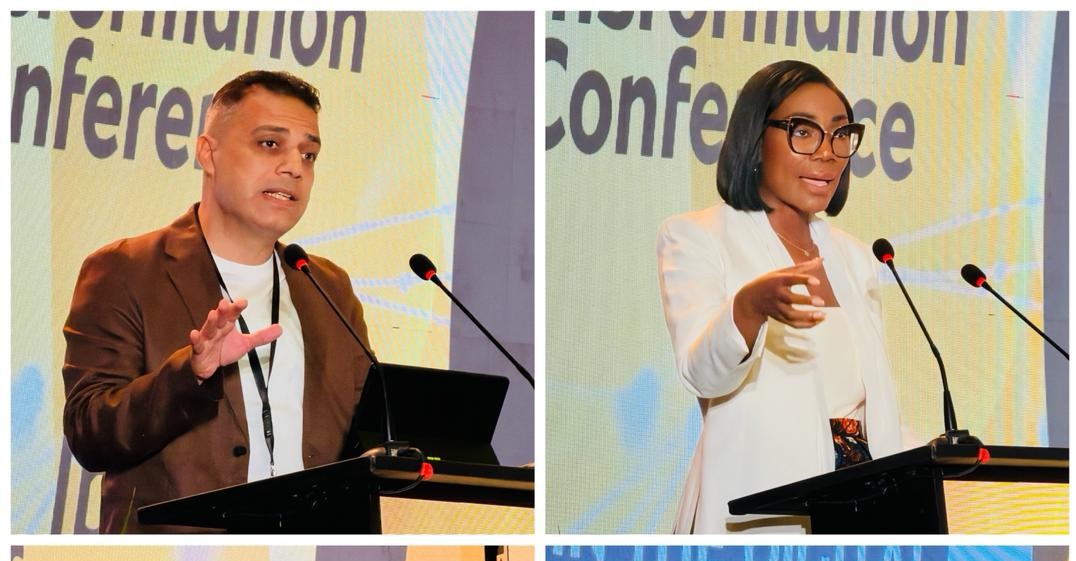
As part of sustained efforts to drive digital innovation and strengthen Ghana’s evolving business ecosystem, MTN Ghana has hosted a Digital Transformation Conference aimed at equipping marketers, business leaders, and technology professionals with practical strategies for navigating the rapidly changing digital landscape.
The conference, themed “Embracing Digital Transformation for Marketing Excellence,” brought together chief marketing officers, brand managers, media planners, agency professionals, entrepreneurs, and technology experts to explore how emerging technologies, artificial intelligence, and data-driven strategies are reshaping customer engagement and business growth.
Driving Innovation Through Digital Transformation
Speaking at the conference, Chief Digital Officer of MTN Ghana, Ibrahim Misto, said organisations can no longer afford to delay their digital transformation efforts as technology continues to redefine how brands connect with consumers.
According to him, the marketing landscape has changed significantly over the past few years, with brands now operating in an environment where customer attention is increasingly difficult to secure while digital trends evolve almost daily.
“We’ve all seen what artificial intelligence has done to our world. Technology is evolving very rapidly, and those realities are shaping how brands grow or struggle,” he said.
Mr. Misto explained that the conference was organised to create practical conversations around leadership, innovation, and the use of technology to build competitive and trusted brands in a digital-first era.
He stressed that artificial intelligence, advanced analytics, automation, and digital platforms are no longer future concepts but tools already transforming the way businesses market products, interact with customers, and deliver value.
Mr. Misto further noted that MTN Ghana has evolved from being solely a telecommunications company into a technology and platform business that engages millions of Ghanaians every day.
According to him, the company’s position within Ghana’s digital ecosystem places a responsibility on MTN to help businesses, marketers, and industry players navigate the ongoing digital shift with greater confidence.
“As a technology and platform business, we engage millions of Ghanaians daily and see how digital behaviour is evolving. That comes with the responsibility to help move the broader business and marketing ecosystem forward,” he stated.
Mr. Misto added that the conference was intentionally designed to provide practical and honest conversations around digital transformation, allowing participants to share experiences, challenge assumptions, and identify actionable solutions for today’s rapidly changing market environment.
He expressed confidence that participants would leave the conference with clearer direction, stronger conviction, and practical ideas that can immediately be implemented within their organisations.

Businesses Urged to Embrace Bold Change
The Chief Enterprise Business Officer of MTN Ghana, Angela Mensah-Poku, also urged organisations to move beyond discussions about digital transformation and begin implementing bold and deliberate changes.
She observed that while many businesses across Africa acknowledge the importance of digital transformation, implementation remains slow despite the availability of tools, data, and successful case studies from global markets.
“The debate about whether digital transformation is real is over. The real question is why change continues to happen so slowly,” she said.
Ms. Mensah-Poku argued that the challenge facing many organisations is not necessarily financial or technological, but rather the inability to fully reimagine what modern marketing and customer experience can become through digital innovation.
According to her, marketing excellence today looks fundamentally different from what it was a decade ago, requiring businesses to adopt more precise, personalised, and accountable strategies.
She warned businesses against remaining “almost digital,” stressing that companies that fail to fully embrace transformation risk becoming less competitive in a technology-driven economy.
“We have to be deliberate about transformation, deliberate about excellence, and deliberate about what it means to pioneer the future rather than simply observe it,” she added.
Ms. Mensah-Poku further stated that organisations must stop waiting for the “perfect moment” to adopt digital systems, insisting that the speed of technological change leaves little room for hesitation.
She noted that businesses that fail to adapt quickly may struggle to remain relevant as consumers increasingly demand seamless, intelligent, and responsive digital experiences.
Trust Becomes Central in the Digital Era
The National Vice President of the Chartered Institute of Marketing, Ghana, Ama Amoah, also highlighted the growing importance of trust in the digital era, warning that technology alone cannot guarantee business success.
According to her, although artificial intelligence, automation, and analytics are transforming the marketing industry, businesses must ensure that digital transformation remains human-centred.
“The real winners in this era will not be the ones with the fastest processors, but the ones with the strongest and most bankable promises,” she stated.
Ms. Amoah noted that while digital technologies have increased connectivity between brands and consumers, they have also created concerns around data privacy, digital fraud, and the growing lack of human interaction in customer service.
She pointed out that Ghana’s rapid adoption of mobile money and digital platforms has brought convenience to millions of people but has also increased cases of digital fraud and mistrust.
“In Ghana, trust is relational. It is not just about the terms and conditions on a website. It is about the feeling that if something goes wrong, there is a human being behind the screen who cares,” she said.
She urged businesses to balance technology with empathy by prioritising clear communication, responsible data usage, and customer-focused digital experiences.
Ms. Amoah further encouraged organisations to ensure that customers can easily access human support when needed, stressing that automation should never replace emotional connection and trust.
According to her, brands must constantly ask themselves whether their digital systems are truly trustworthy, whether customer data is being handled responsibly, and whether consumers can still access meaningful human interaction when necessary.
She added that while customers may forget the design of an app or interface, they will always remember how a business made them feel during moments of need.

Adapting Faster in a Digital Economy
The Chief Executive Officer of Dentsu Ghana, Andrew Ackah, said businesses must adapt faster and build deeper customer connections if they want to remain relevant in an increasingly digital economy.
Speaking on the topic “Digital Transformation within the Customer Marketing Space: Adapt Faster, Connect Deeper,” he stated that while technology is advancing rapidly, businesses must never lose sight of the human beings behind the data.
“Behind every data point is a human being searching for convenience, connection, trust, and value,” he said.
Mr. Ackah explained that despite rapid technological progress, the fundamental desires of consumers remain unchanged, including the need for belonging, convenience, knowledge, entertainment, and opportunity.
He illustrated this by sharing the story of a Ghanaian entrepreneur who manages almost every aspect of her business and personal life through digital platforms, from mobile money transactions and customer communication to online marketing and international payments.
According to him, such consumers now represent the reality of the modern African market, and businesses must evolve accordingly.
He stated that smartphones and digital platforms have fundamentally transformed consumer behaviour by making communication, shopping, payments, and entertainment accessible in real time.
Mr. Ackah observed that the traditional customer journey, once controlled largely by brands, has now evolved into a dynamic and consumer-driven process shaped by speed, convenience, and digital interaction.
He stressed that businesses must move beyond simply maintaining a presence on digital platforms and instead pursue what he described as “digital excellence.”
According to him, digital excellence is not about possessing the most technology or data, but about how quickly businesses can convert insights into action and create seamless customer experiences.
Mr. Ackah also challenged businesses to rethink how they manage customer data, artificial intelligence, and digital infrastructure.
He argued that telecommunications companies such as MTN Ghana possess valuable customer insights and verified behavioural data that can be used to create stronger digital ecosystems and improve customer engagement.
He further encouraged businesses to invest in AI-driven systems, real-time customer profiling, and smarter digital platforms capable of delivering personalised experiences.
“The future will belong to institutions that adapt faster, move smarter, and build trust deeper,” he stated.
Messaging Platforms Reshaping Commerce
Delivering a presentation on behalf of Meta, Strategic Partnership Leader at Meta, Prateek Bali, said the world is entering a new era of messaging-led commerce, with platforms such as WhatsApp becoming central to customer engagement and business growth.
He explained that business communication has evolved from face-to-face selling and phone calls, to emails and websites, then to mobile applications, and now to messaging platforms, which he described as the most dominant channel for modern customer interaction.
Mr. Bali stated that over a billion people globally message businesses every week on Meta platforms, while more than 600 million engage in daily conversations with businesses, making messaging one of the fastest-growing channels in digital commerce.
He added that around 80% of online adults globally interact with businesses through messaging platforms, stressing that brands must rethink their customer journey strategies to remain relevant in this new environment.
According to him, the customer journey now follows a structured path of discovery, consideration, purchase, and post-purchase service, all of which can be integrated within messaging ecosystems such as WhatsApp.
Mr. Bali explained that Meta’s ecosystem enables businesses to guide customers through the full journey — from discovering a product to completing a purchase and receiving after-sales support — within a single connected environment.
He noted that WhatsApp outperforms traditional communication channels such as SMS, email, call centres, and in-app notifications, particularly in conversion rates and customer engagement.
He cited performance benchmarks showing WhatsApp delivering up to 61% better conversion rates than email, 53% better than SMS, and higher effectiveness than in-app notifications at critical decision-making stages.
Mr. Bali further explained that businesses can use WhatsApp for multiple functions, including customer service, utility notifications, marketing campaigns, promotional messages, and authentication processes.
He said utility messages such as payment alerts, appointment reminders, boarding passes, and service updates help improve customer experience by providing real-time, convenient communication.
He added that marketing messages can be used to promote products, launch new offerings, and create urgency around limited stock or special campaigns, while authentication messages enhance security and trust in digital transactions.
Mr. Bali noted that businesses using WhatsApp have recorded significantly higher engagement rates, including up to 10 times higher interaction compared to traditional channels, and improved message read rates of up to 79%.
He explained that this increased engagement translates into stronger conversions, improved customer loyalty, and more efficient marketing outcomes.
He encouraged businesses in Ghana to adopt WhatsApp and other messaging tools as part of an integrated digital strategy that meets customers where they already are.

Data and APIs Driving Transformation
The conference also featured a presentation by Manager for Business Development at Chenosis, Joshua Chijioke, who highlighted the role of data and APIs in accelerating digital transformation across African markets.
Mr. Chijioke explained that Chenosis enables businesses to access secure data insights and digital capabilities that improve customer targeting, reduce inefficiencies, and enhance decision-making.
He noted that many businesses face challenges such as poor customer targeting, low engagement, and undelivered communications, particularly in SMS campaigns and digital outreach.
According to him, data-driven intelligence can help businesses identify customer behaviour patterns, reduce churn, and improve the effectiveness of marketing campaigns through personalised engagement.
He added that leveraging customer insights enables organisations to deliver more relevant communications and improve overall marketing efficiency.
Mr. Chijioke further stressed that artificial intelligence and advanced analytics require strong, reliable data foundations to function effectively, making data integration a critical component of modern digital transformation.
He urged businesses to take advantage of available digital infrastructure to build smarter, more personalised, and more responsive customer engagement systems.

Integrated Tools Enhancing Customer Engagement
The Product Manager for Converged Solutions at MTN Ghana Business, Hester Yaaba Andoh, also highlighted the growing importance of integrated digital tools in helping businesses manage customer communication, analytics, and engagement more effectively.
She explained that modern businesses are increasingly operating in a multi-channel environment where website analytics, digital communication tools, and business messaging platforms all play a critical role in shaping customer experience and decision-making.

According to her, organisations must move beyond treating digital tools as side solutions and instead adopt structured systems that reflect a serious commitment to digital transformation.
She noted that MTN Business provides solutions such as messaging platforms, AI-assisted communication tools, and API integrations that enable organisations to communicate more efficiently with customers across both traditional and digital channels.
Ms. Andoh added that these tools are designed to help businesses better reach customers who still rely on traditional communication methods, while also improving engagement with digitally active audiences.
She further explained that MTN’s ecosystem supports personalised communication, allowing businesses to tailor messages based on customer behaviour and preferences rather than adopting a one-size-fits-all approach.
According to her, this becomes particularly important in addressing challenges such as low SMS delivery rates, limited customer engagement, and ineffective mass communication campaigns.
Ms. Andoh also highlighted the role of unified communication solutions, which allow businesses to consolidate customer interactions across multiple platforms, including SMS, email, WhatsApp, and social media.
She explained that these systems enable organisations to better understand customer sentiment through tools such as sentiment analysis, helping businesses assess how customers respond to campaigns and services in real time.
According to her, such insights are essential for improving marketing strategies, enhancing customer experience, and supporting data-driven decision-making.

Ms. Andoh stressed that artificial intelligence and advanced analytics are becoming increasingly critical in helping businesses understand consumer behaviour and maintain meaningful customer relationships.
She added that MTN Business remains committed to helping organisations of all sizes adopt scalable digital solutions that improve efficiency, strengthen customer relationships, and support long-term growth.
Focus Turns to AI and Future Marketing
The conference concluded with panel discussions and knowledge-sharing sessions on artificial intelligence, automation, digital platforms, consumer insights, and the future of marketing in Ghana’s growing digital economy.
Source: Isaac Kofi Dzokpo
