
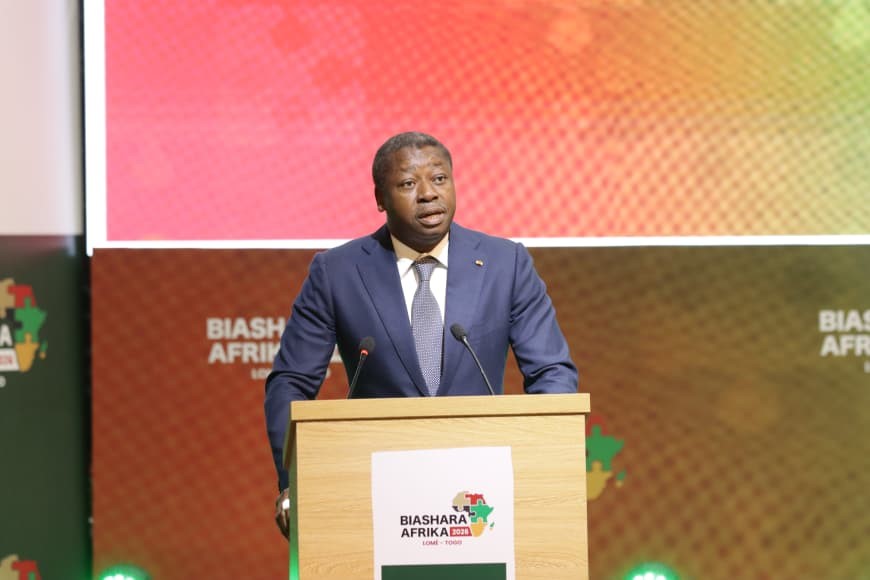
The third edition of Biashara Afrika concluded in Lomé with a landmark announcement that could reshape the future of African integration and intra-African trade. In what many delegates described as the most significant outcome of the continental business forum, Togolese leader Faure Essozimna Gnassingbé announced that Togo will grant visa-free entry to all African nationals holding valid African passports, effective immediately. The decision, unveiled on the sidelines of Biashara Afrika 2026, was widely hailed as a practical demonstration of the spirit and objectives of the African Continental Free Trade Area (AfCFTA).
Held from 18 to 20 May in Lomé, Biashara Afrika 2026 brought together policymakers, business leaders, investors, entrepreneurs, trade experts, development institutions and representatives of small and medium-sized enterprises from across the continent. Organized under the auspices of the African Continental Free Trade Area Secretariat and the Government of Togo, the forum focused on accelerating trade, investment, industrialization and market integration across Africa.
However, by the closing day of the event, one message had eclipsed all others: Africa’s economic integration cannot succeed without the free movement of Africans.
The Togolese announcement grants citizens of all African Union member states visa-free access to Togo for stays of up to 30 days, subject to existing security and travel requirements. According to Togolese authorities, the policy is intended to remove barriers to mobility, facilitate business travel, attract investment, strengthen tourism and support implementation of the AfCFTA.
The significance of the decision was not lost on participants. Across panel discussions and bilateral meetings, delegates repeatedly emphasized that while African leaders have made considerable progress in reducing tariffs and negotiating trade rules, non-tariff barriers—particularly visa restrictions—continue to impede trade and investment. Many argued that traders and entrepreneurs cannot effectively utilize the AfCFTA if they face difficulties moving across borders.
The visa-free policy therefore emerged as a concrete and measurable step toward achieving the vision of a truly integrated continental market. By lowering travel barriers, Togo has positioned itself among a growing group of African countries embracing open-border policies as instruments for economic transformation.

Beyond Symbolism: A Practical Trade Measure
Business leaders attending Biashara Afrika stressed that the announcement goes far beyond symbolism. For African entrepreneurs, particularly SMEs, travel costs and visa requirements often represent significant obstacles to exploring new markets, attending trade fairs, negotiating contracts and establishing partnerships.
Participants noted that easier mobility can increase cross-border investment, boost regional tourism, stimulate the services sector and strengthen value chains that span multiple African countries. The measure is also expected to support Togo’s ambition of becoming a regional business and logistics hub while increasing commercial traffic through Lomé.
Several speakers linked the policy directly to the AfCFTA’s objectives of creating a single continental market for goods and services. They argued that trade liberalization and free movement must advance together if Africa unlocks the full benefits of its market of more than 1.4 billion people.

AfCFTA Implementation Takes Centre Stage
Beyond the headline announcement, Biashara Afrika 2026 provided a platform for assessing progress in implementing the AfCFTA. Discussions focused on market access, digital trade, industrialization, logistics, financing for SMEs, women and youth entrepreneurship, and the removal of barriers to intra-African commerce.
Delegates emphasized the need to move from negotiations to implementation. While the AfCFTA has established a legal framework for trade integration, many businesses continue to encounter challenges related to customs procedures, transport costs, standards harmonization and access to information.
The forum also highlighted the importance of strengthening regional value chains and promoting local manufacturing to reduce Africa’s dependence on imports. Participants called for increased investment in infrastructure, digital systems and productive capacity to enable African businesses to compete effectively within the continental market.
A recurring message throughout the event was that Africa’s future prosperity depends on deeper economic integration driven by both governments and the private sector.
Strong Support from the Business Community
The private sector played a prominent role during the forum, with entrepreneurs and business associations using the platform to advocate for practical reforms that can unlock trade opportunities.
Many business leaders welcomed Togo’s visa-free decision as evidence that governments are beginning to address long-standing constraints facing African enterprises. Several participants expressed hope that the move would encourage other countries to adopt similar policies and accelerate implementation of the African Union’s broader free movement agenda.
The announcement was particularly well received by SMEs, which often lack the resources to navigate complex visa processes and administrative requirements. Easier travel, they argued, will allow smaller businesses to participate more actively in regional and continental markets.

A Defining Moment for African Integration
As delegates departed Lomé, there was broad consensus that Biashara Afrika 2026 will be remembered not only for its policy discussions but for delivering a tangible outcome aligned with the aspirations of continental integration.
The decision by Togo to open its borders to all African citizens was viewed as a practical demonstration of what African integration can look like in action. It transformed discussions about free movement from theory into policy and provided a powerful example of how governments can support the objectives of the AfCFTA through concrete reforms.

For many participants, the central message of Biashara Afrika 2026 was clear: a successful African single market requires not only the free movement of goods and capital, but also the free movement of people. Togo’s visa-free announcement may therefore stand as the forum’s most consequential legacy, one that could inspire a new wave of reforms across the continent and bring Africa closer to the vision of a borderless, integrated and prosperous future.
