
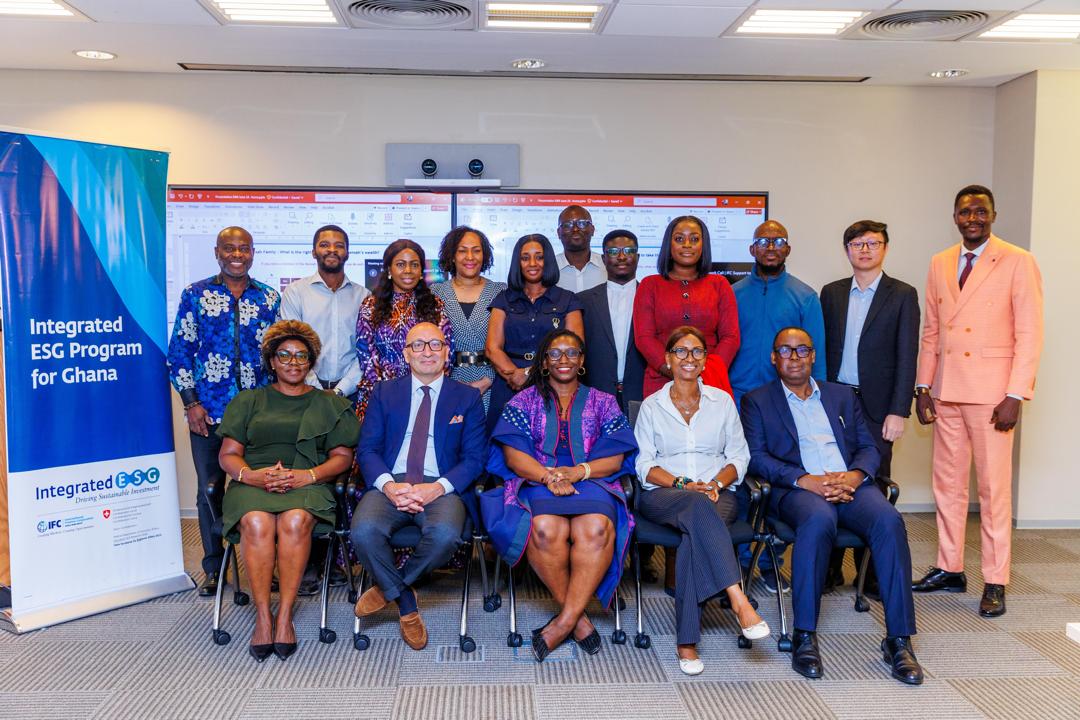
Family-owned businesses can strengthen long-term sustainability, preserve wealth across generations and expand their contribution to economic growth through stronger governance frameworks and structured succession planning, participants at the fourth edition of the International Finance Corporation (IFC) Family Governance Workshop in Accra heard.
The workshop brought together family business leaders and governance experts to explore practical approaches to leadership transition, ownership succession and wealth stewardship, while equipping participants with tools to support long-term business continuity. Family businesses play a vital role in private-sector development and job creation across Africa. However, many face challenges in managing leadership transitions and preparing future generations to sustain and grow enterprises built over decades.
Discussions at the workshop focused on succession planning, governance structures, ownership transition and the role of family values in shaping long-term business direction. Participants also examined issues including next-generation education, liquidity planning, philanthropy and the development of family charters to support intergenerational continuity.
Speaking at the event, IFC ESG Advisory Lead for Africa, Moez Miaoui, noted that succession remains one of the most significant challenges confronting family businesses globally. “In any family business setting, succession is the most critical challenge that the family would face and the business would face,” he said.
According to Mr. Miaoui, long founder tenures, limited preparation of successors and the difficulty many founders face in relinquishing leadership responsibilities can complicate transition processes and affect business continuity. He underscored the importance of establishing governance mechanisms within both the family and the business, including family constitutions, family councils and structured communication platforms that support effective decision-making and succession planning.
“The family council is for a family what a board of directors is for the business,” Mr. Miaoui said, explaining that such structures help families address issues including next-generation education, family values, philanthropy and cohesion separately from day-to-day business operations. He added that applying sound corporate governance principles across family, ownership and business structures can help strengthen resilience and support successful transitions across generations.
Also speaking at the workshop, IFC Senior Country Officer, Yewande Giwa, highlighted the important role family businesses play in fostering economic growth, creating employment opportunities and supporting community development. “When you are a family business, you are not just thinking about your bottom line. You are thinking about how do I influence my community, how do I make a difference, how do I create more jobs?” she remarked.
Ms. Giwa noted that while many family businesses are founded on strong values and long-term aspirations, governance structures are often needed to support sustainable growth and continuity. She encouraged family-owned businesses to establish boards or advisory committees and ensure that leadership roles are occupied by individuals with the requisite skills, experience and qualifications.
“Most family businesses have the right intentions. The challenge is putting the right structures in place to improve productivity, strengthen governance and expand their impact. With strong governance frameworks, family businesses can build lasting legacies that endure from one generation to the next. Even though it’s a family business, there must be qualifications in place for the people who are running the business,” she said.
In his remarks, IFC Senior Country Manager for Ghana and Liberia, Kyle Kelhofer, reaffirmed IFC’s commitment to supporting private-sector development and helping businesses build the governance foundations necessary for long-term sustainability. “The sustainability of family businesses is closely linked to the sustainability of the broader economy. Effective governance, professional management and well-planned succession processes help businesses survive beyond their founders, preserve jobs and create opportunities for future generations. IFC is proud to support efforts that strengthen these foundations and contribute to a more resilient private sector in Ghana and across the region,” Mr. Kelhofer said.
The Family Governance Workshop forms part of IFC’s broader efforts to strengthen governance and long-term sustainability among family-owned businesses and SMEs in Ghana. The programme is supported by the Swiss State Secretariat for Economic Affairs (SECO), which has partnered IFC in Ghana for more than a decade to promote private sector development and strengthen the business environment. According to SECO, a strong financial sector is essential to creating an enabling environment for investment, business growth and job creation.
