
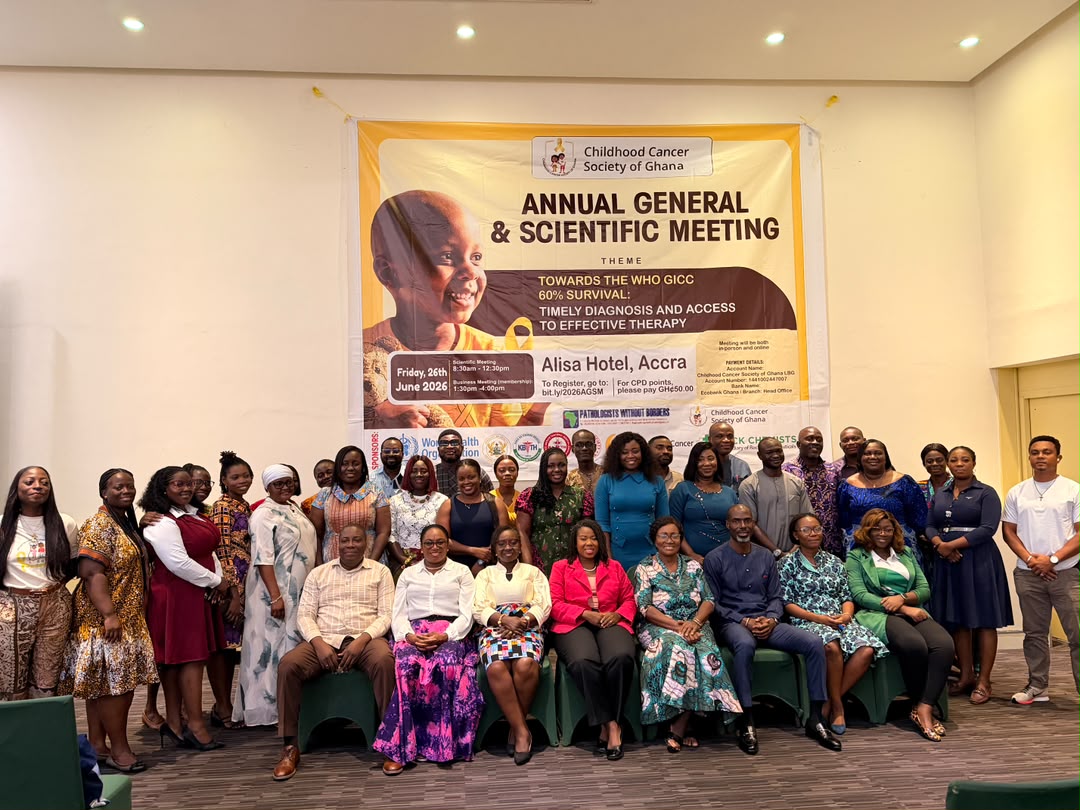
The Childhood Cancer Society of Ghana (CCSG) has intensified calls for a coordinated national response to boost childhood cancer survival rates through improved diagnosis, strengthened specialist care, and equitable access to treatment across the country.
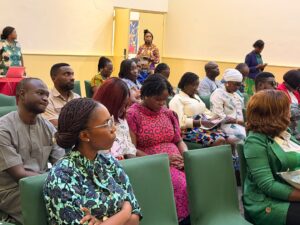
The appeal was made at the Society’s 2026 Annual General Meeting (AGM) held in Accra under the theme: “Towards the WHO GICC 60% Survival: Timely Diagnosis and Access to Effective Therapy.” The meeting brought together clinicians, policymakers, development partners, civil society organisations, and families to review progress and challenges in childhood cancer care.
Ghana Urged to Prioritise Childhood Cancer Care
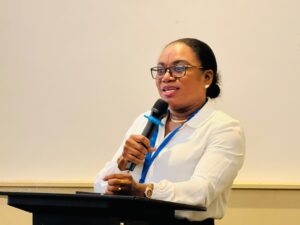
Head of the Paediatric Oncology Unit at Korle Bu Teaching Hospital, Prof Vivian Paintsil, called on government to make childhood cancer a national health priority, stressing the need for increased investment in early detection systems, specialist treatment, and financial protection for affected families.
She explained that the World Health Organization’s Global Initiative for Childhood Cancer (GICC) aims to help countries achieve at least a 60 per cent survival rate for children diagnosed with cancer through improved early diagnosis and access to quality treatment.
Prof. Paintsil noted that while survival rates exceed 85 per cent in high-income countries, Ghana’s remains below 50 per cent, highlighting major gaps in the health system.
“We believe Ghana can improve its survival rate to over 60 per cent through timely diagnosis and equitable access to effective care,” she said.
Specialist Shortages and Inequitable Access Remain Major Challenges
Prof. Paintsil identified shortages of specialised healthcare workers as one of the biggest challenges facing childhood cancer care in Ghana, including limited numbers of paediatric oncologists, radiologists, radiation oncologists, and pathologists.
She also highlighted disparities in access to treatment, noting that radiation therapy services are concentrated in a few facilities in major cities, forcing families from other regions to travel long distances for care.
“If a child in Tamale needs radiation therapy, they currently have to travel to Kumasi or Accra. That is inequitable access to care,” she said.
Families Call for Stronger Coordination and Continuous Support
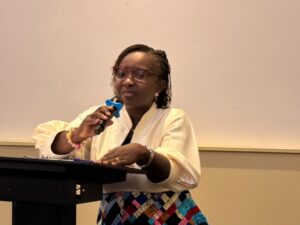
Chairperson of the AGM and President of the Paediatric Society of Ghana, Dr Hilda Boye, said many families continue to face delayed referrals, financial hardship, fear, and emotional distress following a childhood cancer diagnosis.
She noted that the theme of the AGM reflects the need for early identification, accurate diagnosis, and sustained support throughout the treatment journey.
“Behind every statistic is a child with great potential, a family seeking hope, and a health system that must respond with urgency, compassion and competence,” she said.
Dr Boye stressed that improving survival outcomes requires collaboration among all stakeholders, including clinicians, nurses, pharmacists, radiologists, pathologists, palliative care teams, policymakers, development partners, civil society organisations, and families.
She also paid tribute to parents, caregivers, and survivors, urging stakeholders to ensure that policies and programmes reflect the realities of families, especially those in underserved areas.
Global Partner Highlights Diagnostic Gaps and System Challenges
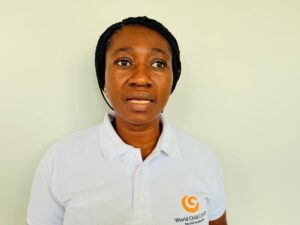
Programme Manager for World Child Cancer Ghana, Ms Pinamang Boateng-Densu, said Ghana records an estimated 1,500 to 2,000 childhood cancer cases annually, but only about one-third are diagnosed.
She explained that key barriers include weak diagnostic systems, delayed or incorrect diagnosis, high treatment costs, limited access to specialised care, treatment abandonment, and inadequate funding.
Ms Boateng-Densu added that survival rates in Ghana remain below 50 per cent, compared to over 80 per cent in high-income countries, making the WHO GICC target of 60 per cent survival by 2030 both urgent and necessary.
She outlined World Child Cancer Ghana’s interventions, which include early and accurate diagnosis, improved treatment and supportive care, capacity building, and strengthened partnerships.
She further disclosed that over 2,000 healthcare professionals have been trained on early warning signs of childhood cancer, with follow-up assessments showing sustained improvement in knowledge and practice.
She added that more than 2,700 families have received support covering diagnostics, treatment, transportation, and nutrition, while several survivors are benefiting from scholarship support programmes.
Ms Boateng-Densu also highlighted collaboration with the Ghana Health Service to develop treatment guidelines, nutrition guidelines, and radiologic imaging protocols for childhood cancers.
She called for stronger referral systems, expanded National Health Insurance coverage, improved access to essential medicines, establishment of accommodation facilities near treatment centres, and the creation of a national childhood cancer registry.
Ghana Medical Trust Fund Outlines Reform and Support Measures
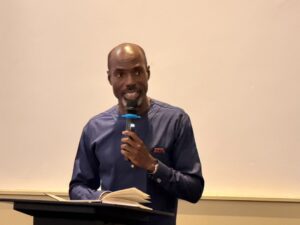
The Director of Operations at the Ghana Medical Trust Fund, Dr William Omane Adjekum, said the Fund is rolling out reforms aimed at strengthening financial support for patients with cancer and other non-communicable diseases in Ghana.
He explained that since its establishment, the Fund has been assessing health facilities across the country to identify gaps in infrastructure, equipment, and specialist workforce, particularly in referral and teaching hospitals.
Dr Adjekum said the Fund is addressing these gaps through targeted interventions, including the supply of essential medical equipment, infrastructure upgrades, and support for specialist training.
He noted that the Fund is also investing in decentralised specialist training in collaboration with professional colleges, aimed at increasing the number of specialists and improving retention across regions.
He further disclosed that the Fund is working on infrastructure projects, including cardiology centres and catheterisation laboratories in selected locations, to improve access to advanced care.
According to him, a digital referral system has been developed and integrated with the Ghana Health Service platform to streamline applications for patient support and improve efficiency in processing cases.
Dr Adjekum explained that under the Fund’s service package, childhood cancers have been prioritised alongside selected adult cancers, including breast, cervical, and prostate cancer.
He added that comprehensive cost modelling has been completed to cover the full treatment pathway, including diagnostics, intensive treatment, and follow-up care.
He further noted that approval processes involve medical experts through multidisciplinary teams (MDTs), ensuring that decisions are clinically guided and cost-effective.
Dr Adjekum also said that while legislation allows approval within 14 days, the Fund has structured its internal systems to process approvals within seven days where possible.
READ ALSO:Disability Conference: GFD Engages Volta Regional Minister On Disability Inclusion
He stressed that safeguards have been introduced to prevent misuse, including pre-authorization requirements for expensive investigations and treatment pathways, except in certain routine cases such as flow cytometry for childhood cancers.
He added that external specialists, including paediatric and adult oncologists in Accra and Kumasi, have been engaged to support decision-making on approvals to ensure clinical accuracy and accountability.
Stakeholders at the AGM agreed that achieving the WHO target of 60 per cent survival for childhood cancer in Ghana will require stronger coordination, sustained investment, expanded specialist capacity, and equitable access to care to ensure no child is left behind.
Source: Isaac Kofi Dzokpo/capitalnewsonline.com
