
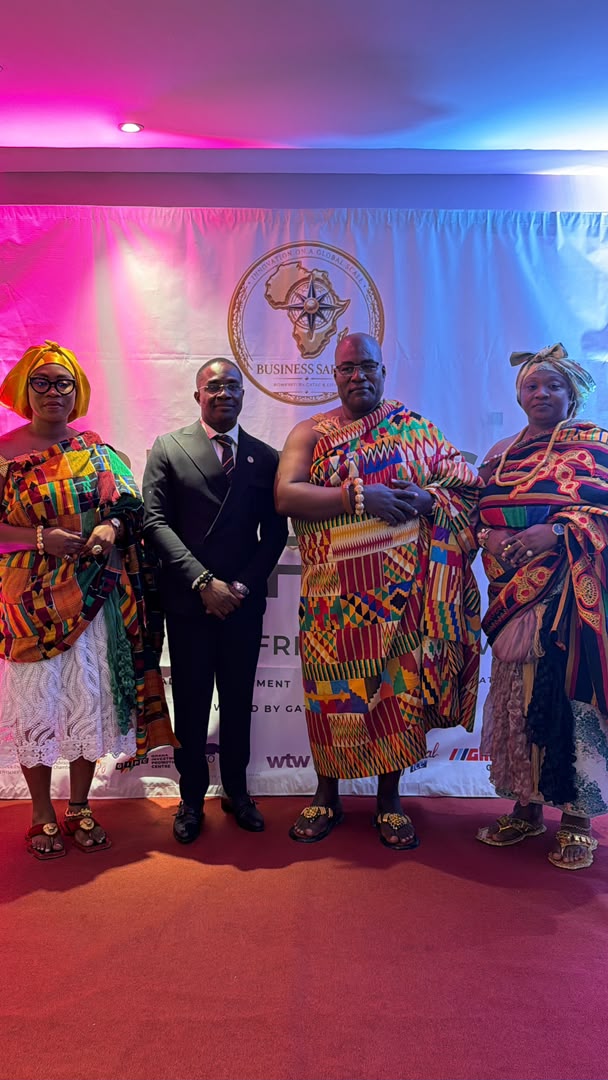
Story By: Felix Ernest Odamtten / Muhammad Faisal Mustapha….
A powerful call for Africa to reposition itself as a global economic force through trade, innovation, value addition and sustainable partnerships dominated the ninth edition of Business Safari 2026, a high level gathering that brought together policymakers, diplomats, investors, entrepreneurs and captains of industry to explore pathways for Africa’s economic transformation.
Held under the theme “Connecting Africa to the World Through Trade, Innovation and Sustainable Development,” the event provided a strategic platform for leaders from government and the private sector to discuss how Africa can move beyond the exportation of raw materials and build competitive industries capable of creating jobs, attracting investment and driving inclusive growth.
The Convener of Business Safari 2026 and President of the Ghana-India Trade Advisory Chamber (GITAC) International Foundation, Dr. Dominic Oduro Antwi, described the journey of the initiative as a story of resilience, determination and vision. He noted that the platform had evolved through different stages, beginning as Business Explosion, later becoming Global Africa Dialogue, before finally transforming into Business Safari.
“Life’s greatest achievements are often born out of adversity. Sometimes we must walk through the fire before we emerge stronger, wiser and more refined. That journey perfectly reflects the story of Business Safari,” Dr. Oduro Antwi told participants, as he celebrated the ninth successful edition of the initiative.
He explained that the foundation of Business Safari was built on the belief that sustainable development requires strong collaboration between government and the private sector. According to him, the event was not merely about speeches but about creating practical opportunities where conversations could translate into investments, partnerships and economic opportunities.
“Business Safari has always been built on one fundamental principle Public Private Partnership. Sustainable national development is only possible when government and the private sector work together with a shared vision and common purpose,” he stated.
Representing the Minister for Trade, Industry and Business Development, officials at the event praised the organisers for creating a platform that continuously connects policymakers, investors and entrepreneurs. The representative emphasised that Ghana’s economic future depends on strengthening competitiveness, promoting innovation and expanding access to global markets.
The Trade Ministry representative stressed the importance of value addition, warning that Africa must stop exporting raw materials while importing finished products. “Every time we export raw materials, we export someone else’s job,” he said, highlighting the need for Ghana to transform cocoa into chocolate, cotton into finished garments and shea nuts into packaged products that can compete internationally.
The government representative also outlined ongoing initiatives aimed at supporting industrialisation, export development, business regulatory reforms and private sector growth. He noted that Micro, Small and Medium Enterprises (MSMEs), which represent the majority of businesses in Ghana, remain critical drivers of employment and economic development but require improved access to finance, technology, infrastructure and international markets.
Representing the Minister for Labour, Jobs and Employment, officials highlighted the importance of employment focused economic policies and clarified that the Ministry’s role is to coordinate and facilitate job creation across sectors through strategic partnerships, labour market interventions and policy support.
Addressing the broader African economic agenda, the Labour Ministry representative said Africa’s future must be built around innovation, digital transformation, skills development and stronger regional cooperation. He noted that the continent’s greatest asset is not only its natural resources but also the creativity, resilience and ingenuity of its people.
“Connecting Africa to the world goes beyond infrastructure. It requires economic integration, digital connectivity, knowledge exchange, innovation and investment partnerships,” he stated, adding that Africa must build systems that allow its businesses to compete effectively in the global marketplace.
Business Safari 2026 also reinforced Ghana’s ambition to become a major trade and investment hub on the continent. Discussions centred on expanding international partnerships, promoting sustainable investments and positioning Ghanaian businesses to take advantage of opportunities under the African Continental Free Trade Area (AfCFTA).
As the event concluded, participants were encouraged to transform networking opportunities into concrete business relationships. Organisers expressed confidence that the partnerships established during the forum would generate investments, strengthen industries and contribute to Africa’s journey towards becoming a connected, competitive and sustainable economic powerhouse.
