
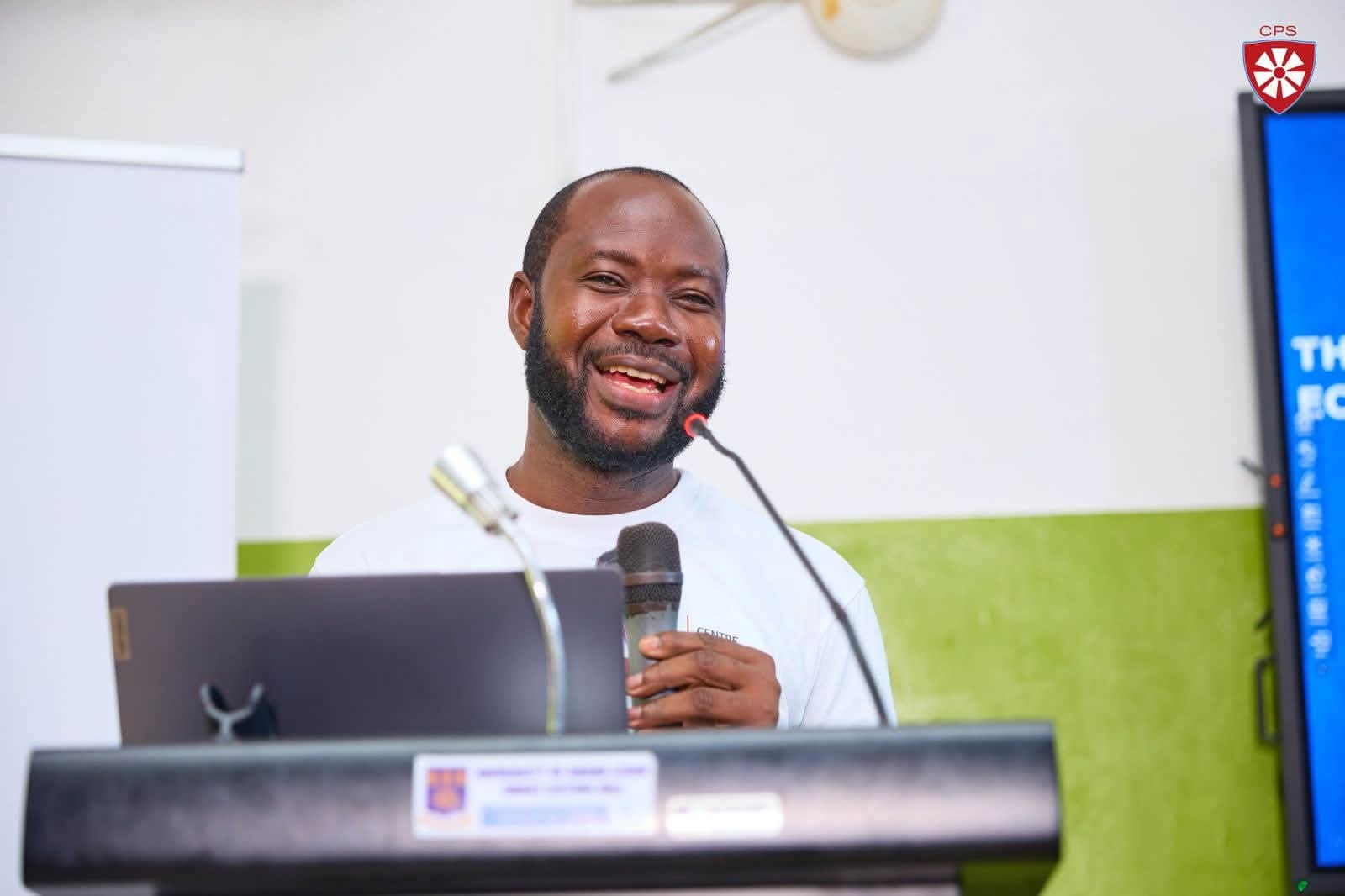
Ghana may have forgone about GH¢2 billion in withholding tax revenue following the removal of the 1.5% withholding tax on gold purchases under the Ghana Gold Board (GoldBod) programme, according to Dr Adu Owusu Sarkodie.
The Senior Lecturer at the University of Ghana and Executive Director of the Centre for Policy Scrutiny said the estimated revenue forgone should be included in assessing the overall cost of the GoldBod programme.
He said public discussion over GoldBod’s financial performance has largely focused on the reported US$1.7 billion, equivalent to about GH¢22 billion, without adequately considering other costs associated with the programme.
“One of the costs for the programme, the fees, the charges, the exchange rate differential, the foregone tax, 1.5% withholding tax foregone, that’s about GH¢2 billion foregone,” Dr Sarkodie said.
He added that the estimated tax revenue had not featured prominently in the ongoing debate.
“And that’s even; it’s not been accounted for in all our conversations. Our conversation has been set on a 1.7 billion, GH¢22 billion. It should be higher,” he said.
The 1.5% withholding tax on gold purchases was removed under the government’s 2025 tax reforms as part of measures accompanying the GoldBod programme.
The tax relief was introduced to encourage small-scale miners and other gold sellers to trade through formal channels, reduce gold smuggling and strengthen the country’s control over the gold trade.
Dr Sarkodie said while the incentive may have helped attract gold sellers into the formal system, the revenue forgone should be treated as part of the cost of achieving those objectives.
“The design of the programme is very generous. It has too many giveaways,” he said.
He identified premiums, discounts, fees, charges and exchange-rate differentials as other costs that should be considered when assessing GoldBod.
Dr Sarkodie called on the government to review the programme to determine whether its objectives could be achieved at a lower cost without undermining the benefits recorded so far.
“We should make sure that we get a lower loss or cost of transaction for that,” he said.
He also called for a comprehensive cost-benefit analysis of GoldBod, taking into account direct financial costs, forgone tax revenue, opportunity costs and environmental costs.
According to him, those costs should be weighed against the programme’s contribution to foreign exchange management, gold reserve accumulation, formalisation of the gold trade and efforts to reduce smuggling.
His comments come amid disagreement over GoldBod’s financial performance.
The Minority has accused GoldBod of incurring losses of about US$1.7 billion, with Minority Leader Alexander Afenyo-Markin citing an International Monetary Fund report in support of the claim.
GoldBod Chief Executive Officer Sammy Gyamfi has rejected the allegation, insisting that the institution has not recorded the alleged losses and has instead generated profits.
Dr Sarkodie said determining whether GoldBod has made a profit or loss alone would not provide a complete assessment of the programme.
He said the government must account for the concessions and other costs associated with the programme and compare them with its wider economic benefits to determine whether GoldBod is delivering value for money.
