
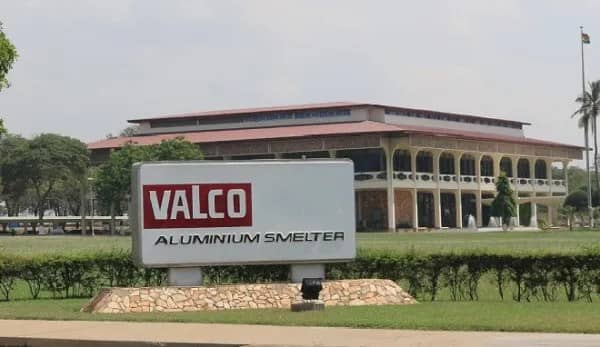
Volta Aluminium Company Limited (VALCO) is moving deeper into Ghana’s aluminium value chain with a new continuous casting and rolling mill that could reduce the need for local cable manufacturers to import aluminium rods used in electrical cables as well as register our presence as a supplier of valued added aluminium products on the international market.
This was disclosed at the Ministry of Lands and Natural Resources mid-year’s performance review and training program organized at Marriott Hotel, Accra.
The new product line has already supplied, industrial test samples, with satisfactory feedback, to two local downstream manufacturers, Nexans Kablemetal and Reroy Cables, according to VALCO’s Finance Director, Sepenu Agbetsise, marking a shift from the company’s traditional focus on primary aluminium production toward higher value-added products.
“Hitherto, these companies would have had to import the rod and process it into the various cables that power our homes. Now, VALCO is in a position to supply those directly,” Sepenu said.
Ghana’s aluminium industry remains heavily dependent on imported inputs. Although the country has bauxite resources and an operating smelter, VALCO still imports alumina for production because Ghana does not yet have a domestic alumina refinery.
The smelter has identified construction, automotive, packaging, and other manufacturing industries as areas where domestic production could replace imports.
VALCO’s new rolling mill therefore gives the company a route to capture more value from each tonne of aluminium produced, while giving domestic manufacturers access to a locally produced intermediate input.
The company is also testing its products in the overseas markets. In June 2026, circa 25 metric tonnes of the H11 Electrical Conductor (EC) grade aluminium rods had been shipped to Europe for testing, with results expected by the end of August.
Ghana is seeking to build an aluminium industry that goes beyond the production of primary aluminium and captures the value addition segment of the alumium value chain. GIADEC’s mandate covers the full value chain, from bauxite mining and alumina refining to aluminium smelting and value-added aluminium manufacturing.
The missing link remains alumina. The long lead time between ordering, payment and delivery of alumina ties up substantial working capital in inventory in transit, while also exposing the company to financing and interest costs.
VALCO also faces a double freight burden: it pays substantial inbound freight to import alumina and, after converting the raw material into aluminium, incurs another round of freight costs to export the finished product. The anticipated establishment of a domestic alumina refinery would therefore provide much-needed relief on the inbound logistics side, significantly shorten the supply chain, reduce working-capital requirements and financing costs, and unlock substantial freight savings for VALCO.
“If we have alumina just at our backyard, we don’t have to pay ahead of time,” he said, adding that local alumina production could reduce financing and operating costs.
The issue is central to Ghana’s plans for an integrated aluminium industry. The government has been pursuing investors for the country’s first alumina refinery, with the projects viewed as mutually reinforcing parts of the value chain.
Given the acceptance the new rolling mill is already enjoying among local cable and manufacturing companies, VALCO could begin capturing more value domestically while helping reduce dependence on imported aluminium downstream products.
