
The Traders Advocacy Group Ghana (TAGG) has called for a temporary 50 per cent reduction in import duties on commercial vehicles, arguing that the measure could help address the shortage of vehicles and ease the daily transportation difficulties confronting workers, traders and other commuters.
The group said the shortage had reached a critical level, with thousands of commuters allegedly stranded at markets and transport terminals during peak hours, particularly between 4 p.m. and 8 p.m.
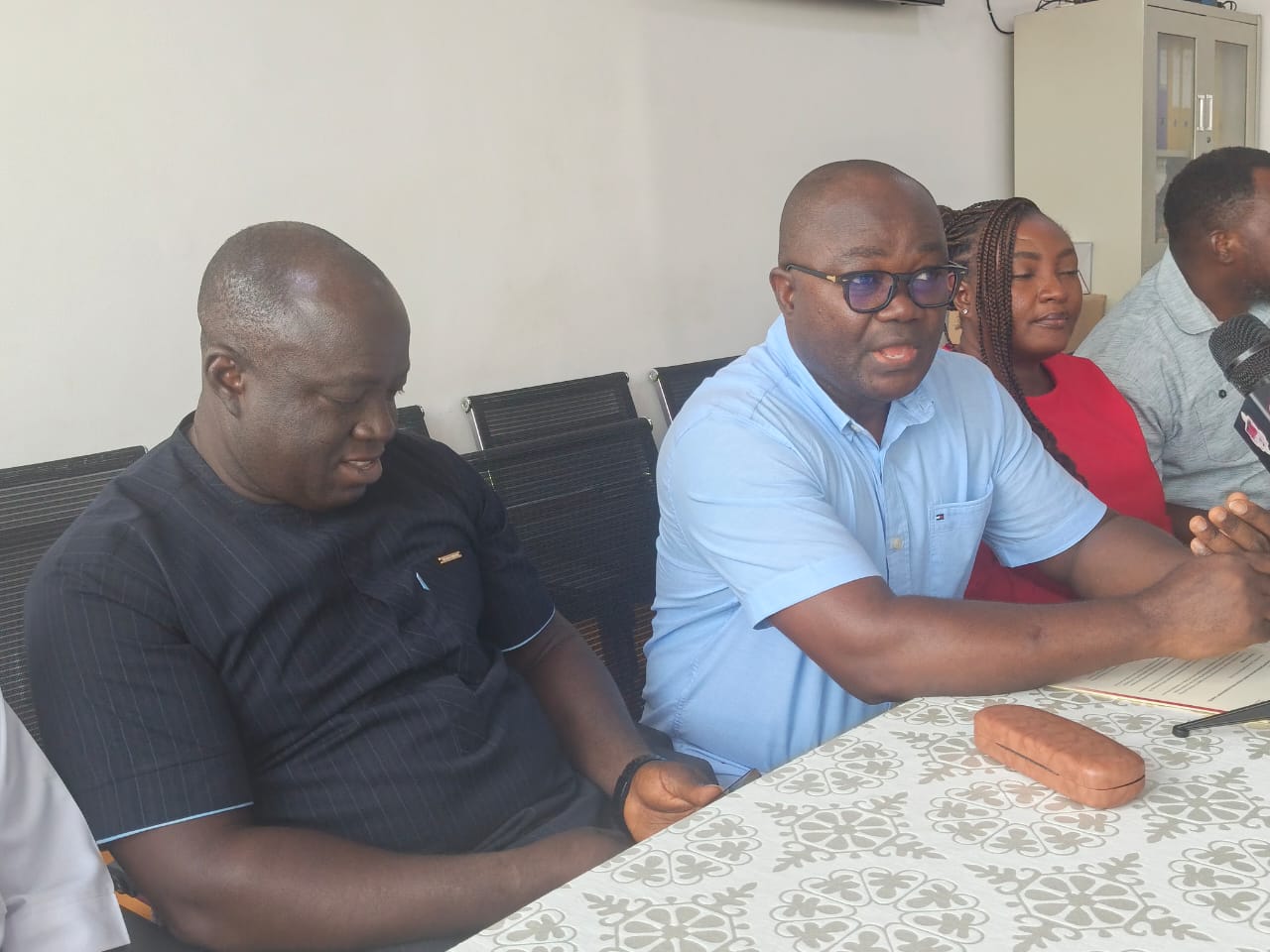
General Secretary of TAGG, Emmanuel Nana Poku, made the call at a press conference in Accra on Tuesday, September 1, where he broadened the group’s concerns beyond port charges to what he described as a wider transportation crisis.
He urged journalists to visit major markets and transport terminals during the evening rush hour to witness the situation.
“Don’t keep your cameras in your media houses. When it is 4 p.m., come and see things,” he said.
Commuters stranded after work
According to Nana Poku, government workers, civil servants, traders and other members of the public are increasingly struggling to find vehicles to return home after work.
He recounted an incident involving a commuter who, according to him, had no option but to board a flatbed vehicle heading towards Kasoa after failing to secure conventional transport.
Nana Poku said the incident raised serious concerns about road safety and the welfare of commuters who were being forced to take risks simply to get home.
He questioned who would care for the man’s family if an accident occurred.
The group said the situation demonstrated the urgency of increasing the number of commercial vehicles available to the public.
50% duty reduction proposed
TAGG said it had already submitted proposals to the Presidency aimed at addressing the transport crisis.
According to Nana Poku, the group’s petition was acknowledged and subsequently forwarded to the Ministry of Transport.
A key proposal contained in the petition, he said, was a 50 per cent reduction in import duties on commercial vehicles for a specified period.
The objective, according to the group, was to encourage private-sector investment in commercial transportation and increase the number of vehicles available to commuters.
TAGG argued that the measure would provide an incentive for transport operators and private investors to acquire additional vehicles and help close the supply gap.
Nana Poku said the proposal was not intended as a permanent tax concession but as a targeted intervention to address the immediate shortage of commercial vehicles.
Reference to previous waiver
The traders cited a previous intervention under the Akufo-Addo administration, which they said involved a 50 per cent waiver on commercial vehicles.
They argued that a similar intervention could be considered to increase the number of vehicles on the road, particularly at a time when existing vehicles were ageing and becoming unavailable.
According to TAGG, restrictions and other regulatory requirements were also limiting the ability of businesses and transport operators to replace vehicles quickly.
The group therefore called for a comprehensive review of the policies affecting the importation and deployment of commercial vehicles.
Government accused of delaying action
Nana Poku expressed disappointment that, despite the seriousness of the transport situation and the group’s proposals, what he considered meaningful action had yet to materialise.
He accused the authorities of waiting for the situation to deteriorate instead of implementing practical solutions.
The group warned that the transport shortage was not merely an inconvenience but a matter with implications for productivity, road safety and household welfare.
Workers who spend hours searching for transportation after work, it argued, lose valuable time and are exposed to unnecessary risks.
TAGG proposes solutions
The traders rejected the perception that their press conference was simply an exercise in criticising government.
Nana Poku said the group had consistently proposed solutions and wanted the government to succeed.
“We want every government that comes to power to succeed,” he said.
He nevertheless argued that success would depend on appointing officials capable of responding effectively to persistent national challenges.
TAGG also criticised the Transport Minister’s handling of the situation, defending its description of his leadership as incompetent on the grounds that, in its view, the ministry had failed to adequately address the transportation crisis.
The group warned against postponing solutions until the next election cycle.
It said government should act immediately rather than wait and later appeal to voters to overlook current difficulties.
Broader consumer concerns
TAGG linked the transportation crisis to its wider concerns about the cost of living and doing business.
The group said the challenges facing traders did not end at the ports but extended to transportation costs, availability of commercial vehicles and the prices consumers ultimately pay for goods.
It also called for stronger consumer protection measures, expressing concern about the quality of some imported products on the Ghanaian market.
Nana Poku argued that consumers sometimes buy low-quality products only to return shortly afterwards to replace them because the items do not last.
He said stronger enforcement of consumer protection standards was therefore necessary.
Four-point appeal
The traders concluded with four broad demands: fairness for Ghanaians, relief for traders, justice for importers and protection for consumers.
They called on the President, the Ministry of Transport and other relevant authorities to move beyond meetings and promises and implement practical measures to address the transportation and port-related challenges.
“Our position is very simple. We do not want excuses. We want action,” Nana Poku said.
TAGG maintained that unless the government acted quickly, the combined effects of high port charges and inadequate public transportation would continue to place additional financial and social pressure on ordinary Ghanaians.
TAGG calls for fairness and relief for traders
Nana Poku also criticised what he described as the exclusion of traders from some stakeholder engagements involving institutions responsible for regulating the trading and shipping sectors.
He alleged that traders were sometimes invited to meetings without being given adequate opportunity to express their concerns or contribute meaningfully to discussions affecting their businesses.
According to him, whenever he was given the opportunity to participate, he insisted on speaking frankly about the difficulties confronting traders and the need for government to provide relief.
“If you call me to a meeting, I will talk. Ghanaians need relief. We traders, we have no small problem,” he said.
He warned that failure to address the cost pressures facing traders would eventually worsen relations between traders and consumers, as businesses would have little choice but to pass their additional costs on to customers.
“If you don’t help us to put this thing out there, you come and meet us in the market. When I price and you are crying, I’ll just sit there and relax. Because no matter what, you need it, you pay,” Nana Poku said.
He explained that the group’s objective was not to create hardship for consumers but to push for a system in which the various stakeholders could operate without imposing an unreasonable burden on one another.
“We are just calling for, let me borrow this word, parity—to have a system whereby everybody will be okay. That’s all,” he said.
TAGG said it would continue to advocate for policies that reduce the cost of doing business, provide relief to traders and importers, and ultimately protect consumers from excessive price increases.
