
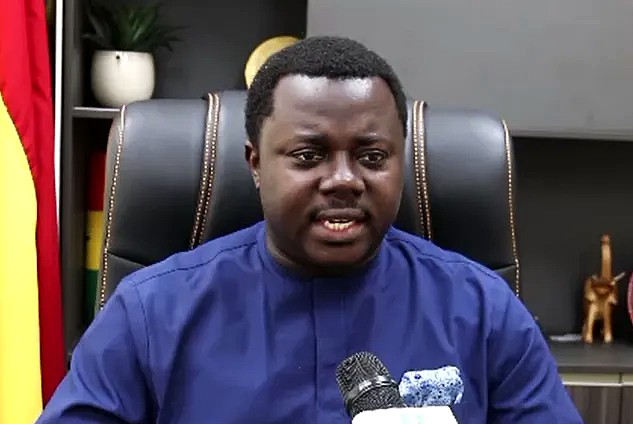
The Minority in Parliament has secured more than the constitutionally required 15 per cent of MPs to request an emergency sitting of Parliament over recent major drug-trafficking cases linked to Ghana, according to Assin South MP Rev. John Ntim Fordjour.
Rev. Ntim Fordjour, Ranking Member on Parliament’s Defence and Interior Committee, said the required signatures, petition and accompanying memorandum were submitted to Speaker Alban Bagbin last week.
He said the Speaker had acknowledged receipt of the request and expressed the expectation that a recall notice would be issued this week for Parliament to reconvene for an extraordinary sitting.
The Minority invoked Article 112(3) of the 1992 Constitution and Order 53 of Parliament’s Standing Orders in seeking the recall. Under Article 112(3), at least 15 per cent of MPs may request a meeting of Parliament, after which the Speaker is required to summon the House within seven days.
Rev. Ntim Fordjour said the proposed emergency sitting should pave the way for the establishment of a bipartisan parliamentary committee to investigate the narcotics cases and recommend measures to strengthen Ghana’s fight against drug trafficking.
“Yes, we got more than 15%. So the Speaker is expected to quickly issue a notice of recall for us to have an emergency recall, to constitute a committee, a bipartisan committee in Parliament, to dig into it, have a full inquiry into it, a transparent inquiry, so that we will be able to offer solutions,” he said.
He stressed that the proposed parliamentary investigation should not be reduced to partisan politics, saying the focus must be on finding solutions to the country’s narcotics challenges.
“We are interested in solutions that restore Ghana to its glory,” he stated.
The push for a parliamentary inquiry follows heightened scrutiny over major narcotics seizures linked to Ghana, including the interception of nearly 3.9 tonnes of cocaine at the Port of Dunkirk in France from a container that had arrived from Ghana.
The Minority argues that the incidents raise serious questions about the security of Ghana’s ports and borders, customs controls, intelligence gathering and the effectiveness of the country’s narcotics enforcement systems.
Rev. Ntim Fordjour also criticised the government’s response, questioning why no head of a relevant state agency had been removed from office over the incidents. His criticism is a political claim by the opposition MP; the government has separately defended its response to the recent cocaine case and investigations remain ongoing.
He called for stronger leadership and urged MPs to approach any emergency sitting in the national interest rather than along partisan lines.
The proposed bipartisan inquiry, if established by Parliament, is expected to scrutinise the circumstances surrounding the major drug seizures and examine possible weaknesses in Ghana’s security and narcotics-control systems.
